
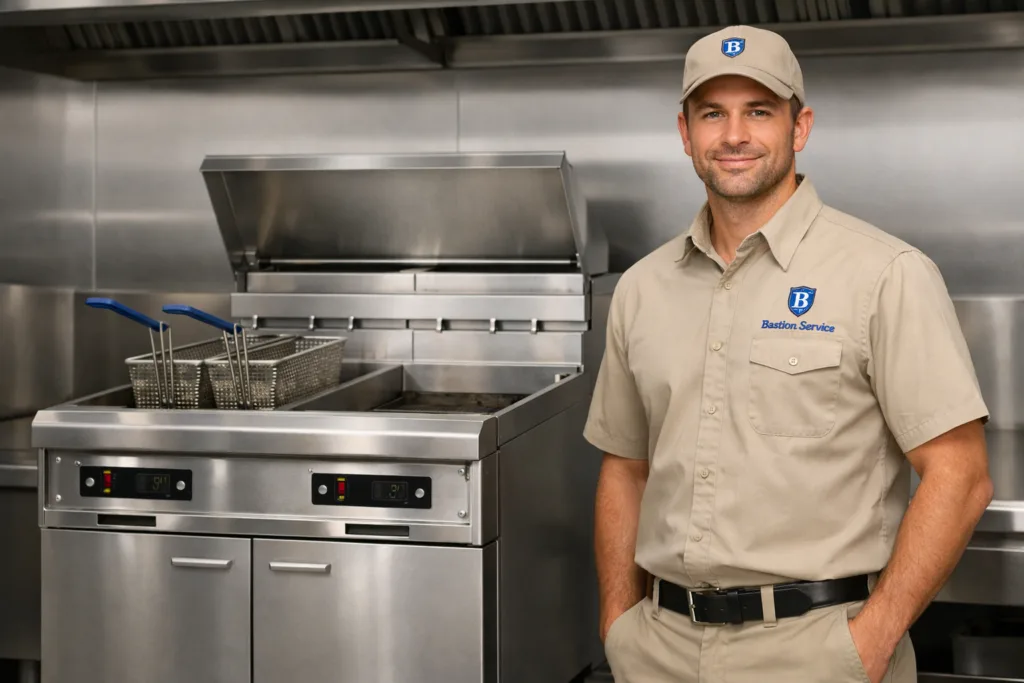




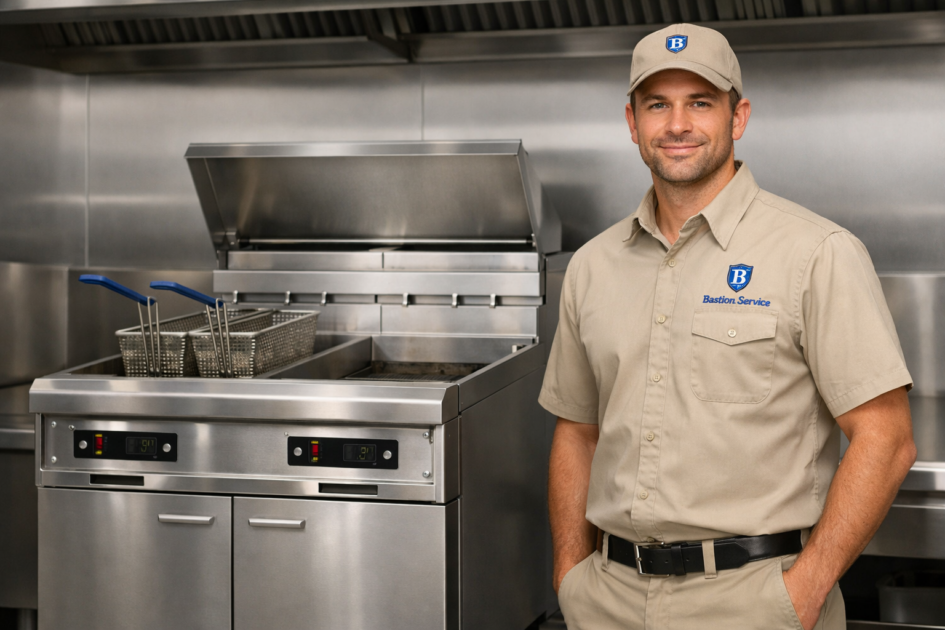
Downtime in a kitchen rarely starts with a complete failure. More often, Pitco cooking equipment begins showing warning signs such as inconsistent heat, delayed ignition, slow recovery, control irregularities, or intermittent shutdowns that gradually disrupt prep, ticket times, and food quality. For businesses in Venice, repair service is most useful when it focuses on the actual operating symptom, the urgency of the failure, and whether the equipment can stay in use safely while repairs are scheduled. Bastion Service provides Pitco equipment diagnosis and repair support for businesses that need a fast understanding of what is wrong and what the next step should be.
For specific equipment paths in Venice, review Pitco Fryer Repair in Venice and Commercial Appliance Repair in Venice.
What Pitco cooking equipment problems usually lead to a repair call
Pitco equipment is often judged by output consistency. When performance changes, the problem may be tied to heat delivery, ignition, burner operation, controls, sensors, safety components, or electrical faults. Even when the unit still runs, symptom-based service helps determine whether the issue is isolated or part of a larger reliability problem.
Businesses in Venice often schedule service when they notice one or more of the following:
- Equipment not heating to normal operating temperature
- Heat recovery becoming slower during busy periods
- Ignition clicking, delayed lighting, or failure to light
- Burners cycling irregularly or not staying stable
- Temperature overshooting or falling below set point
- Random shutdowns, resets, or safety lockouts
- Controls not responding correctly during operation
- Production delays caused by inconsistent cooking results
These symptoms are not all caused by the same part failure. That is why testing matters before approving repairs. A burner issue can resemble a control issue, and a temperature complaint may actually start with sensing, gas delivery, or a safety component reacting to another fault.
Fryer symptoms that affect daily kitchen output
Because Pitco fryer equipment is central to many kitchen workflows, even minor performance changes can quickly become operational problems. A fryer that still powers on but cannot hold temperature or recover properly may create the same level of disruption as a unit that is fully down.
Slow heat-up and poor recovery
When oil takes too long to reach operating temperature or the fryer struggles between batches, staff usually notice it first as slower ticket flow and inconsistent finished product. The underlying cause may involve burner output, heat transfer performance, control response, sensor feedback, or buildup that reduces efficiency. If this symptom is appearing during peak use, service should be scheduled before the equipment falls further behind production demand.
Ignition failure or delayed burner start
If the unit clicks repeatedly, lights late, or fails to ignite consistently, the issue may involve ignition components, flame sensing, gas valve behavior, burner condition, or related controls. Intermittent ignition problems are especially disruptive because the fryer may appear normal during one cycle and fail during the next. That uncertainty makes shift planning difficult and increases the risk of a mid-service stoppage.
Temperature control problems
Temperature drift is one of the most important warning signs to address early. If the fryer overheats, undershoots, cycles erratically, or requires repeated manual adjustment, the problem may involve sensors, thermostatic regulation, control boards, or high-limit devices. In practical terms, this affects food consistency, oil life, and the ability of kitchen staff to rely on standard cook times.
Unexpected shutdowns and lockouts
A fryer that shuts down without warning or enters a lockout condition should not be treated as a temporary nuisance. Shutdowns can point to overheating protection, ignition proving failures, unstable burner operation, electrical interruption, or control faults. For a business, the real concern is not just why the equipment stopped once, but whether it can be trusted for the next shift without creating additional disruption.
How symptom patterns help determine the repair path
The most efficient repair decisions usually come from looking at the full pattern rather than a single complaint. For example, a fryer that heats slowly, then overshoots temperature, then shuts down may have multiple related issues rather than separate isolated problems. Likewise, a unit with weak recovery and uneven cooking may need more than a simple settings adjustment.
A service visit helps clarify:
- Whether the problem is mechanical, electrical, fuel-related, or control-related
- Whether one failed component has created stress on others
- Whether the equipment should stay in service, be used only in a limited way, or be taken offline
- Whether the repair is likely to restore stable day-to-day operation
- Whether repeated breakdowns suggest a larger reliability issue
This kind of evaluation is especially important for Venice kitchens trying to protect production during busy hours. A partially functional fryer often causes more hidden disruption than managers expect because staff compensate around the problem until the unit fails more completely.
When to stop using the equipment until it is checked
Some symptoms justify taking the unit out of active use until it can be inspected. That is often the safer and less costly choice when operation is unpredictable or signs point to a worsening fault.
It is usually wise to pause use when the equipment is:
- Overheating or unable to regulate temperature
- Failing to ignite repeatedly
- Shutting down in the middle of normal operation
- Showing unstable burner behavior
- Entering repeated error or lockout conditions
- Producing output that is no longer consistent enough for service standards
Continuing to run problem equipment can lengthen downtime if the original issue causes secondary failures. It can also make the eventual diagnosis less straightforward if staff must keep resetting or working around the problem between service calls.
Repair versus replacement considerations for Pitco equipment
Many Pitco cooking equipment issues can be repaired successfully when the fault is identified early. Problems involving ignition systems, controls, temperature regulation, burners, and related electrical components do not automatically mean the unit should be replaced. The decision usually comes down to condition, frequency of breakdowns, repair scope, and how important that unit is to daily kitchen capacity.
Replacement becomes a more serious discussion when the equipment has a pattern of recurring failures, extended downtime, multiple unresolved control issues, or a repair history that no longer supports stable operation. For most businesses in Venice, the practical question is whether the repair will return the equipment to reliable use within a timeframe that supports the kitchen, not simply whether the unit can be made to run again for the moment.
Scheduling service before downtime spreads
Early service scheduling is often the best way to prevent a small operating problem from becoming a rush-period outage. If the unit is already showing slow recovery, unstable temperatures, ignition hesitation, or intermittent shutdowns, the best next step is to have it evaluated before those symptoms begin affecting more stations, more staff time, and more customer orders.
For businesses that rely on Pitco cooking equipment in Venice, repair service should do more than swap parts. It should identify the likely cause of the symptom, define whether continued use makes sense, and set a realistic repair plan based on how the equipment is performing in actual kitchen conditions. If your Pitco equipment is creating delays, inconsistent output, or repeated interruptions, scheduling diagnosis now is the most practical way to limit further downtime and restore a more predictable service flow.


