
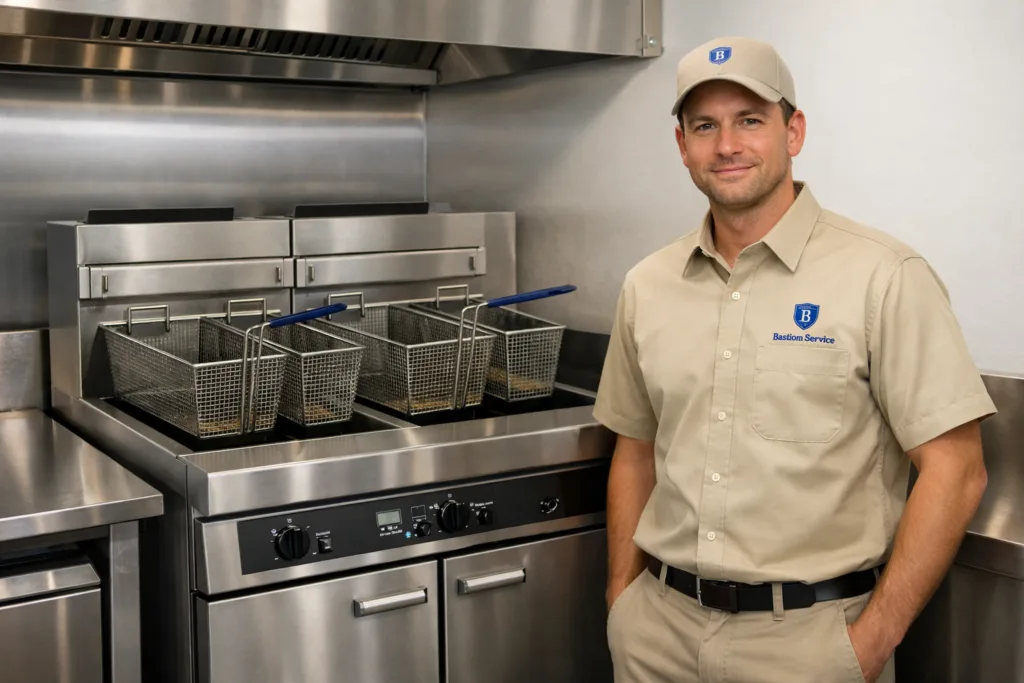




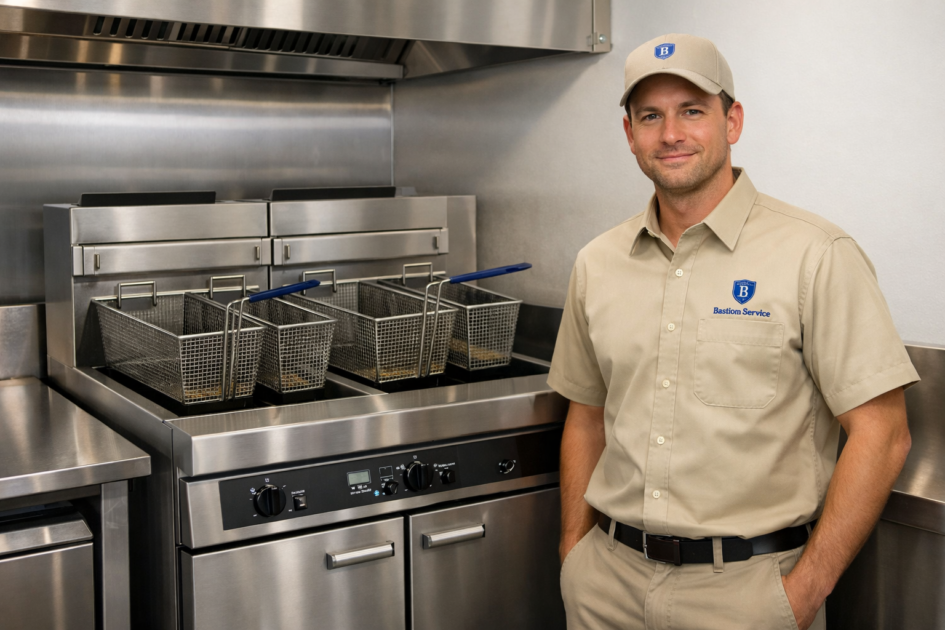
When Pitco cooking equipment begins missing temperature targets, recovering too slowly, or dropping out during a rush, the right next step is service that identifies the actual fault before more production time is lost. For businesses in Sawtelle, repair decisions are usually tied to uptime, food consistency, staff efficiency, and whether the unit can stay in operation safely until work is completed.
For specific equipment paths in Sawtelle, review Pitco Fryer Repair in Sawtelle and Commercial Appliance Repair in Sawtelle.
Bastion Service works with Sawtelle businesses to troubleshoot Pitco cooking equipment problems, isolate the source of the issue, and schedule repair based on urgency and operational impact. Whether the complaint is a fryer that will not ignite, unstable heat during service, or a unit that shuts down without warning, symptom-based diagnosis helps determine the most practical path forward.
What Pitco cooking equipment problems usually need repair attention
Pitco equipment problems often begin as performance complaints rather than total failure. A fryer may still run but struggle to hold temperature. A burner may light inconsistently. Recovery may become slower over time until batch timing starts affecting the whole line. These early symptoms matter because they often point to wear, control faults, ignition issues, heat-delivery problems, or safety-related shutdown conditions that can worsen under daily use.
- Temperature running too low, too high, or drifting during production
- Slow recovery between batches
- Ignition failure, delayed lighting, or repeated reset behavior
- Burner inconsistency or weak heat output
- Unexpected shutdowns during operation
- Error conditions, lockouts, or controls that behave unpredictably
- Oil heating complaints that affect cook quality and throughput
Heating and temperature control symptoms
One of the most common service calls involves a unit that no longer holds a stable cooking temperature. In daily kitchen use, this can show up as undercooked product, over-browning, inconsistent batch times, or oil that seems to break down faster because the heat cycle is no longer controlled correctly.
Temperature-related problems may involve control components, sensing issues, high-limit behavior, electrical faults, burner performance, or heat-transfer problems. Because several different failures can create similar symptoms, it is important to evaluate how the equipment behaves during startup, while idling, and under load. That distinction often changes the repair plan.
Signs the temperature problem is affecting operations
- Staff need to compensate with longer or inconsistent cook times
- Product quality varies from one batch to the next
- The unit cycles strangely or struggles to reach set temperature
- Overheating or safety trip behavior interrupts service
Ignition and burner problems
If a Pitco fryer is hard to start, lights intermittently, or fails to maintain a stable flame, the issue may involve ignition components, flame sensing, burner condition, gas-delivery performance, or controls. These faults are especially disruptive because they can move from occasional nuisance resets to complete startup failure with little warning.
Burner-related complaints also affect throughput even when the unit still turns on. Weak flame, uneven heating, or delayed light-off can reduce heat recovery and make production less predictable. In a busy kitchen, that often leads to line backups, rushed workarounds, and unnecessary stress on staff trying to keep service moving.
Slow recovery and output loss
Slow recovery is one of the clearest signs that cooking equipment is no longer keeping pace with demand. A fryer may eventually heat, but if it cannot recover quickly between loads, the practical result is reduced output during peak periods. Businesses in Sawtelle often notice this first as longer ticket times, inconsistent crispness, or the need to stagger batches more than usual.
Recovery complaints can stem from burner inefficiency, control issues, sensor problems, wear within the heating system, or conditions that reduce the unit’s ability to deliver heat consistently. Repair becomes more urgent when the equipment is technically operating but no longer supporting normal production volume.
Why slow recovery matters beyond convenience
When recovery lags, the problem is not just slower cooking. It can affect food quality, labor flow, and customer service timing. Over time, operators may start adjusting procedures around the equipment instead of addressing the fault itself. That usually means the unit is already costing more in lost efficiency than the original symptom suggests.
Intermittent shutdowns and control-related faults
A unit that runs normally for a while and then shuts down can be one of the hardest problems for staff to manage. Intermittent faults often involve sensors, safety-limit conditions, electrical supply issues, control failures, or heat-related component behavior that only appears after the equipment has been operating for a period of time.
These symptoms should not be ignored simply because the unit restarts. Repeated shutdowns create uncertainty during service and make it harder for a kitchen to plan production with confidence. If employees are monitoring the equipment constantly, resetting it regularly, or avoiding certain menu volume because they do not trust it to stay online, service should be scheduled before the next busy period.
When continued use can create bigger repair issues
Some problems remain manageable for a short time. Others tend to escalate quickly. Ongoing overheating, unreliable ignition, burner instability, repeated lockouts, and unexplained shutdowns can increase wear and complicate diagnosis if the equipment continues to be pushed through normal volume. What starts as a minor performance complaint can turn into broader component damage or a complete outage at the worst possible time.
It is usually wise to stop relying on the unit as a primary piece of equipment when any of the following are happening:
- Safety-related trips are becoming more frequent
- The equipment needs repeated resetting to keep running
- Temperature swings are affecting food consistency
- Ignition behavior is unreliable from shift to shift
- The unit cannot support normal production without staff intervention
How repair planning works in a working kitchen
Repair planning is not only about what failed. It also depends on how the failure is affecting the kitchen right now. Some businesses need immediate attention because the affected unit is central to service. Others can schedule work around prep, lighter shifts, or temporary menu adjustments. The most useful service visit is one that connects the fault itself with the business impact, parts needs, and realistic scheduling options.
For older Pitco equipment, repair versus replacement may also become part of the discussion if there are multiple active issues at once, a history of repeated failures, or major control and heating problems affecting reliability. In those cases, the goal is not just to get the unit running again, but to determine whether the repair is likely to restore stable day-to-day operation.
What to note before scheduling service
If you are arranging Pitco cooking equipment repair in Sawtelle, a few details can make diagnosis more efficient. Try to note when the problem occurs, whether it happens during startup or after the unit has been running, and whether the issue appears only under heavier production loads. Symptom timing often helps narrow the likely source.
- Does the unit fail on startup or after reaching temperature?
- Is recovery slow only during busy periods or all day?
- Are there repeated resets, lockouts, or visible error behavior?
- Has food quality changed along with the equipment complaint?
- Did the problem begin suddenly or worsen over time?
Even simple observations from staff can help distinguish between a constant fault and an intermittent one, which improves scheduling and repair planning.
Service decisions that reduce downtime
When Pitco cooking equipment is affecting output, consistency, or shift flow, early repair action is usually less disruptive than waiting for a total failure. Heating issues, ignition problems, burner faults, control trouble, and shutdown behavior all tend to become more expensive operationally once the kitchen starts building workarounds around them. Scheduling service gives your team a clearer view of what failed, how urgent the repair is, and whether the equipment should remain in use, be repaired promptly, or stay offline until the issue is corrected.
For Sawtelle businesses relying on Pitco equipment during daily service, the best next step is a repair visit focused on the symptom pattern, downtime risk, and the fastest workable path back to reliable operation.


