
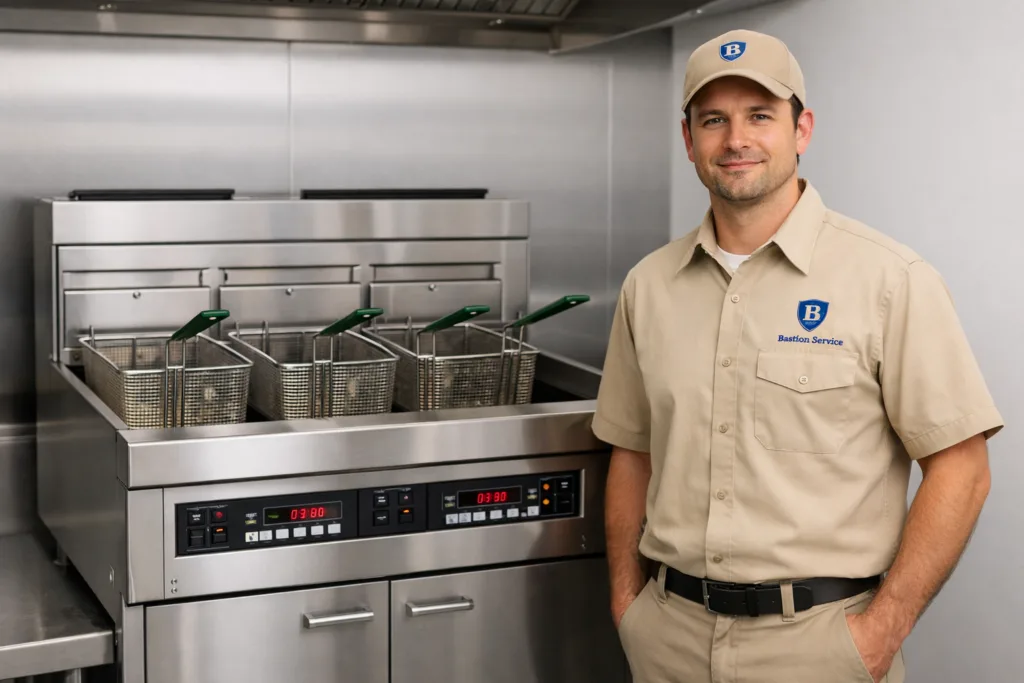




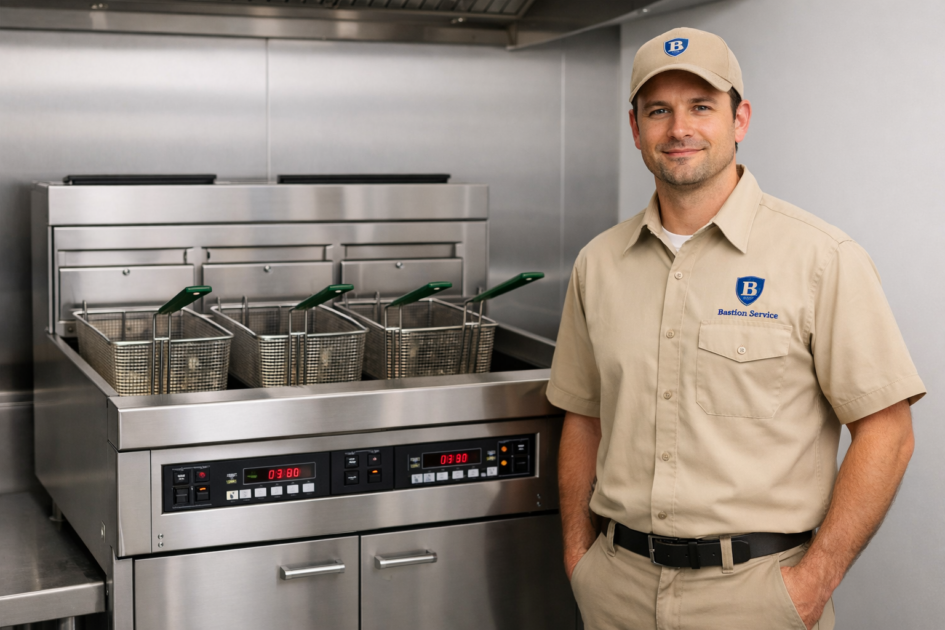
When Pitco cooking equipment starts affecting output in a busy kitchen, the next step is not guesswork. Service should focus on the actual symptom pattern, how the equipment is behaving under load, and whether the unit can stay in operation without creating more downtime, safety concerns, or product loss. Bastion Service helps businesses in Pico-Robertson evaluate those issues, identify the likely failure point, and schedule repair based on the urgency of the problem and the demands of daily service.
For specific equipment paths in Pico-Robertson, review Pitco Fryer Repair in Pico-Robertson and Commercial Appliance Repair in Pico-Robertson.
What Pitco cooking equipment problems do technicians troubleshoot?
Pitco equipment problems often show up as heat loss, slow recovery, ignition trouble, unstable temperature, control failures, or repeated shutdowns. In many kitchens, the complaint sounds simple at first, but the cause may involve burners, sensors, ignition components, high-limit devices, gas flow, wiring, or electronic controls. The main goal of a repair visit is to determine whether the issue is isolated, progressive, or likely to interrupt service again if the unit is left in use.
Common symptoms include:
- Equipment that will not heat or takes too long to reach operating temperature
- Ignition failure, delayed lighting, or intermittent startup
- Temperature running too high, too low, or drifting during use
- Slow recovery that affects batch timing and ticket flow
- Burner performance problems or unstable flame behavior
- Unexpected shutdowns, lockouts, or repeated resets
- Control response issues, error conditions, or inconsistent operation
Heat and recovery problems that slow production
One of the most disruptive complaints with cooking equipment is poor heat performance during active service. A unit may appear normal while idle, then fall behind once demand increases. That pattern usually points to a system that is no longer recovering as it should, which can reduce throughput and force staff to change timing, hold product longer, or limit output.
Possible causes can include burner inefficiency, ignition weakness, sensor or thermostat problems, control drift, or other faults that reduce heating consistency. When recovery time stretches out, the problem is rarely just about speed. It also affects food quality, labor flow, and confidence that the equipment will stay online through the shift.
No heat or partial heat
If a Pitco unit will not heat at all, cycles off too early, or only produces partial heat, the issue may involve the ignition sequence, burner operation, temperature-sensing components, safety limits, or the control system. A proper diagnosis matters because replacing parts based only on the surface symptom can waste time while the original fault remains unresolved.
Slow recovery during peak periods
Equipment that cannot rebound after normal use often creates production delays before it fully fails. Staff may notice longer cook times, reduced output capacity, or inconsistent results from one batch to the next. That is often the point where repair should be scheduled before the issue turns into a full shutdown at the busiest moment.
Ignition, burner, and startup issues
Ignition complaints should be taken seriously because they often become more frequent over time. A unit that hesitates before lighting, starts inconsistently, drops flame, or locks out during normal operation may have a problem with the igniter, flame sensing, burner alignment, gas valve behavior, or control timing. Even if the equipment restarts after a reset, recurring startup problems usually indicate that the fault is still active.
Burner-related symptoms can also affect more than heat alone. Uneven or unstable burner performance may lead to slow recovery, unreliable temperature control, and repeated interruptions that make the equipment difficult to trust during service. For managers, the real concern is not only whether the unit can be restarted, but whether it can run predictably through a full production window.
Temperature control problems and inconsistent results
When cooking equipment runs hotter or cooler than expected, the consequences show up quickly in product consistency. Temperature swings can lead to overcooking, undercooking, oil stress, wasted product, and uneven output across a shift. In some cases, the set temperature may appear normal while the actual operating temperature is drifting well outside the target range.
These complaints may be linked to probes, thermostatic controls, calibration drift, high-limit behavior, or electronic control faults. The most useful repair approach is to verify how the unit is performing in actual operating conditions and then determine whether the problem is sensing, regulation, or a broader control issue.
Signs temperature control needs service
- Product quality changes even though staff are following the same process
- The unit overheats or shuts down unexpectedly
- Temperature fluctuates noticeably during normal use
- Recovery timing feels inconsistent from batch to batch
- Operators compensate by changing cook times or reducing load size
Shutdowns, resets, and intermittent operation
Intermittent failures are some of the hardest problems for kitchen teams to manage because the equipment may seem fine between incidents. A unit may run for part of the day, then trip, reset, or stop heating without warning. That creates uncertainty around staffing, prep timing, and whether the equipment can be relied on for the next rush.
Repeated shutdowns can stem from overheating protection, ignition faults, burner issues, sensor failures, control board problems, or electrical interruptions. When staff have to restart the unit several times in one shift, that is usually a sign that continued operation is increasing disruption rather than preserving productivity.
When it makes sense to stop using the equipment
Some problems allow for limited short-term operation, while others should be addressed before the unit is put back into regular use. If the equipment will not hold temperature, shows unstable ignition behavior, trips repeatedly, or interrupts production more than once in a shift, keeping it online may lead to more waste and a more complicated repair path.
Warning signs that should prompt service scheduling include:
- Frequent lockouts or restart attempts
- Erratic burner behavior or repeated heat loss
- Output that drops sharply during busy periods
- Temperature instability that affects product quality
- A problem pattern that is getting worse over days or weeks
For businesses in Pico-Robertson, the key decision is whether short-term use is realistic or whether the risk of another interruption is too high. That answer depends on the consistency and severity of the symptoms, not just whether the equipment happens to be running at the moment.
Repair planning for kitchens that cannot afford delays
Repair decisions are tied to operations as much as to the failed component. Managers often need to know whether the issue looks straightforward, whether parts are likely after inspection, and whether the equipment should be scheduled for service immediately or during a slower window. A good service process helps clarify the probable cause, the next repair step, and the impact on uptime if the unit remains in service until the visit.
That matters because cooking equipment problems can spread beyond one station. A single unreliable unit can affect prep timing, menu availability, staffing assignments, and the pace of the entire kitchen. Fast symptom recognition and informed scheduling help reduce avoidable disruption.
When repair is usually the right move
Many Pitco cooking equipment issues are repairable, especially when the symptoms are addressed before repeated failures create added wear. Heating faults, ignition problems, burner issues, and control-related failures often have a defined repair path once the source of the problem is confirmed. Replacement discussions usually become more relevant when there are multiple recurring faults, severe wear, or repair costs that no longer match the equipment’s role in the kitchen.
The practical way to approach that decision is to look at actual condition, recent failure history, and expected reliability after service. That keeps the conversation focused on uptime and production needs rather than assumptions based on one bad shift.
Scheduling Pitco cooking equipment repair in Pico-Robertson
If your equipment is falling behind, shutting down, struggling with ignition, or producing inconsistent temperatures, scheduling service early usually prevents a smaller issue from turning into a larger interruption. For Pico-Robertson businesses, the most useful next step is a symptom-based evaluation that identifies what is failing, whether continued use makes sense, and how repair should be scheduled to limit downtime and restore reliable kitchen performance.


