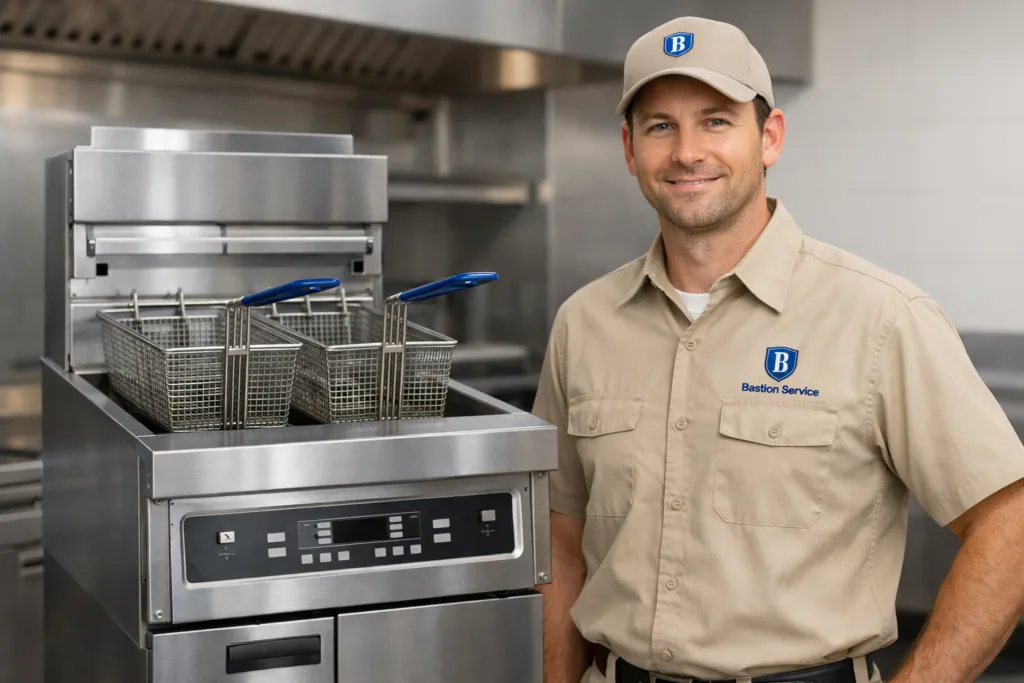





When Pitco cooking equipment begins missing temperature, recovering too slowly, failing to ignite, or shutting down during service, the priority is to identify the fault before it causes longer downtime, food-quality problems, or workflow disruption. For businesses in Manhattan Beach, a service visit should do more than confirm that something is wrong. It should help determine whether the issue is isolated, whether the equipment can remain in limited use, and what repair steps make the most sense for the kitchen’s production schedule.
For specific equipment paths in Manhattan Beach, review Pitco Fryer Repair in Manhattan Beach and Commercial Appliance Repair in Manhattan Beach.
Bastion Service provides Pitco cooking equipment repair support for Manhattan Beach businesses by diagnosing the actual symptom pattern, checking likely failure points, and helping operators plan repairs around active kitchen use. That matters when one recurring fault can affect ticket times, holding capacity, staff workload, and consistency across the line.
Common Pitco cooking equipment problems that lead to service calls
Although fryers are a frequent source of repair calls, many of the same operating concerns apply across cooking equipment used in daily food production. Service is often needed when performance changes begin affecting output, even before the unit stops completely.
Temperature-control problems
If equipment is not reaching set temperature, overshoots, drifts during use, or struggles to recover between batches, the issue may involve thermostatic controls, probes, high-limit components, gas-system parts, burners, or electronic controls. In a busy kitchen, temperature instability can quickly lead to slower production, inconsistent results, and added waste. A repair visit helps determine whether the problem is a single component failure or part of a broader wear pattern.
Ignition and burner issues
Delayed ignition, repeated clicking, burner dropout, weak flame, or complete no-heat conditions usually point to ignition components, flame-sensing faults, gas delivery issues, wiring defects, or control failures. These problems tend to move from intermittent to disruptive, especially during heavier use. If staff notice that the unit needs repeated restarts or behaves differently once the kitchen is under load, that is usually a strong sign to schedule service.
Slow recovery and production delays
Cooking equipment that heats up but cannot keep pace during service may still appear usable, yet the real impact shows up in ticket delays and reduced batch capacity. Slow recovery can be tied to burner performance, heat-transfer problems, oil-heating inefficiency, control drift, or restricted gas flow. In practical terms, this is the kind of fault that reduces output before operators realize how much time the equipment is costing them.
Unexpected shutdowns and lockouts
If a Pitco unit powers down, locks out, or becomes unpredictable during normal operation, the cause may involve safety circuits, control boards, wiring, switches, overheating, or intermittent electrical failure. Shutdowns that only happen during peak demand are still repair issues, not normal operating quirks. Intermittent faults often worsen over time and can become harder on connected components if the equipment remains in service without correction.
How symptom patterns affect the repair decision
Not every fault requires the same response. One unit may have a single failed part that can be addressed directly, while another may show several related symptoms that point to broader wear or repeated stress on the system.
For example, equipment that heats but cannot hold temperature usually follows a different repair path than equipment that will not ignite at all. A unit that only slows down during rush periods may still allow limited use until repair is completed, while one with repeated flame loss or unexplained shutdowns may need to be taken offline immediately. The goal of diagnosis is to separate manageable performance issues from conditions that can lead to bigger failures.
Signs the equipment should not stay in use
Kitchens often try to work around minor symptoms to avoid interrupting service, but some conditions become more expensive when operation continues. Equipment should be evaluated promptly when staff notice:
- sudden changes in heating behavior
- burners that do not stay stable
- repeated ignition failures or resets
- temperature swings that affect food consistency
- slower-than-normal recovery during active production
- unexpected shutdowns in the middle of service
When staff are changing cook times, reducing batch sizes, restarting the unit, or avoiding certain menu volume just to keep production moving, the equipment is already affecting operations. At that point, repair is no longer only about convenience. It is about limiting downtime, avoiding waste, and preventing a larger interruption.
What Pitco fryer symptoms often indicate
Because Pitco fryer repair is a major part of cooking equipment service, fryer-specific symptoms are often worth separating from general heating complaints. A fryer may present problems in ways that look similar on the surface but point to different repair needs.
Fails to heat at startup
If the fryer does not begin heating at all, likely causes can include ignition failure, gas valve problems, high-limit interruption, control faults, or power-related issues. This usually requires prompt service because the unit is already out of production.
Heats, but does not maintain temperature
When the fryer reaches temperature and then drops too far during use or cycles inconsistently, the issue may involve sensing, calibration, burner performance, or control response. This can create food-quality inconsistency even when the fryer appears operational.
Recovers too slowly between loads
Slow recovery is especially important in high-output kitchens because it directly reduces throughput. This symptom may indicate weakened heating performance, burner inefficiency, control issues, or developing wear that only becomes obvious during continuous demand.
Shuts off during use
A fryer that stops heating in the middle of production can point to flame-sensing problems, overheating protection, electrical interruption, or unstable controls. This is one of the clearest signs that the unit should be assessed before continued use.
Repair versus replacement considerations
Underperforming cooking equipment does not automatically need replacement. Many Pitco service calls come down to identifiable failures that can be repaired without replacing the entire unit. The better question is whether the current issue is isolated, whether the equipment has a pattern of recurring faults, and whether the repair is likely to restore reliable operation.
Replacement becomes a more serious consideration when multiple systems are failing, the same issue keeps returning, or downtime costs are starting to outweigh the value of continued repair. A proper inspection helps frame that decision clearly by identifying what failed, what related wear is present, and what level of reliability can reasonably be expected after the work is completed.
What to note before scheduling service
Before booking a repair visit in Manhattan Beach, it helps to document the symptom as specifically as possible. Useful details include:
- whether the equipment fails on startup or during active use
- whether the problem is constant or intermittent
- how long the issue has been happening
- whether the unit loses heat, overheats, or cycles unevenly
- whether shutdowns happen during heavy production
- any resets, error behavior, or unusual burner performance staff have observed
These details can shorten diagnosis and help determine service urgency. They also make it easier to decide whether the equipment can remain in use until the appointment or should be taken offline.
Scheduling Pitco cooking equipment repair in Manhattan Beach
If Pitco cooking equipment is slowing production, creating inconsistent results, or causing repeated interruptions, the next step is to schedule service based on the current symptom pattern and operating impact. For Manhattan Beach businesses, a focused repair visit helps confirm the fault, identify whether continued use is advisable, and map out the work needed to reduce downtime and restore more stable kitchen performance.