
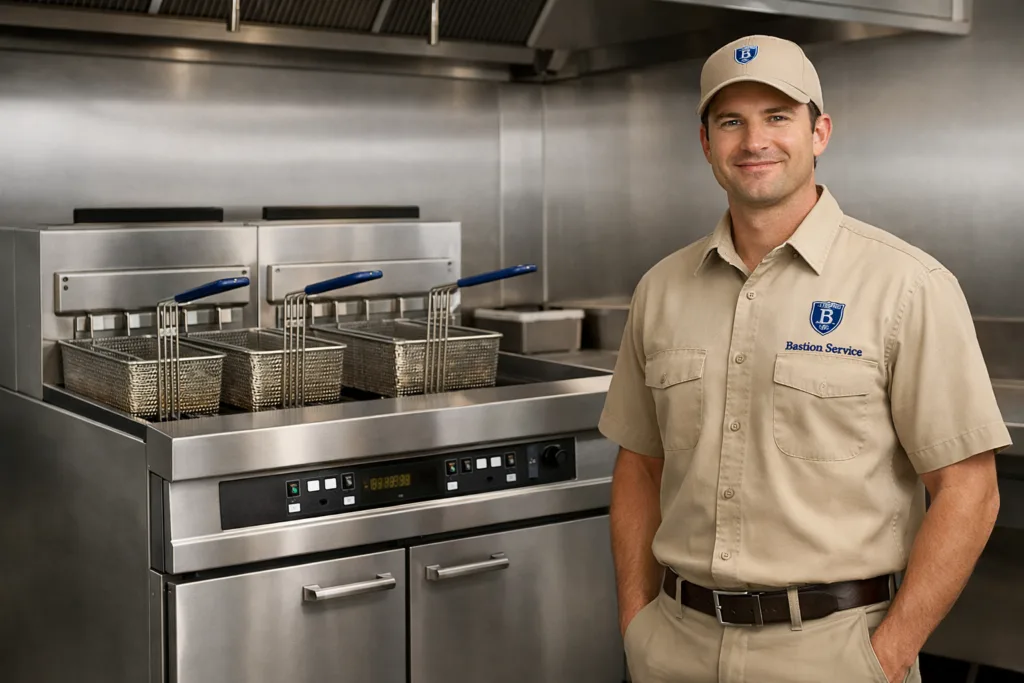




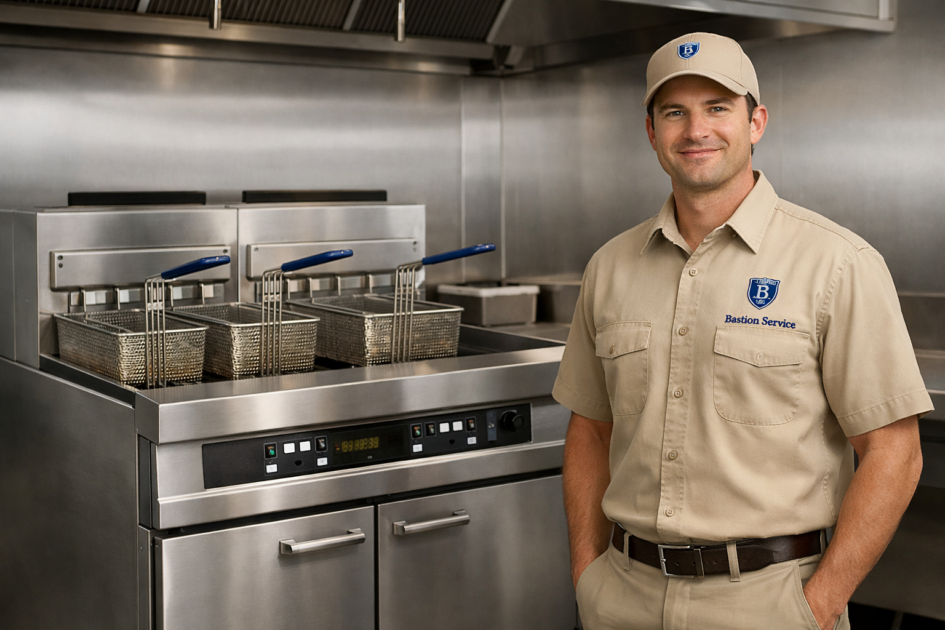
When Pitco cooking equipment starts affecting ticket times, batch consistency, or line capacity, the priority is to identify the fault quickly and decide how to keep service moving. For restaurants and food-service operations in Hawthorne, repair decisions usually come down to whether the unit is safe to keep using, whether the symptom points to a failing control or heat-related component, and how soon service should be scheduled to avoid a larger interruption.
For specific equipment paths in Hawthorne, review Pitco Fryer Repair in Hawthorne and Commercial Appliance Repair in Hawthorne.
Bastion Service works with local businesses that rely on Pitco equipment during daily production and need symptom-based repair planning instead of guesswork. That matters when a fryer is heating slowly, missing set temperature, dropping out during a rush, or showing a pattern of intermittent operation that staff can no longer manage with resets and workarounds.
What Pitco cooking equipment problems usually point to service needs?
Pitco cooking equipment problems often show up as performance issues before they become full shutdowns. In busy kitchens, early warning signs can include longer preheat times, uneven results, burner startup trouble, poor recovery between batches, or controls that no longer respond consistently. These symptoms may involve separate systems, so the most useful repair approach is to trace the pattern rather than assume every fault has the same cause.
For most operators, the practical question is not just whether the equipment still turns on. It is whether it can hold temperature, recover under load, and stay stable through a full shift without creating production delays or forcing staff to constantly monitor it.
Temperature control problems
If the equipment runs too hot, too cool, or drifts away from the selected setting, the issue may involve temperature sensing, limit components, controls, burner performance, or calibration-related faults. Temperature instability affects product quality first, but it also raises the risk of repeated shutdowns and unnecessary wear when the system cycles incorrectly.
- Oil or heat does not reach the expected cooking range
- Set temperature and actual cooking results do not match
- Heat overshoots and then drops sharply
- Product cooks unevenly from one batch to the next
Ignition and startup failures
When ignition becomes unreliable, the equipment may fail to light, attempt multiple startups, or run briefly before dropping out. That can point to trouble with ignition components, flame sensing, burner condition, gas-flow-related issues, or the control sequence itself. In a high-volume kitchen, repeated startup failures are more than an inconvenience because they slow the line and increase the chance of a complete stop during service.
Slow recovery and reduced output
A unit that heats eventually but cannot keep pace once orders build usually needs attention before peak periods expose the problem further. Slow recovery often appears as longer wait times between batches, weaker performance after the first few cycles, or equipment that seems functional in light use but struggles under real operating demand. That pattern can be tied to burner efficiency, heat-transfer problems, sensor faults, or control-related issues that are limiting normal performance.
Unexpected shutdowns and lockouts
Shutdowns in the middle of production are a strong sign that the underlying fault has moved beyond a minor nuisance. Safety trips, high-limit events, ignition loss, control errors, and intermittent component failure can all cause a Pitco unit to stop unexpectedly. When staff has to restart the equipment repeatedly just to finish service, it is usually time to take the symptom seriously and arrange repair before the next outage is longer or harder to recover from.
Supported equipment coverage for Pitco cooking equipment
Although many calls involve fryers, the broader issue for kitchens is dependable cooking equipment performance across the line. Pitco equipment is often judged by how well it supports steady production, predictable recovery, and repeatable cooking results. Service is most helpful when it accounts for the operating symptoms managers are seeing in real time, especially where downtime affects prep flow, order timing, and labor efficiency.
On this page, the primary supported category is Pitco fryer repair. Common service concerns include:
- Fryers that are not heating properly
- Units that recover too slowly between loads
- Ignition systems that fail intermittently
- Burners that do not stay lit
- Controls that display errors, lock out, or behave unpredictably
- Temperature issues that affect food consistency
- Unexpected shutdowns that interrupt service
Signs the equipment should be checked before the next busy shift
Some faults can wait for planned scheduling, but others become costly when a kitchen continues using the equipment without understanding the cause. If the same symptom appears across multiple shifts, if staff has changed normal operating routines just to keep the unit online, or if production has slowed because the equipment cannot maintain normal heat performance, repair should move up the priority list.
Businesses in Hawthorne often schedule service when they notice one or more of the following:
- The fryer needs frequent resets to keep running
- Heat-up time is noticeably slower than before
- Recovery drops during rush periods
- Controls stop responding consistently
- Shutdowns happen with no clear pattern
- Product quality changes because temperature is no longer stable
Even when the unit is still partially operational, inconsistent performance can create enough drag on the kitchen to justify a service call. Catching the problem while the equipment is still running often provides more repair options than waiting for a full failure.
How diagnosis helps with repair planning
Effective repair planning is about more than identifying a bad part. Kitchen managers also need to know whether the equipment can remain in limited use, whether the fault appears isolated or part of a larger reliability issue, and whether the repair is likely to restore normal production. A symptom-based diagnosis helps separate a temperature-control problem from an ignition issue, a burner problem, or a safety-related shutdown condition.
That distinction matters because similar symptoms can lead to very different repair paths. A fryer that cooks unevenly may have a control or sensing problem, while a fryer that cannot recover may be dealing with heat delivery or burner performance issues. Looking at the symptom pattern as a whole is what turns a service call into an informed decision instead of a temporary fix.
Repair versus continued operation
Many businesses try to stretch equipment through one more shift when the problem seems manageable, but that choice depends on the type of symptom. If the unit is losing temperature, shutting down without warning, or showing repeated ignition trouble, continued operation can lead to more disruption than arranging service promptly. Problems that seem minor in slower periods often become severe once the kitchen is under load.
Repair is often the better short-term decision when the equipment still has a defined, serviceable fault and the rest of the unit remains in workable condition. On the other hand, if multiple systems are deteriorating at once, managers may need a broader conversation about reliability, downtime exposure, and whether repeated service events are affecting operations more than expected.
Scheduling Pitco equipment repair in Hawthorne
For Hawthorne operators, the most practical next step is to schedule service when recurring symptoms start interfering with output, timing, or consistency rather than waiting for a complete shutdown. Whether the issue involves heating problems, ignition failures, slow recovery, or unstable controls, a repair visit should help clarify the source of the fault, the likely repair scope, and whether the equipment should remain in use before service is completed.
If your Pitco cooking equipment is slowing production or becoming harder to trust during daily operations, scheduling diagnosis now can help limit downtime, support safer operation, and restore more reliable performance before the next major service period.


