
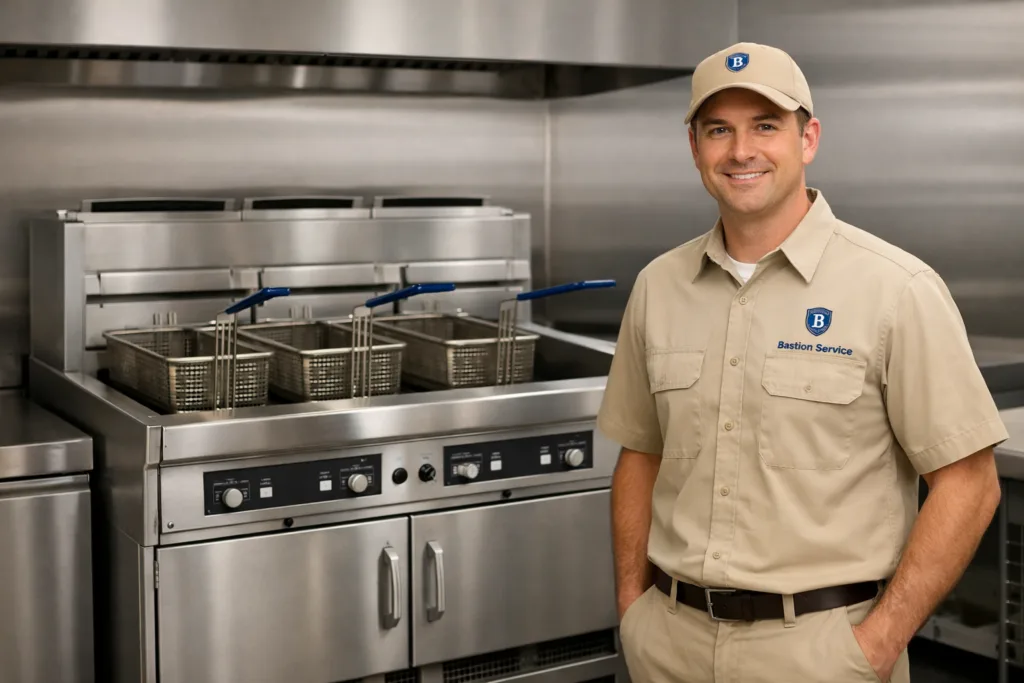




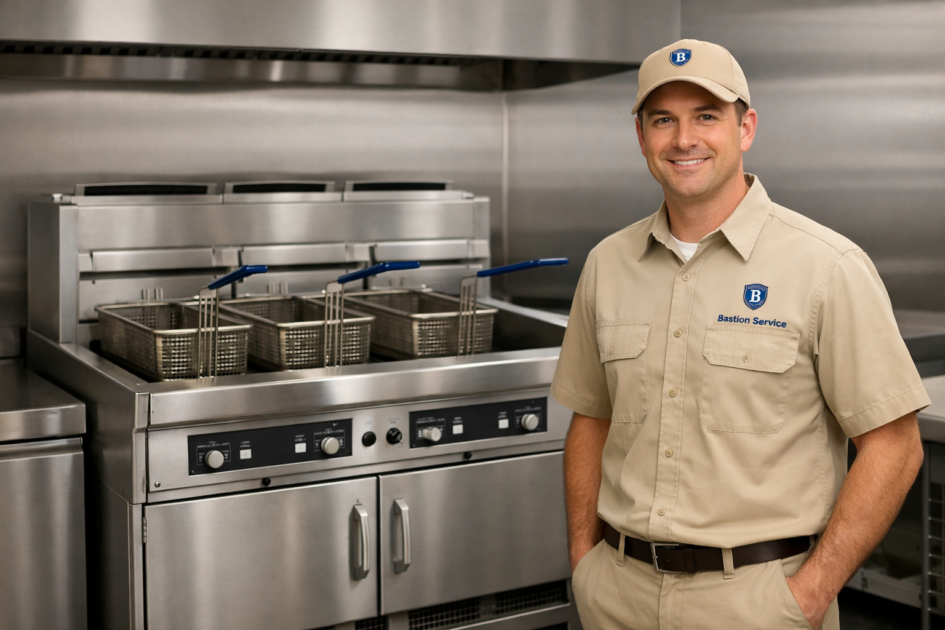
When Pitco cooking equipment begins disrupting line flow, the most useful service call is one that connects the symptom to an actual repair path. In Del Rey, restaurants and food-service operators often need more than a quick reset or a guess at the failing part. They need to know whether the problem involves heat output, ignition, temperature regulation, safety controls, or a condition that could lead to a full shutdown during service. Bastion Service helps businesses evaluate those symptoms, schedule repair work appropriately, and make better decisions about whether equipment can remain in use until service is completed.
For specific equipment paths in Del Rey, review Pitco Fryer Repair in Del Rey and Commercial Appliance Repair in Del Rey.
What Pitco Cooking Equipment Problems Usually Point To
Pitco cooking equipment issues often show up first as performance changes rather than complete failure. A fryer may still turn on but recover too slowly. A unit may ignite, then drop out unexpectedly. Temperature may drift enough to affect food quality before staff realize the equipment is no longer operating normally. Looking at the symptom pattern helps narrow the likely cause and determine how urgent the repair is.
Slow Heating or No Heat
If the equipment is taking too long to reach operating temperature, never gets there, or does not heat at all, the fault may be tied to the ignition system, burner operation, gas flow, temperature sensing, or safety-limit controls. In a busy kitchen, this symptom quickly affects prep timing, batch consistency, and ticket speed. Even if the unit eventually heats, slow warm-up usually means the system is no longer performing as intended.
Temperature Control Problems
When cooking results become inconsistent, temperature regulation is often the issue. Equipment that overshoots, undershoots, or cycles unpredictably may have a problem with its probe, thermostat, control board, or related control circuit. Businesses often notice this first through uneven product color, changing cook times, or staff repeatedly adjusting settings to compensate. Once that pattern appears, service is usually more cost-effective than continuing to work around it.
Ignition Failures or Burner Problems
Ignition complaints can include failure to light, delayed lighting, repeated clicking, intermittent flame, or burner dropout after startup. These problems may stem from ignition components, flame sensing, burner contamination, gas delivery issues, or control faults. Because ignition trouble can become a reliability and safety concern, repeated misfires or inconsistent burner operation should be evaluated before the equipment is relied on for a full service window.
Slow Recovery During Production
Recovery problems are especially disruptive on fryers. If oil temperature drops too far between loads or the unit struggles to rebound during peak periods, output slows and food quality becomes harder to manage. This can be caused by weak burner performance, control errors, heat transfer issues, or internal buildup affecting normal operation. For operators, slow recovery is not just a technical issue; it directly limits throughput and can force changes to menu pacing.
Unexpected Shutdowns, Lockouts, or Reset Dependence
Equipment that shuts itself off, locks out, trips a limit, or requires repeated resets should not be treated as a minor inconvenience. Those symptoms often indicate overheating, failing safety components, unstable ignition, electrical faults, or broader control-system problems. If the unit only works after staff intervention, that usually means the underlying issue is progressing and may lead to a complete outage with little warning.
Supported Pitco Cooking Equipment Coverage
For this brand page, cooking equipment is the main service category, with Pitco fryer repair as the primary supported equipment type. That includes symptom-based troubleshooting for issues such as:
- Failure to heat or delayed heat-up
- Inaccurate or unstable temperature control
- Ignition problems and burner irregularities
- High-limit trips and shutdown events
- Slow recovery during heavy production periods
- Intermittent operation that affects service flow
- Control faults that interfere with normal cooking cycles
For businesses running Pitco fryers daily, these problems are rarely isolated to convenience alone. They affect food quality, labor pace, order timing, and confidence in the equipment during the hours that matter most.
How Businesses Can Tell a Repair Visit Is Needed
Some warning signs make scheduling service the right move sooner rather than later. If a unit is no longer holding temperature, is producing uneven results, shuts down during active use, or forces staff to monitor it constantly, the problem has already moved beyond normal operation. Businesses should also pay attention when a fryer begins showing the same fault repeatedly, even if it temporarily returns to service after a restart.
In many cases, the best time to book repair is before the equipment fails completely. Early service can help prevent a rush-period breakdown, reduce product loss, and avoid overloading other kitchen equipment that has to absorb the demand when one unit is underperforming.
What a Diagnosis Helps Clarify
A service visit should answer more than whether a part needs replacement. It should help identify which system is failing, whether other components may be affected, how severe the issue is, and whether continued operation is reasonable in the short term. That matters for managers planning around staffing, prep volume, and peak-hour capacity.
Diagnosis is also important because similar symptoms can come from different causes. For example, slow recovery may point to burner weakness, a control issue, or maintenance-related restriction. Temperature inconsistency might be tied to a probe problem, a thermostat fault, or a broader control failure. The symptom alone does not always reveal the repair path.
Repair or Replace?
Replacement is not automatically the right answer when Pitco cooking equipment starts acting up. Many problems can be corrected with targeted repair, especially when the fault is limited to ignition parts, controls, sensors, valves, or burner-related components. Repair tends to make sense when the equipment has otherwise been supporting daily production and the issue is identifiable and contained.
Replacement becomes a stronger consideration when breakdowns are recurring, multiple systems are failing, or the unit no longer supports dependable kitchen output even after recent service. For operators, the most useful decision is one based on equipment condition, symptom history, and expected results after repair rather than frustration during a downtime event.
Service Planning for Del Rey Food-Service Operations
In Del Rey, kitchen equipment problems are often tied directly to service interruptions, reduced menu capacity, and staff workarounds that are difficult to sustain. Scheduling repair with the production schedule in mind can help minimize disruption, especially when the unit is still partially operating but clearly degrading. For some businesses, the priority is restoring full output quickly. For others, it is confirming whether the equipment can safely remain online until the earliest available service window.
If your Pitco equipment is showing heating issues, ignition trouble, slow recovery, unstable temperatures, or repeated shutdowns, the next step is to schedule a repair evaluation based on the actual symptom pattern. A focused service visit helps identify the fault, set realistic repair expectations, and reduce the risk of additional downtime for your Del Rey operation.


