
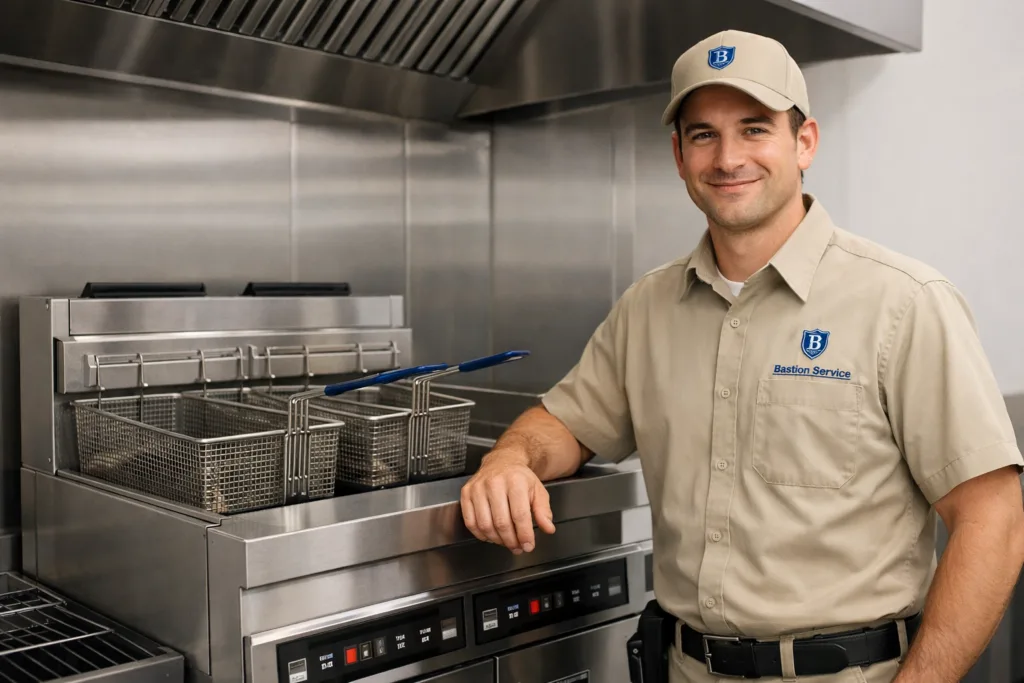




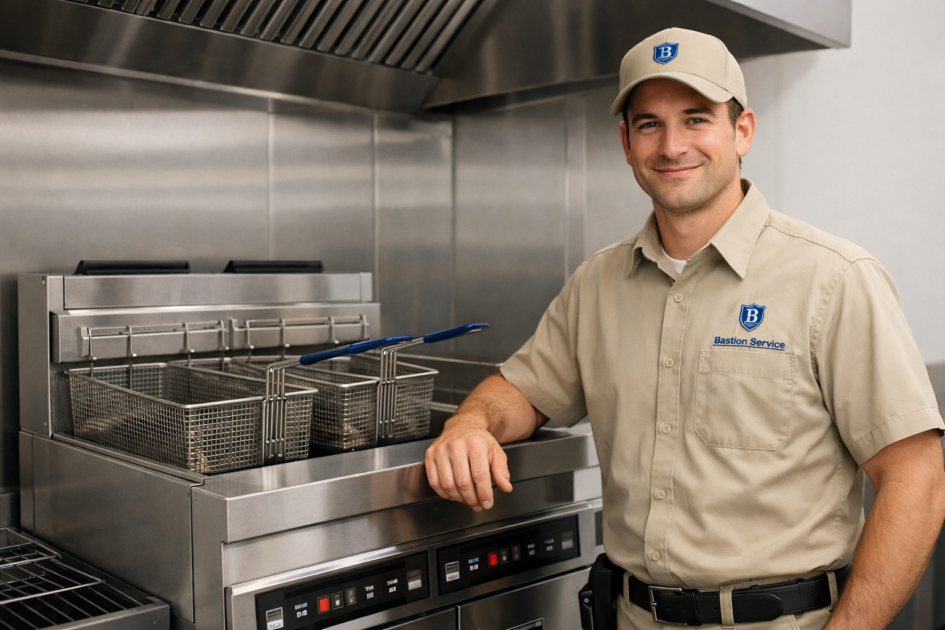
When Pitco cooking equipment starts falling behind during service, the effect is usually immediate: slower output, inconsistent food quality, frustrated staff, and a kitchen that has to work around equipment instead of relying on it. For operators in Culver City, the most useful next step is service that focuses on the symptom pattern, the urgency of the failure, and whether the unit can stay in operation while repairs are arranged.
For specific equipment paths in Culver City, review Pitco Fryer Repair in Culver City and Commercial Appliance Repair in Culver City.
Bastion Service provides repair support for Pitco cooking equipment used in daily food-service operations. Whether the issue involves heating performance, ignition trouble, temperature drift, burner behavior, safety shutdowns, or slow recovery during peak demand, the goal is to identify the fault, explain what it means for production, and schedule the right repair path with as little disruption as possible.
What Pitco Cooking Equipment Problems Usually Trigger Service
Most service calls begin with one of a few operational problems: the equipment does not heat correctly, takes too long to recover, will not start reliably, cycles unpredictably, or shuts down when demand is highest. These symptoms can point to different underlying causes, so the value of a repair visit is not just replacing parts. It is determining which system is failing and what that means for uptime.
For Pitco equipment, businesses often request service when they notice:
- Heating that is weak, inconsistent, or delayed
- Ignition failures or startup problems
- Temperature control issues affecting product consistency
- Burners that do not stay stable during operation
- Slow recovery between batches
- Unexpected shutdowns, resets, or lockouts
- Performance changes that worsen during busy periods
Pitco Fryer Symptoms That Need Attention
Because Pitco fryer repair is a common need in active kitchens, it helps to understand how fryer symptoms usually show up in real operations. Some units stop heating entirely. Others still run, but with unstable temperatures, slower recovery, or repeated interruptions that make the equipment unreliable during service.
Not Heating or Not Reaching Operating Temperature
If a fryer is not reaching its target temperature, the kitchen may see longer cook times, under-finished product, and backup at the line. This can be tied to burner issues, ignition components, controls, safety devices, electrical faults, or related heating system problems. A fryer that heats only part of the way can be just as disruptive as one that will not heat at all, especially when staff starts compensating with longer cook cycles or inconsistent batch timing.
Ignition Problems and Delayed Startup
Startup issues often appear as failure to ignite, delayed lighting, repeated ignition attempts, or a unit that starts intermittently from one shift to the next. In a business kitchen, that can delay opening tasks and create uncertainty about whether the fryer will stay available through service. These symptoms may involve ignition assemblies, flame sensing, controls, gas flow issues, or related safety conditions that should be evaluated before normal use continues.
Temperature Swings and Inconsistent Results
When oil temperature runs too high, too low, or fluctuates during use, food quality is usually the first warning sign. Operators may notice greasy product, uneven browning, scorching, or cook times that no longer match normal expectations. Temperature instability can point to control faults, sensor problems, calibration drift, or other issues that need testing rather than guesswork.
Slow Recovery Between Batches
Recovery issues are especially noticeable when order volume increases. The fryer may technically still operate, but if it cannot return to cooking temperature quickly enough, throughput suffers. Slow recovery often affects ticket times, forces menu adjustments, and creates a ripple effect across the kitchen. Common causes can include heating inefficiency, burner performance problems, airflow concerns, or control-related faults.
Shutdowns, Lockouts, and Unpredictable Operation
If the equipment drops out mid-shift, requires repeated resets, or locks out without clear warning, the problem should be treated as more than an inconvenience. Unexpected shutdowns can involve high-limit trips, ignition failure, unstable controls, electrical issues, or other safety-related interruptions. Repeated restarts may keep production moving for the moment, but they do not resolve the underlying fault and can make downtime harder to plan around.
How Symptom Patterns Help Guide Repair Decisions
Two pieces of equipment can show the same visible symptom and still need very different repairs. For example, a fryer that will not maintain temperature could have a control problem, a sensing issue, a burner performance problem, or a safety-related interruption. That is why symptom-based diagnosis matters for business operators trying to decide how urgent the repair is and whether temporary workarounds are realistic.
A service evaluation helps answer practical questions such as:
- Can the equipment continue operating safely in the short term?
- Is the failure isolated or part of a broader wear pattern?
- Will delaying repair increase downtime risk?
- Is the issue likely to affect food quality or output consistency?
- Should repair be scheduled immediately to avoid service disruption?
When to Schedule Service Instead of Waiting
Businesses often delay calling for repair when the equipment still works part of the time. In practice, partial operation is often what creates the biggest losses. A fryer that heats slowly, cycles unpredictably, or needs repeated attention from staff can reduce output long before it stops completely.
Scheduling service is usually the smart move when the equipment is:
- Missing temperature targets on a recurring basis
- Causing product inconsistency or waste
- Interrupting prep or line flow
- Requiring frequent resets or manual workarounds
- Showing worsening performance during busy periods
- Creating uncertainty about whether it will stay online for the full shift
For kitchens in Culver City, early repair attention can prevent a manageable fault from becoming a full shutdown at the worst possible time.
Repair or Replace: What Businesses Usually Consider
Replacement is not always the first or best answer when Pitco cooking equipment develops a problem. In many cases, repair remains the practical option if the unit is structurally sound and the issue is limited to serviceable heating, ignition, burner, or control components. On the other hand, replacement becomes more relevant when failures are repeated, multiple systems are worn, or downtime is starting to cost more than the repair path makes sense to justify.
The decision often comes down to the age of the equipment, recent service history, severity of the current issue, parts availability, and how essential the unit is to daily production. A good diagnosis gives operators a better basis for that decision than symptoms alone.
Service Support for Pitco Equipment in Culver City
Pitco cooking equipment repair in Culver City is most helpful when it leads to a usable plan: identify the cause of the failure, understand the risk of continued operation, and schedule repair around kitchen demand. If your Pitco fryer is dealing with heating problems, ignition faults, temperature control issues, slow recovery, burner trouble, or shutdowns, service should be scheduled before the problem causes larger delays, product loss, or avoidable downtime.


