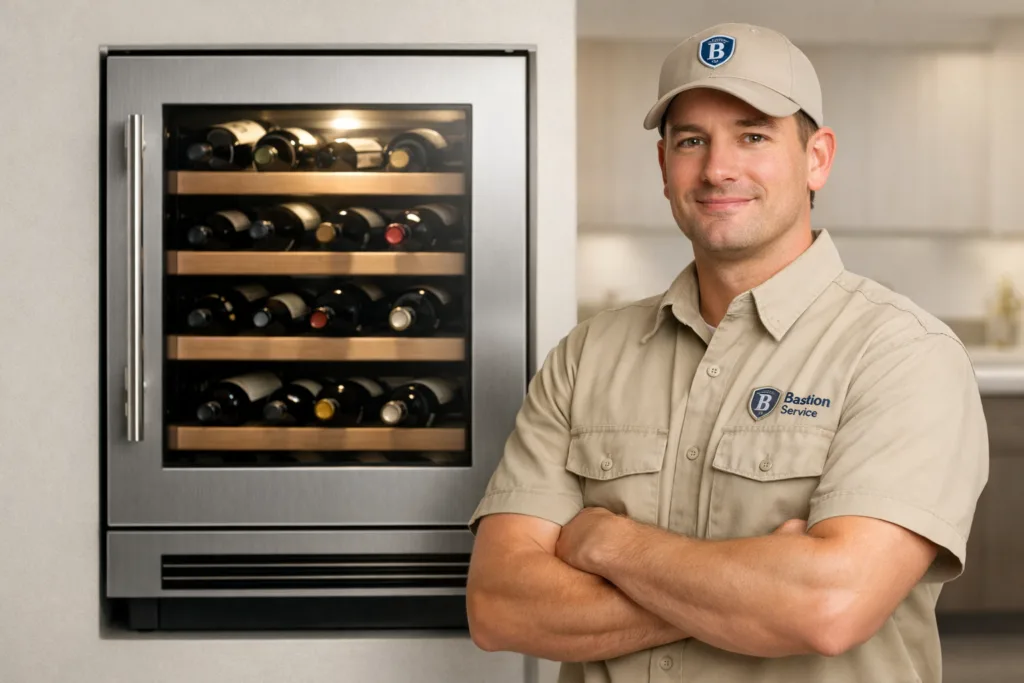
A Perlick wine cooler that begins running warm, fluctuating between temperatures, or collecting moisture inside the cabinet can affect both short-term serving bottles and long-term storage. Because several different faults can create similar symptoms, the most useful starting point is identifying how the unit is behaving day to day: whether it is missing temperature, overcooling, running constantly, getting noisy, or showing control errors.
Related Perlick and wine cooler service paths in Century City include Perlick Appliance Repair in Century City, Wine Cooler Repair in Century City, and Perlick Refrigerator Repair in Century City.
Common Perlick Wine Cooler Problems in Century City Homes
Wine coolers are built for stable, predictable conditions. When that stability changes, the symptom itself often points toward the likely repair path.
Not Cooling Enough
If the cabinet is warmer than the selected setting, the cause may be poor airflow, a dirty condenser area, a weak fan motor, a sensor issue, or a problem in the cooling system. Some units still run and make normal sounds while gradually losing cooling performance, which is why homeowners often notice the problem only after bottles feel noticeably warmer.
Typical signs include:
- The display shows the right setting, but the cabinet feels warm
- The unit runs for long periods without recovering temperature
- Upper and lower sections feel uneven
- The cooler seems worse after the door is opened, and slow to recover
Too Cold or Freezing Bottles
A wine cooler that drops below its setting may have a faulty thermistor, thermostat, or control issue. In some cases, the cooling system is not cycling off when it should. This can be easy to miss at first, especially if the display still looks normal. Overcooling can damage labels, affect cork condition, and defeat the purpose of temperature-controlled storage.
Water Leaks and Interior Condensation
Moisture inside the cabinet or water underneath the unit usually means something is interrupting normal drainage or sealing. A worn gasket, drain restriction, or cooling irregularity can all contribute. If condensation keeps returning, the cooler may also be struggling to maintain a steady internal environment.
Watch for:
- Water pooling under shelves
- Beads of moisture on interior walls
- Dampness near the door opening
- Recurring leaks after wiping the cabinet dry
Fan Noise, Buzzing, or Clicking
Perlick wine coolers do make normal operating sounds, but a change in sound is often more important than the sound itself. Rattling can point to vibration or loose hardware. A scraping or fast buzzing sound may come from a fan problem. Repeated clicking can indicate starting trouble, electrical issues, or compressor stress. New noises should not be ignored if they appear along with weak cooling or temperature swings.
Display and Control Problems
If the display is blank, flashing, inaccurate, or unresponsive, the cabinet may not be regulating temperature correctly even if it appears to be running. Control faults can make a unit cool too much, too little, or cycle at the wrong times. When the controls cannot be trusted, the actual cabinet temperature matters more than the number on the panel.
Why Symptom-Based Diagnosis Matters
Wine cooler issues are commonly misread. A unit that is not cooling may look like it has a compressor failure when the actual problem is airflow or a bad fan. A unit with moisture may seem like a simple drain issue when the door is not sealing well or the cabinet is not cooling consistently. Good troubleshooting narrows the fault before parts are replaced.
That matters even more with undercounter installations common in Century City homes. Tight cabinetry, reduced ventilation, nearby heat, and door alignment all affect operation. A cooler should be evaluated as it is installed, not just as a standalone appliance.
When to Schedule Service
Service is worth scheduling when the problem repeats, worsens, or begins affecting storage quality. A wine cooler does not have to stop completely to need repair. In many cases, the early warning signs are subtle but consistent.
- The cabinet temperature changes from one day to the next
- The unit runs almost nonstop
- The door no longer closes or seals as firmly as before
- Moisture keeps appearing inside the cabinet
- The fan or compressor sounds different than usual
- The display does not match actual cooling performance
Prompt service can help prevent extra strain on the compressor, frost buildup, worsening fan wear, or ongoing moisture exposure inside the cabinet.
Repair or Replace?
Whether repair makes sense usually depends on the age of the cooler, the condition of the cabinet and shelving, the type of failure, and the expected cost of restoring reliable operation. Problems involving controls, sensors, fans, door gaskets, drainage, and many electrical components are often repairable. More serious sealed-system failures may change that calculation.
For homeowners in Century City, the right choice is usually the one based on actual component condition rather than guesswork. If the cabinet is otherwise in good shape and the issue is isolated, repair may be a sensible option. If several systems are wearing out at once or cooling failure is severe, replacement may be the better long-term investment.
What a Service Visit Should Focus On
A useful service call should center on the exact complaint the cooler is showing in the home. That usually includes checking real cabinet temperature, listening to fan and compressor operation, reviewing control response, inspecting door sealing surfaces, and looking for drainage, frost, or ventilation issues. From there, the next step becomes clearer: repair the faulty component, correct an installation-related issue, or decide whether replacement is more practical.
When a Perlick wine cooler stops maintaining consistent conditions, protecting the collection starts with a clear diagnosis and a repair plan tied to the actual symptom pattern.