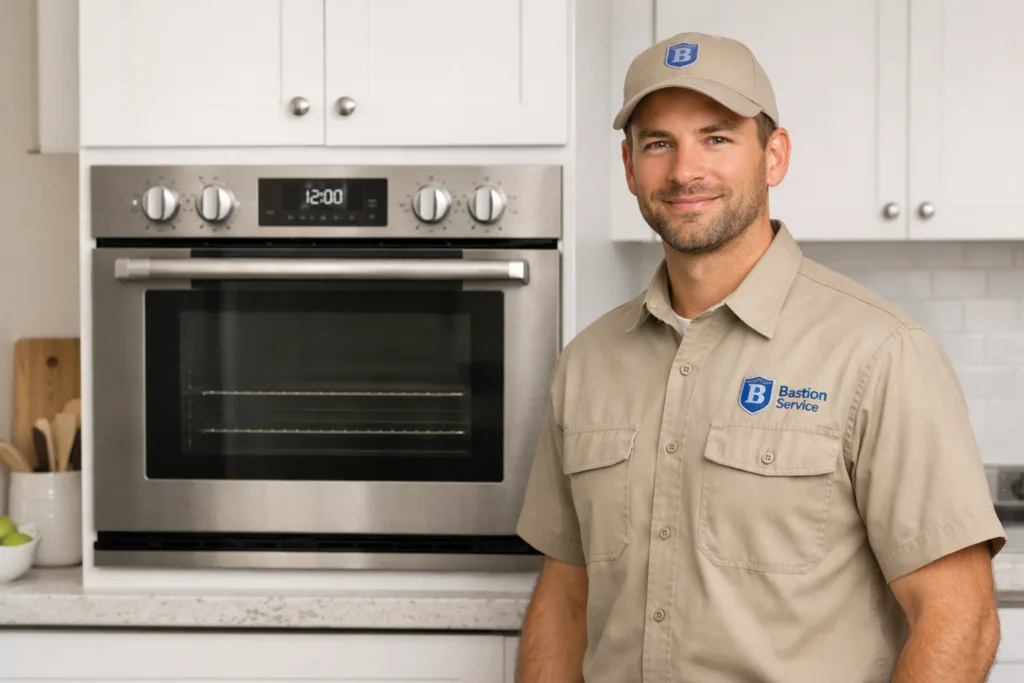
Cooking problems usually show up first in the food: longer bake times, pale bottoms, scorched edges, or a preheat cycle that seems to drag on forever. Those clues matter because the same oven can fail in different ways depending on whether the issue is with heat production, temperature sensing, airflow, door sealing, or the electronic controls that manage the cycle.
Common oven symptoms and what they often point to
A no-heat oven is one of the clearest signs that service is needed. In an electric unit, the cause may be a failed bake element, damaged wiring, a bad relay, or a control problem. In a gas oven, a weak igniter is a common reason the burner will not light properly or takes too long to open the gas valve. If the cavity eventually heats but does so slowly, the oven may be operating on only part of its heating system.
Uneven baking can be more subtle but just as frustrating. Cookies may brown on one side, casseroles may stay cool in the center, or familiar recipes may suddenly need extra time. That can happen when the temperature sensor is inaccurate, the convection fan is not circulating air correctly, the door gasket is leaking heat, or one heating component is cycling inconsistently.
Some temperature complaints are really control complaints. An oven that beeps, flashes an error code, resets itself, or ignores keypad input may have an electronic control fault rather than a simple heating-part failure. When broil works but bake does not, or when preheat starts and then stalls, that difference helps narrow the diagnosis.
When the problem may not be the oven alone
It helps to separate oven-cavity issues from surface-cooking issues. If meals are delayed because the top burners are the main problem and the oven symptoms are minor by comparison, Cooktop Repair in Sawtelle may be the better place to start for a faster match to the appliance you use most.
Combination appliances can blur the line between one repair category and another. If burner performance and oven temperature are both acting up on the same freestanding unit, Range Repair in Sawtelle may be more relevant because the fault may involve a shared control, power supply, or gas distribution issue.
Some households describe the entire appliance as a stove when the complaint includes oven heat, ignition, and day-to-day cooking performance together. In that case, Stove Repair in Sawtelle may be the better service path when the symptoms affect more than the oven cavity by itself.
Signs it is time to schedule service
An oven should be checked promptly if it trips breakers, gives off a hot electrical smell, clicks repeatedly without heating, or stops mid-cycle. Continued use can turn an isolated failure into wiring damage, a ruined control board, or a larger safety concern. The same is true when the door will not close properly, the gasket is torn, or the hinges no longer support a tight seal.
Temperature drift is another reason not to wait. An oven that runs too cool can leave food undercooked, while one that overshoots the set temperature can burn meals and make baking unreliable. In Sawtelle homes where the appliance is used regularly, that inconsistency tends to become more noticeable long before the oven fails completely.
Built-in layouts deserve special attention as well. If the appliance is installed in cabinetry as a separate cooking unit rather than part of a freestanding setup, Wall Oven Repair in Sawtelle may be the more accurate fit for the way the equipment is configured in your kitchen.
Repair or replacement?
Many oven problems are worth repairing when the appliance is otherwise in solid condition. Igniters, heating elements, sensors, door parts, and some control-related components are often replaceable without turning the job into a full appliance replacement decision. A repair usually makes sense when the oven has been dependable, the fault is clearly identified, and the rest of the unit is in good shape.
Replacement becomes more likely when there are several major issues at once, repeated electrical failures, severe internal wear, or parts that are no longer practical to source. The age of the oven matters, but the actual condition matters more. A well-kept unit with one failed component can be a far better repair candidate than a newer oven with recurring control and wiring problems.
What to note before the appointment
A few details can make diagnosis faster. Pay attention to whether the problem happens during preheat, only in bake mode, only in broil mode, or only after the oven has been running for a while. If the display shows an error code, write it down exactly. If food is baking unevenly, note whether the top, bottom, front, or back is affected most.
It also helps to mention whether the oven recently lost power, had a breaker trip, or began acting up after self-cleaning. Those patterns can point to specific failures in sensors, thermostatic control, door-lock systems, or electronic boards. For gas ovens, stop using the appliance if there is a persistent gas smell. For electric units, leave it off if you notice sparking, smoke, or visible wire damage.
Why diagnosis matters for everyday cooking
A good service visit should do more than name a part. It should explain why the symptom is happening, whether the failure is isolated, and whether continued use is likely to damage other components. That is especially important with intermittent heat problems, because they often look minor until the oven stops working altogether.
For households in Sawtelle, the goal is simple: restore predictable cooking without guessing at parts. When the problem is identified correctly, the repair path is easier to understand and the oven is much more likely to return to reliable daily use.