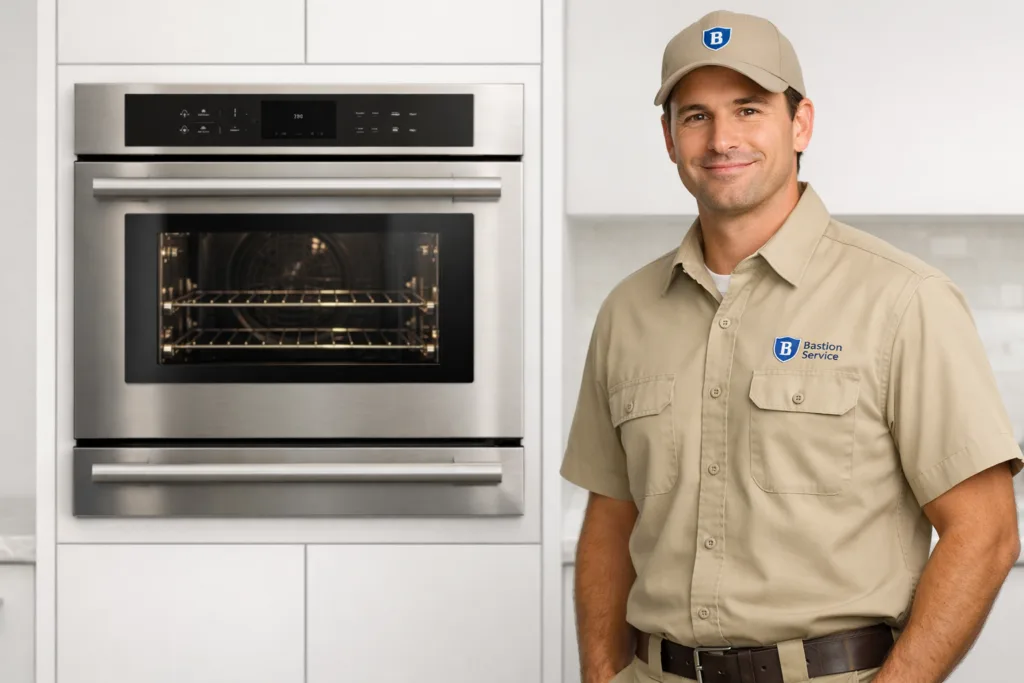
Built-in wall ovens usually give warning signs before they fail completely. A longer preheat time, uneven browning, a temperature that drifts during baking, or a control panel that behaves inconsistently can all point to a specific electrical or mechanical problem. With Monogram models, the most useful first step is to match the symptom pattern to the likely system involved rather than assuming one failed part is always to blame.
Related Monogram and wall oven service paths in Century City include Monogram Appliance Repair in Century City, Wall Oven Repair in Century City, and Monogram Refrigerator Repair in Century City.
Common Monogram wall oven issues homeowners notice
Heating complaints are among the most common. If the oven will not heat, heats only partway, or seems to take far too long to reach the selected temperature, the cause may involve the bake circuit, broil circuit, temperature sensor, relay, control board, or a power-related issue. Similar cooking results can come from very different failures, which is why testing matters.
Another frequent complaint is inconsistent baking. Food may brown heavily on the top rack, stay pale on the lower rack, or finish unevenly from side to side. In some cases the oven is running cooler than the display suggests. In others, it is overshooting and cycling incorrectly. What looks like a simple temperature issue can actually be tied to sensor feedback, element performance, or control response.
Some units also develop display and keypad problems. Error codes, random beeping, partial display loss, failure to accept commands, or a control that resets during use can indicate faults in the control system, communication path, door-latch circuit, or temperature-monitoring components.
What specific symptom patterns can mean
Oven not heating at all
If the cavity light works but the oven does not produce heat, the problem may be isolated to the heating system or electronic control. If the entire unit appears dead, incoming power, breaker status, wiring connections, thermal protection components, and the main control path should all be checked. On a built-in appliance, it is especially important to confirm the actual failure before replacing major parts.
Slow preheat
A slow preheat often suggests that one heating function is weak or not operating as expected. The oven may eventually get hot enough for lighter use but struggle to recover temperature once the door is opened or during longer cooking cycles. That can lead to undercooked centers, longer bake times, and inconsistent results from meal to meal.
Temperature swings and uneven baking
If recipes that normally work well suddenly become unreliable, the oven may not be cycling correctly. A drifting sensor reading, intermittent element operation, or a control issue can cause the temperature to swing higher or lower than intended. Homeowners often notice this first with baking because cookies, casseroles, and roasts start finishing unevenly or at the wrong pace.
Error codes or control problems
Error codes are helpful clues, but they are not complete diagnoses by themselves. They usually point to a system that needs further testing, such as temperature sensing, door lock operation, or electronic communication. A flashing display, unresponsive buttons, or shutdowns during cooking can also indicate a problem that is intermittent rather than fully failed.
Door lock or self-clean related issues
If the door will not lock, will not unlock, or seems misaligned after a self-clean cycle, the issue may involve the latch mechanism, switch, thermostat, fuse, or control. Self-clean cycles create very high heat, and that stress can expose weakened components. Forcing the door or repeatedly restarting the oven can sometimes make the repair more involved.
Signs the oven should not be used until it is checked
Some issues are more than an inconvenience. It is best to stop using the oven if you notice:
- A burning or overheated wiring smell
- Repeated breaker trips
- A door that will not close or latch properly
- Unpredictable shutdowns during a cooking cycle
- Error codes that return immediately after clearing
- Visible sparking, arcing, or signs of heat damage
These symptoms can point to conditions that may worsen with continued use. In a built-in unit, delaying service can also increase the chance of damage spreading to other components.
When repair makes sense
Repair is often worthwhile when the problem is limited to a specific serviceable part and the oven otherwise fits the kitchen well. That is especially true with built-in Monogram wall ovens, where cabinet fit, trim alignment, and electrical setup all matter. Replacing the appliance may involve more than simply swapping one unit for another.
Repair tends to be the better path when the issue is isolated, the oven has been performing well up to the recent failure, and the expected repair cost is reasonable compared with replacement. Replacement becomes a more serious consideration when there are multiple major failures, ongoing electronic issues, or a history of repeat repairs that suggest the appliance is becoming unreliable overall.
Why built-in wall oven diagnosis matters
Wall ovens are less forgiving than freestanding appliances because access, ventilation, and installation details can affect both troubleshooting and repair planning. A symptom such as “not heating” may sound simple, but the actual cause can range from a failed heating component to a control problem, a power supply issue, or a heat-related safety device opening the circuit.
That is why homeowners in Century City usually benefit from a service approach that starts with symptom-based testing. It helps determine whether the problem is isolated, whether continued use is safe, and whether the likely repair path is sensible for the condition of the appliance.
What to note before scheduling service
A few observations can make the visit more productive. Try to note:
- Whether the oven fails in bake, broil, or both
- If the display shows an error code
- Whether the issue started suddenly or gradually
- If problems appeared after a self-clean cycle
- Whether the breaker has tripped or power has been intermittent
- How cooking results have changed, such as burning tops or undercooked centers
Details like these often help narrow the fault more quickly and make it easier to judge whether repair is practical.
Monogram wall oven repair in Century City
For homeowners in Century City, the goal is usually straightforward: get the oven back to reliable performance without guessing at parts or rushing into replacement. When the symptom is properly identified, it is much easier to decide whether the issue is minor, whether use should stop for safety, and whether repair is the right investment for the kitchen as it is now.