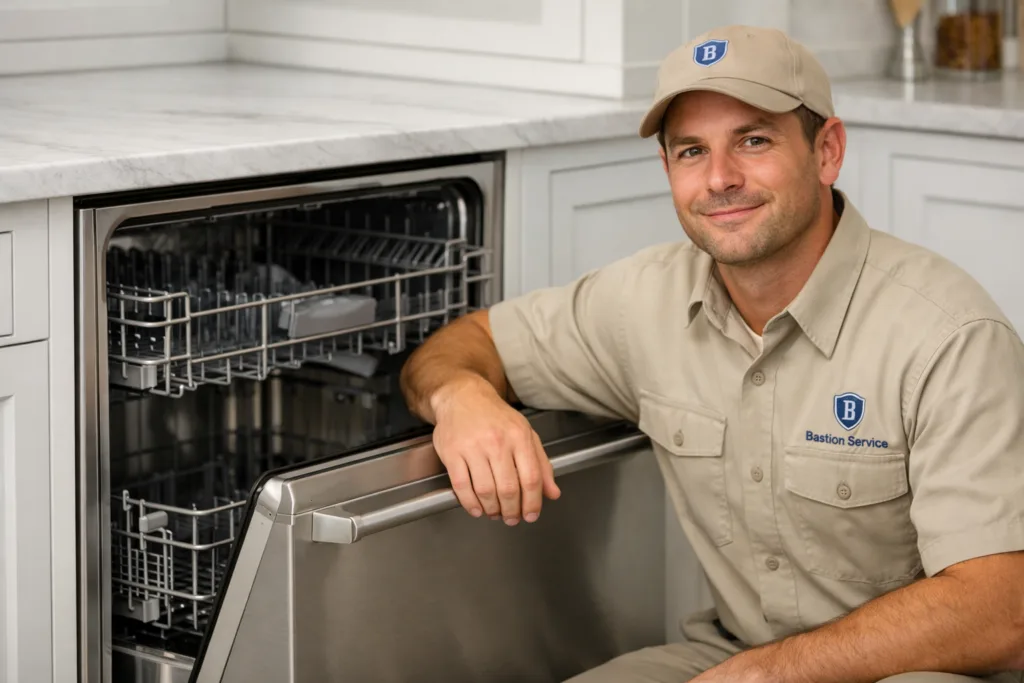
Common Monogram dishwasher problems in Century City homes

Monogram dishwashers usually give warning signs before they stop working completely. Dishes may come out cloudy or still dirty, the tub may hold water after the cycle ends, or the machine may begin pausing, beeping, or failing to finish a normal wash. Those symptoms can look simple from the outside, but the cause may involve water fill, circulation, heating, draining, sensors, or the control system.
Related Monogram and dishwasher service paths in Century City include Monogram Appliance Repair in Century City, Dishwasher Repair in Century City, and Monogram Refrigerator Repair in Century City.
A dishwasher that will not start at all may be dealing with a door latch issue, a control or interface fault, or an electrical interruption. If it starts but cleans poorly, the problem is often tied to blocked spray arms, weak wash pressure, low water level, detergent dispenser failure, or a filter area that needs inspection. When the cycle stops partway through, possible causes include overheating, pump strain, sensor problems, or control trouble.
Drain complaints are also frequent in residential kitchens. Standing water in the bottom of the tub can point to a restricted drain path, a failing drain pump, a kinked hose, or a connection problem at the household drain side. Leaks around a built-in Monogram dishwasher should be checked quickly, since even a slow drip can affect nearby flooring, toe-kick areas, and cabinet materials over time.
Noise, odor, and poor drying symptoms
Unusual sounds often help narrow down the problem. Grinding can mean debris has reached the pump area. A humming sound without strong wash action may suggest a circulation problem. Clicking, repeated attempts to start, or beeping that interrupts the cycle can point toward latch, control, or sensor issues.
Odors usually come from water that is not draining fully, food debris trapped in filters or spray components, or a cycle that is ending before it should. Poor drying performance can be related to low rinse temperature, heating problems, rinse aid issues, or a cycle interruption that prevents the machine from reaching the final drying phase.
How symptom patterns help identify the cause
One of the most useful ways to evaluate a dishwasher problem is to look at exactly when the symptom appears. If the machine fills and then goes quiet, the issue may be different from a unit that washes normally but leaves water behind at the end. If dishes on the top rack stay dirty while the lower rack looks better, that can suggest circulation or spray arm performance problems instead of a total system failure.
- Not starting: latch, user interface, control response, or power supply concerns
- Dirty dishes: weak circulation, clogged spray arms, low fill, detergent release, or filter buildup
- Standing water: drain blockage, pump failure, hose restriction, or drain connection trouble
- Leaks: gasket wear, door alignment, overfilling, cracked components, or loose internal connections
- Low rinse temperature or poor drying: heating-related faults, cycle interruption, or sensor issues
- Stops mid-cycle: overheating, motor strain, control failure, or sensor feedback problems
That symptom-based approach is important because replacing a visible part without testing the underlying cause can leave the real problem unresolved.
When continued use can make the repair worse
Some dishwasher issues are mostly inconvenient, while others can lead to added damage if the unit keeps running. A machine that leaves a few spots on dishes is different from one that is leaking, failing to drain, or giving off a hot or burning smell. Repeated use under those conditions can increase wear on pumps and controls, and water around the dishwasher can affect the surrounding kitchen area.
It is usually best to stop using the dishwasher and arrange service if you notice any of the following:
- Water leaking onto the floor or collecting under the door
- Standing water that remains after every cycle
- A burning odor or signs of overheating
- Repeated error behavior or cycle shutdowns
- Loud grinding, buzzing, or humming that is new
- Power interruptions, tripped breakers, or a unit that will not respond consistently
Intermittent problems are worth attention too. A dishwasher that works one day and fails the next often has an early-stage control, latch, or pump issue that is easier to address before total failure.
Repair versus replacement for a Monogram dishwasher
Repair is often the sensible option when the problem is isolated to a drain component, wash pump issue, heating-related part, latch assembly, or control-related failure and the rest of the dishwasher is still in good overall condition. Many performance complaints come from one failed component rather than a machine that has reached the end of its useful life.
Replacement becomes more likely when there are multiple major problems at once, recurring leaks, significant interior wear, repeated service history, or repair costs that no longer match the condition of the appliance. Age matters, but age alone does not make replacement the right answer. A well-kept Monogram dishwasher can still be worth repairing if the fault is specific and the rest of the unit remains sound.
For homeowners in Century City, the best decision usually comes after the appliance is inspected in person and the symptom pattern is matched to the actual failed system. That keeps the choice grounded in condition, repair scope, and expected reliability rather than guesswork.
What a service visit should evaluate
A thorough dishwasher service visit should focus on what the machine is doing in your kitchen, not just on a general complaint. If the issue is poor cleaning, the inspection should look at water fill, spray action, filters, detergent release, and heating performance. If the concern is no drain, the drain path, pump operation, hose condition, and connection points should be checked. Leak complaints should include seals, alignment, fill behavior, and internal water routing.
For cycle failures, testing usually needs to go beyond the obvious symptom. Controls, sensors, pump response, temperature behavior, and door switch function may all need review. That is especially true with Monogram models that appear to start normally but then stall, reset, or end the cycle before washing and rinsing are completed correctly.
Practical steps homeowners can take before service
There are a few simple checks that can help you describe the problem more accurately. Look for whether the dishwasher is filling with water, whether the spray action sounds strong or weak, and whether standing water is present only sometimes or after every run. Notice if the issue happens on all cycles or only certain settings. If the dishes are not drying, check whether the problem is new or has been developing gradually.
You can also look for obvious food buildup in the filter area and make sure nothing is blocking the spray arms from turning freely. If there is active leaking, a persistent electrical smell, or repeated shutoffs, it is better to avoid further test runs and have the unit checked instead of forcing additional cycles.
Why timely repair matters in a built-in kitchen layout
In many Century City homes, the dishwasher is integrated closely with surrounding cabinetry and flooring, so even a modest leak or drain overflow can become more than an appliance issue. Moisture can spread slowly and remain unnoticed until damage around the opening or under the machine becomes more expensive than the original repair. Prompt attention is also helpful when a drain or circulation problem is putting extra strain on the motor and pump system.
Addressing a dishwasher problem early often preserves more repair options. It may also prevent the inconvenience of losing the appliance completely just as a manageable symptom turns into a no-start or no-drain condition.