




Premium kitchen appliances tend to give warning signs before they fail completely, and those signs are often more useful than the appliance category alone. A Monogram refrigerator that runs constantly, a dishwasher that leaves water in the tub, or an oven that drifts off temperature may each have several possible causes. Looking closely at the symptom pattern helps narrow the issue and helps homeowners decide whether the appliance can continue to be used safely while repair is arranged.
For specific Monogram appliance paths in Beverly Hills, review Monogram Refrigerator Repair in Beverly Hills, Monogram Freezer Repair in Beverly Hills, and Monogram Wine Cooler Repair in Beverly Hills.
Start with the symptom you can actually observe
Homeowners usually notice performance changes before they see a specific fault. The most helpful details are often simple ones: whether the problem is constant or intermittent, whether it began suddenly or worsened over time, and whether it affects the whole appliance or just one function. Those observations can point in very different directions.
- Temperature problems: warming food compartments, over-freezing, uneven baking, or burners that will not heat properly
- Water-related issues: leaks, standing water, blocked drainage, or condensation where it does not normally appear
- Noise changes: new buzzing, clicking, grinding, rattling, or unusually loud cycling
- Control problems: unresponsive touch panels, flashing displays, fault codes, or cycles that stop midway
- Ignition and heating symptoms: repeated clicking, delayed ignition, weak flame, slow preheat, or inconsistent cooking results
When those details are noted early, it becomes easier to tell whether the problem is likely a worn part, a sensor or control issue, an airflow restriction, or a more serious system fault.
Cooling issues in Monogram refrigerators, freezers, and wine coolers
Cooling appliances often show problems gradually. A fresh food section may feel only slightly warm at first, a freezer may start building more frost than usual, or a wine cooler may drift outside its set range. These symptoms may be related to airflow, door seal wear, fan problems, defrost trouble, drain issues, sensors, or electronic controls.
Common refrigerator and freezer warning signs
If milk spoils early, frozen food softens, or one compartment feels normal while another does not, the issue may not be the same as a unit that is completely warm. Uneven temperatures can indicate air circulation trouble or a defrost problem rather than total system failure. Water under the unit can sometimes come from a blocked drain path, while constant running may suggest the appliance is struggling to maintain temperature.
It is smart to act quickly when cooling performance drops because continued use can put more strain on key components. In a Beverly Hills home, built-in Monogram refrigeration is often integrated into surrounding cabinetry, so leaks, poor ventilation, or excess heat are worth addressing before they create a larger problem around the appliance.
When a wine cooler is not holding a stable range
Wine coolers are especially sensitive to temperature fluctuation. If bottles feel warmer than expected, interior cooling cycles seem unusually frequent, or moisture starts building inside, the concern may involve the thermostat, airflow, door sealing, or a control-related issue. Because these units are expected to maintain a narrower temperature band, even small changes in performance are worth paying attention to.
Dishwasher symptoms that should not be guessed at
Dishwasher complaints often sound similar even when the underlying cause is different. Dishes that come out dirty, cloudy, or still wet may point to circulation, heating, loading, spray arm, sensor, or drain-related issues. A machine that stops mid-cycle or shows no response at the controls may involve the latch, power supply, user interface, or control board.
Signs the problem may be more urgent
If the dishwasher is leaking onto the floor, holding dirty water in the bottom, or tripping power during operation, it is best to stop using it until the cause is identified. Even a slow leak can affect flooring, toe-kick areas, or adjacent cabinet surfaces over time. A standing-water complaint may be as simple as a drainage obstruction, but it can also involve the pump or related controls.
When cleaning performance has declined over several weeks without an obvious leak, homeowners sometimes assume detergent is the issue. Sometimes it is, but sometimes the machine is no longer circulating or heating properly. That is why symptom-based diagnosis matters more than replacing parts by trial and error.
Cooktop and range problems often show up as ignition or heating inconsistency
Monogram cooktops and ranges can develop problems that affect only one burner or the entire appliance. That difference matters. A single burner that clicks repeatedly may suggest a localized ignition issue, while multiple burners acting unpredictably can point to a broader control or electrical problem.
Gas burner symptoms
Repeated clicking, delayed lighting, uneven flame, or a burner that lights only occasionally should be taken seriously. Moisture, residue around ignition points, worn ignition components, or burner assembly problems can all affect performance. If there is a strong or persistent gas smell, stop using the appliance and treat it as a safety issue first.
Electric heating symptoms
On electric models, weak heat, overheating, hot spots, or elements that do not cycle correctly can make cooking inconsistent even when the appliance still powers on. If one area behaves differently from the others, the fault may be limited. If the full range is showing erratic behavior, controls or power-related components may be involved.
Oven and wall oven issues can look the same from the outside
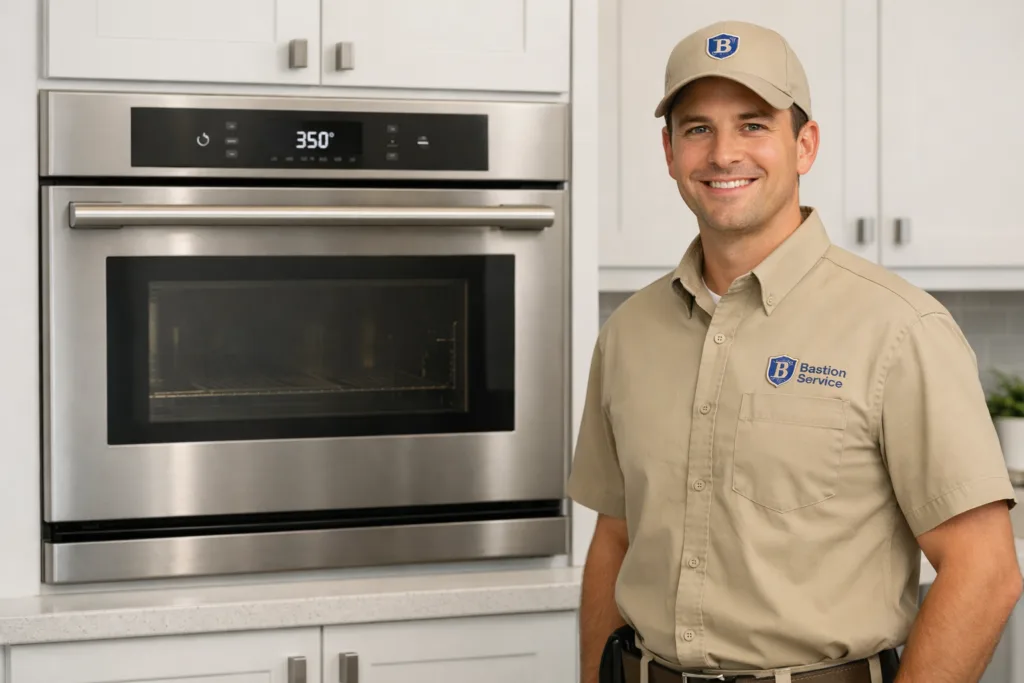
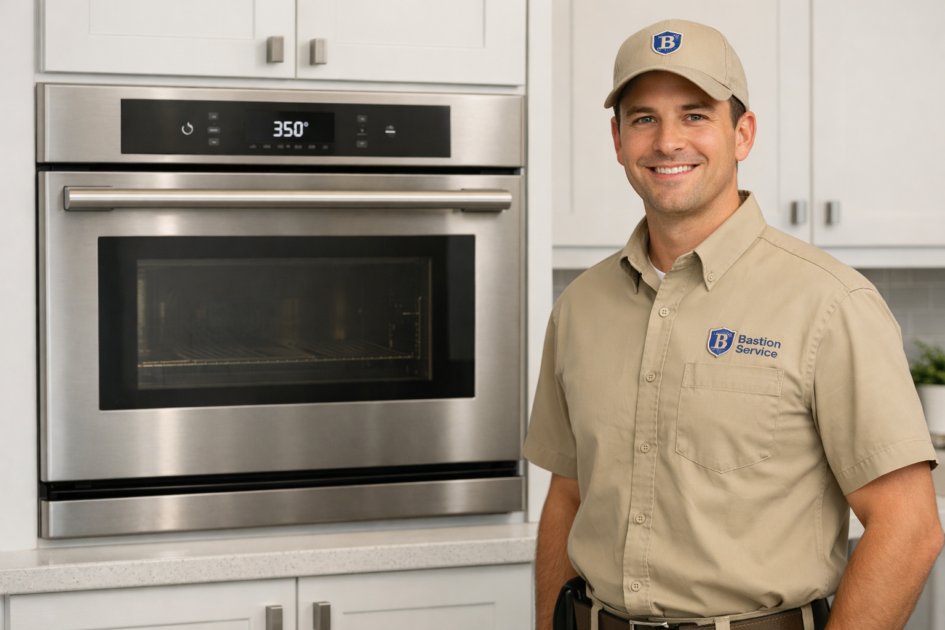
Many oven complaints are described as “not heating right,” but that phrase can cover several different faults. Slow preheating, inaccurate temperatures, uneven browning, and food that finishes too early or too late are not always caused by the same component. Heating elements, temperature sensors, convection systems, door seals, and controls can each affect cooking results.
What uneven cooking may be telling you
If the top of a dish browns too fast while the center stays undercooked, or if baking results vary from one rack position to another more than usual, the appliance may not be distributing heat properly. If preheat takes much longer than normal, a weakened heating component or sensor issue may be part of the problem. Fault codes, blank displays, or controls that stop responding can indicate an electronic issue instead of a heating-only failure.
Wall ovens deserve prompt attention when they cannot maintain temperature, shut off unexpectedly, or become unreliable during normal cooking. For households that use the oven daily, intermittent failure often becomes more disruptive than a complete breakdown because it is harder to predict.
How to think about repair versus replacement
Not every Monogram problem points in the same direction. Repair often makes sense when the appliance is otherwise in good condition and the issue appears limited to a serviceable part or subsystem. Replacement becomes more relevant when there are multiple overlapping failures, repeated breakdowns, or a major cooling-system problem combined with age-related wear.
For many Beverly Hills homeowners, appearance and fit matter just as much as function. Built-in refrigeration, coordinated cooking appliances, and panel-matched installations are often not simple swap-outs. That makes it especially useful to understand whether the current issue is isolated or part of broader decline before making a larger decision.
When continued use can cause more damage
Some appliance problems are inconvenient but temporarily manageable. Others can become more expensive if ignored.
- A refrigerator that is no longer holding temperature can lead to food loss and overwork the cooling system.
- A freezer with heavy frost buildup may lose airflow and cool less effectively over time.
- A dishwasher leak can affect floors, trim, or nearby cabinetry.
- A range or cooktop with recurring ignition issues may become unsafe to use normally.
- An oven with erratic temperature control can ruin meals and put extra stress on heating components.
As a general rule, leaking, repeated power interruption, strong odor, loss of temperature control, or persistent ignition trouble are all signs that the appliance should not be treated as normal until it has been checked.
What to note before scheduling service
A few observations can make the next step more productive. Try to note:
- whether the issue affects one section, one burner, or the whole appliance
- whether the problem is constant or comes and goes
- any new sounds, smells, or visible leaks
- whether an error code appears on the display
- whether the issue started after a power interruption, self-clean cycle, or recent change in performance
Even small details help. Water appearing only at the end of a dishwasher cycle, a refrigerator noise that starts after the door closes, or an oven that struggles only at higher temperatures can all help separate one likely cause from another.
A practical next step for Monogram owners in Beverly Hills
When a Monogram appliance stops performing the way it should, the best next move is usually to evaluate the actual symptom pattern rather than assume the fix. That approach helps homeowners make better decisions about timing, safety, and whether repair is likely to be worthwhile. For refrigerator, freezer, wine cooler, dishwasher, cooktop, oven, wall oven, and range concerns, early attention usually gives you the widest range of workable options.


