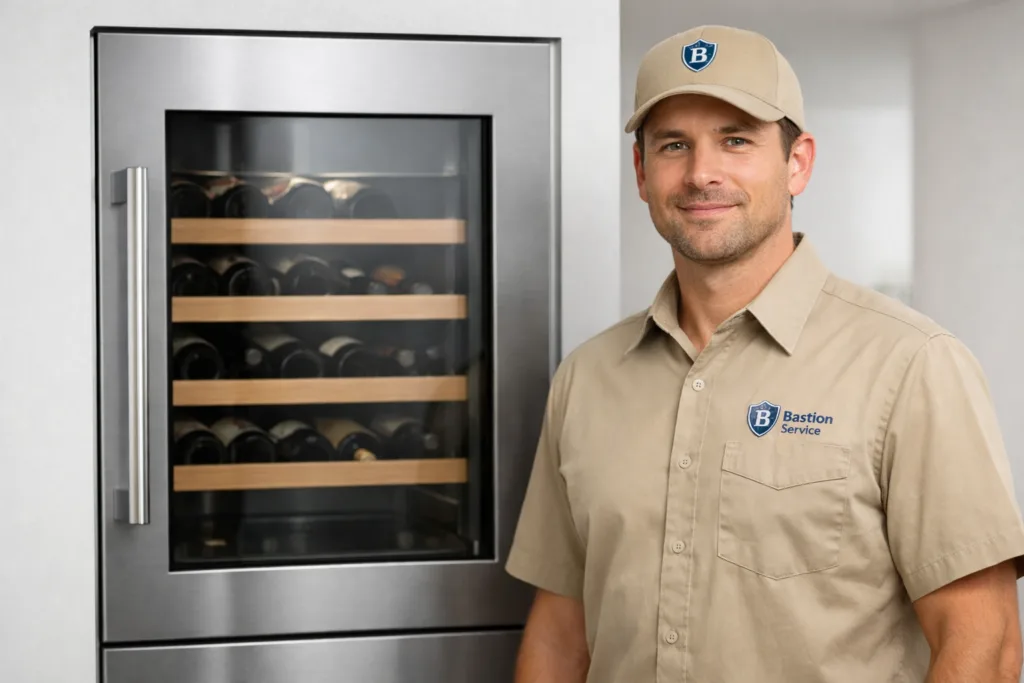
Temperature stability is what makes a wine cooler useful, so even a small change in performance deserves attention. If your Miele unit starts running warm, cycles longer than usual, develops moisture around the door, or makes a new noise, the underlying cause may be very different from what the symptom suggests. In Century City homes, the most helpful approach is to look at cooling performance, airflow, door sealing, controls, and electrical response together before deciding on the repair path.
Related Miele and wine cooler service paths in Century City include Miele Appliance Repair in Century City, Wine Cooler Repair in Century City, and Miele Refrigerator Repair in Century City.
Common Miele wine cooler problems in Century City homes
Miele wine coolers are designed to hold consistent storage conditions, and small faults can interrupt that balance before the appliance fully stops working. A unit may still power on, light up, and respond to settings while no longer maintaining the temperature your bottles need. That is why symptom patterns matter.
Not cooling enough
If bottles feel warmer than expected or the cabinet never seems to reach the set temperature, several issues may be possible. Common causes include weak airflow, evaporator fan trouble, sensor problems, control faults, dirty or restricted ventilation in applicable installations, or a more serious sealed-system issue. A display that appears normal does not always mean the cooling system is actually performing correctly.
Signs this problem needs prompt service include:
- The displayed temperature does not match the actual cabinet feel
- One section cools better than another
- The unit runs for long periods without stabilizing
- Bottles remain only mildly cool instead of properly stored
Temperature swings or uneven cooling
Fluctuating temperature is often more concerning than a simple warm cabinet because it can point to inconsistent sensing, airflow disruption, or intermittent electrical behavior. In dual-zone models, one zone may appear stable while the other drifts. In single-zone units, the cabinet may cool, then warm, then cool again without any change in settings.
This kind of pattern can be caused by a failing fan, a sensor reading incorrectly, a control issue, or a door seal problem that lets warm air enter in small but repeated cycles. If the wine cooler seems unpredictable rather than fully broken, that usually means it should be checked before the issue progresses.
Condensation, interior moisture, or water near the door
Moisture buildup often points to warm air entering the cabinet. That can happen because of a worn gasket, poor door alignment, an obstruction preventing full closure, or a cooling issue that keeps surfaces from staying at the right temperature. Some humidity can appear with frequent opening, but persistent condensation is usually a sign that the unit is no longer operating as intended.
Watch for symptoms such as:
- Water droplets along the gasket or glass
- Moisture collecting on shelves
- A damp smell inside the cabinet
- Condensation returning shortly after it is wiped away
Ignoring this can lead to extra run time, odor, and stress on components that are working harder to compensate.
Loud operation, buzzing, rattling, or constant running
Wine coolers are not silent, but a noticeable change in sound is important. A buzzing or rattling noise may come from a fan, vibration issue, mounting problem, or compressor-related condition. If the appliance seems to run almost nonstop, it may be struggling to maintain temperature because of warm air intrusion, airflow restriction, or declining cooling performance.
What matters most is whether the sound or run pattern has changed. A new noise combined with poor cooling or moisture usually points to a problem that should not be left alone.
Control panel, display, or lighting issues
A blank display, unresponsive buttons, flashing indicators, or a light that no longer works may seem minor at first, but these issues can overlap with temperature regulation problems. Some control faults affect the way the unit reads cabinet conditions or responds to user settings. If the display is inaccurate or the controls behave inconsistently, the cooler should not be trusted to maintain proper storage conditions without inspection.
What technicians usually check first
Because similar symptoms can come from different failures, diagnosis usually starts with the basics that most directly affect storage performance. That often includes verifying actual cabinet temperature, checking airflow, confirming that the door closes and seals properly, evaluating fan operation, and reviewing how the controls respond during a cooling cycle.
For a Miele wine cooler, this step matters because replacing parts based on guesswork can waste time and money. A warm cabinet does not automatically mean compressor failure, and condensation does not automatically mean the unit is beyond repair. The right fix depends on which system is actually failing.
When to stop relying on the wine cooler
If the cabinet is clearly warming, bottles feel too warm to the touch, heavy condensation keeps returning, or the appliance starts making persistent unusual noises, it is wise to reduce use until the problem is identified. Continued operation can sometimes turn a smaller issue into a larger one.
Examples include:
- A bad door seal causing excessive run time
- A fan problem reducing airflow and increasing strain on the cooling system
- An electrical fault creating erratic cycling or control behavior
- A developing cooling-system issue worsening under constant operation
If the symptom is intermittent, that is still worth scheduling. Intermittent faults are often easier to address before they become a complete no-cool failure.
Repair or replacement: what usually makes sense
Replacement is not always necessary when a Miele wine cooler develops a problem. Many faults are repairable, especially when they involve fans, sensors, switches, controls, lighting components, or sealing parts. Repair tends to make more sense when the cabinet and core appliance are otherwise in good condition and the issue has been caught before repeated strain creates additional failures.
Replacement becomes a more serious consideration when there is a major sealed-system problem, a long history of repeat breakdowns, or repair cost that no longer fits the age and condition of the unit. In most cases, homeowners benefit from a practical repair plan based on the exact fault rather than assuming the appliance needs to be replaced.
How to recognize a symptom pattern worth scheduling
It is a good time to arrange service if you notice one or more of the following:
- The cooler no longer holds a steady set temperature
- The cabinet feels warm even though the display looks normal
- The appliance runs far longer than it used to
- Moisture or condensation keeps appearing around the door or inside the cabinet
- The display, controls, or interior light behave inconsistently
- A new buzzing, clicking, rattling, or fan-like noise develops
These signs are especially important in Century City households that use a wine cooler for long-term storage, because small shifts in performance can matter well before the appliance completely stops working.
Focused help for Miele wine cooler issues in Century City
Wine cooler problems are rarely just a convenience issue. They affect storage conditions, confidence in the appliance, and whether the unit can still do the job it was installed to do. For homeowners in Century City, the best next step is usually to identify whether the problem involves temperature sensing, airflow, door sealing, controls, or the cooling system itself, then choose repair based on the actual condition of the appliance. That gives you a realistic way to decide whether to repair now, limit use temporarily, or start planning for replacement.