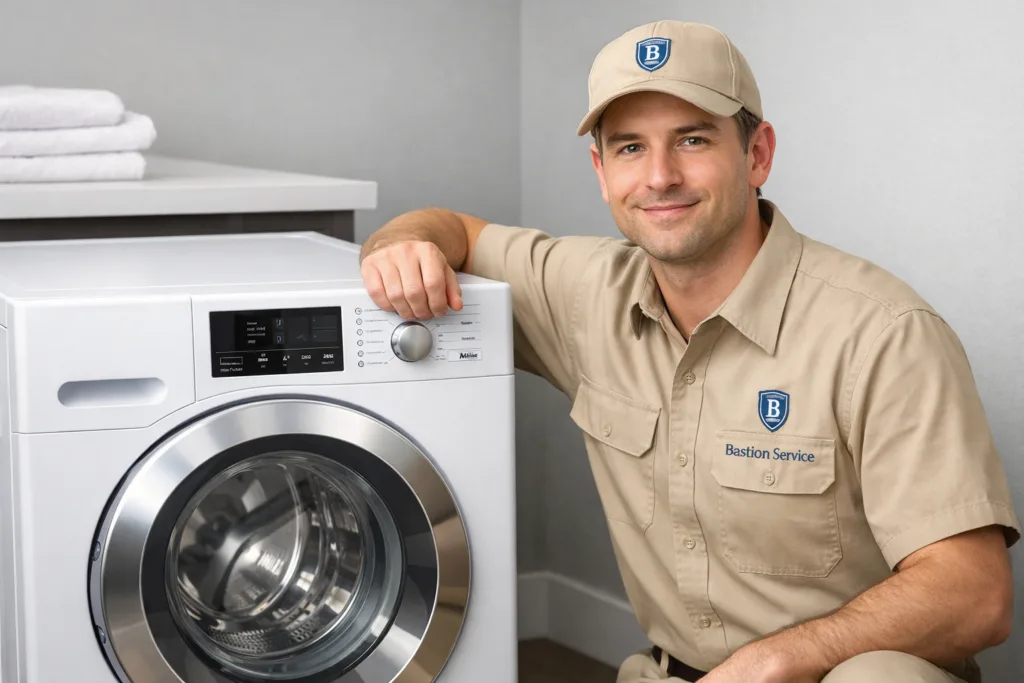
Focused Miele washer diagnosis for Century City homes

Miele washers are engineered with tightly integrated controls, so one symptom can have several possible causes. A machine that will not spin may actually be responding to a drain problem, a door lock fault, a balance issue, or a control interruption. A washer that powers on but never starts may point to water intake trouble, latch failure, or an electronic communication problem. The most useful first step is matching the symptom pattern to the system involved.
Related Miele and washer service paths in Century City include Miele Appliance Repair in Century City, Washer Repair in Century City, and Miele Refrigerator Repair in Century City.
In many Century City households, laundry problems become disruptive quickly. When clothes stay soaked, cycles stop halfway through, or water appears on the floor, it helps to identify whether the issue is isolated to one component or part of a broader wear pattern. That makes it easier to decide whether repair is the right next move.
Common Miele washer symptoms and what they may indicate
Washer not draining or leaving water in the drum
If the drum still has water at the end of the cycle, the washer drains slowly, or spin never fully starts, common possibilities include a blocked filter, restricted drain hose, weak drain pump, or a control-related interruption. On many Miele units, draining must complete properly before high-speed spin is allowed, so a drain fault often shows up as a spin complaint.
- Water remains after the cycle ends
- The machine pauses for long periods before stopping
- Clothes come out unusually wet
- You hear pump noise without effective draining
Repeatedly running new cycles without addressing standing water can put additional strain on the pump system.
Washer not spinning properly
A washer that tumbles normally but never reaches full spin speed may be reacting to an unbalanced load, oversudsing, drainage trouble, worn support parts, or a motor and control issue. If heavy items consistently come out wetter than expected, that usually suggests more than a one-time load problem.
Spin complaints are especially important when they appear together with vibration, pauses, or incomplete draining, because those combinations often narrow the fault to a smaller group of causes.
Door locked, door not locking, or cycle will not start
When the door stays locked after a wash, fails to latch, or prevents the cycle from beginning, the issue may involve the latch assembly, lock switch, wiring, or main control response. These problems can begin intermittently. A washer may start after several attempts for a while, then stop starting altogether.
If the machine contains water and the door will not release, avoid forcing it open. That can create a second repair on top of the original problem.
Leaking during fill, wash, or drain
Leaks can come from the inlet side, the door boot area, internal hoses, pump connections, excess detergent suds, or a drainage restriction that pushes water where it should not go. The point in the cycle when the leak appears matters.
- Leak at the beginning: often related to fill hoses, inlet valves, or detergent drawer overflow
- Leak during wash: may involve the door boot, internal hose problems, or excessive sudsing
- Leak during drain or spin: may point to the pump area, drain path, or movement-related stress
Any active leak is a good reason to stop using the washer until the source is identified.
Unusual noise, vibration, or movement
Grinding, rattling, banging, or stronger-than-normal vibration can indicate foreign objects in the pump path, worn support components, drum movement issues, or leveling problems. A Miele washer that has become noticeably louder than usual should not be ignored, particularly if the noise appears during spin or is accompanied by poor water removal.
Sharp changes in sound are often more meaningful than minor background noise. If the washer recently became unstable or started thumping on routine loads, the machine should be checked before repeated use increases wear.
Error codes or interrupted cycles
Error codes are helpful, but they do not automatically identify the failed part. In most cases, they point toward a system such as intake, drain, lock, heating, or motor control. Proper repair depends on confirming why that system failed rather than replacing parts based on the code alone.
Poor wash results or detergent not rinsing out well
If clothes come out dull, residue remains on fabrics, or detergent is not rinsing away cleanly, the washer may have an issue with water intake, heating, load sensing, drainage, or cycle progression. Poor wash performance is not always a detergent problem. When it appears together with long cycle times or repeated interruptions, the machine may not be moving through its programmed steps correctly.
Washer fills slowly, overfills, or does not fill
Fill-related problems can be tied to inlet screens, water valve issues, pressure sensing problems, or control faults. A washer that hums but never fills is different from one that fills too slowly, and both are different from a machine that takes in too much water. These distinctions matter when deciding which system needs testing.
Water not heating or cycles taking too long
If a Miele washer is not heating water properly, cycles may run longer than expected, cleaning performance may drop, and certain programs may fail to complete as intended. Possible causes can include the heating circuit, sensor issues, or control problems. When heating faults occur alongside error messages or repeated mid-cycle pauses, the pattern usually provides a stronger clue than any one symptom by itself.
When to stop using the washer and schedule service
It makes sense to stop running loads and schedule service when the washer leaks, leaves water in the drum, will not unlock properly, makes new grinding or banging sounds, or repeatedly fails to finish a cycle. These are not minor convenience issues. Continued use can worsen pump damage, increase internal wear, or lead to more water exposure around the appliance.
Intermittent problems also deserve attention. A washer that works every few loads but randomly stops, refuses to spin, or flashes an error is often in the early stage of a larger failure. Waiting usually does not make that type of problem disappear.
Repair or replace: what usually matters most
For Century City homeowners, the repair-versus-replacement decision usually depends on the age of the washer, the specific failed system, the condition of the rest of the machine, and whether the problem appears isolated or part of a broader pattern. A targeted repair for a drain issue, door lock, inlet problem, or other replaceable component is very different from a washer with repeated electronic failures or multiple signs of wear at once.
Useful questions include:
- Is this the first major problem or one of several?
- Is the machine otherwise cleaning and spinning well?
- Did the symptom start suddenly or develop over time?
- Does the needed repair address one clear fault or several possible systems?
If the issue is isolated and the washer is in solid overall condition, repair is often the sensible choice. If failures are stacking up or the machine shows broader wear, replacement may be the better long-term investment.
What homeowners should check before a service visit
Before service, note exactly when the problem happens: during fill, wash, drain, spin, or at the very end of the cycle. Also note whether the door remains locked, whether water stays inside, whether an error appears, and whether the sound changes with heavier loads. Those details help narrow the issue faster.
- Write down the full error code if one appears
- Check whether the problem happens on every cycle or only certain settings
- Notice whether the washer is leaking from the front, back, or underneath
- Do not keep testing the machine if it is leaking or making severe impact noises
For households in Century City, symptom-based troubleshooting is the best way to avoid guesswork. When the pattern is understood clearly, the repair path is easier to evaluate and the next step becomes much more straightforward.