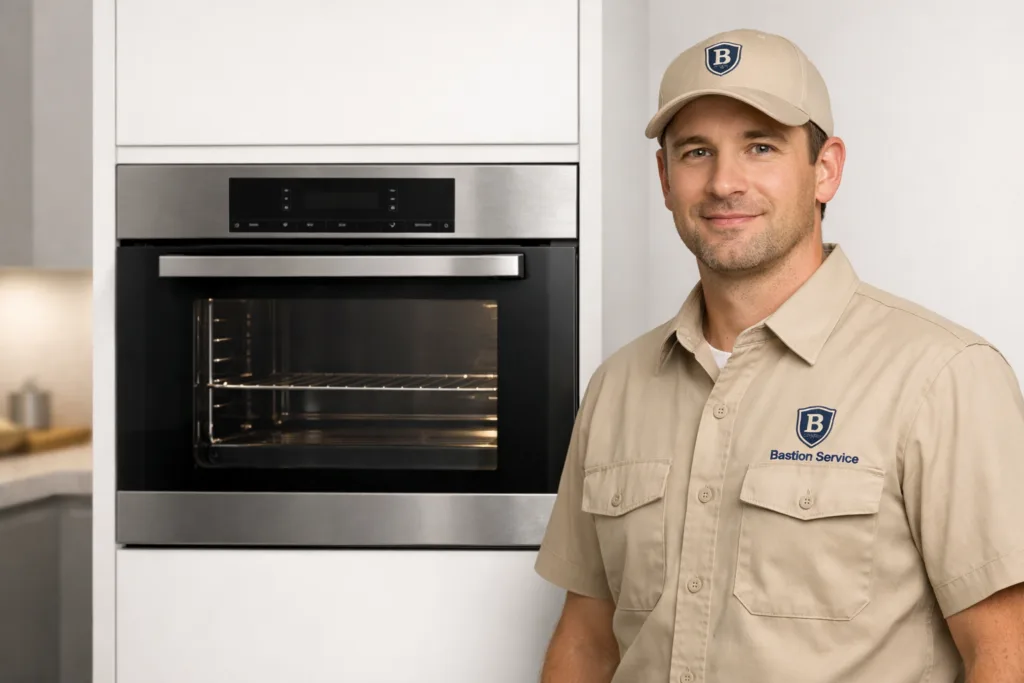
Common Miele oven problems in Century City homes

Miele ovens usually give warning signs before they stop working completely. The most useful way to understand the problem is by looking at the exact symptom pattern rather than assuming every heating complaint has the same cause. In Century City homes, that approach helps narrow the issue faster and avoids unnecessary part replacement.
Related Miele and oven service paths in Century City include Miele Appliance Repair in Century City, Oven Repair in Century City, and Miele Refrigerator Repair in Century City.
Oven not heating at all
If the oven powers on but never gets hot, the failure may involve a heating element, temperature sensor, relay, control board output, thermal cutoff, or power supply issue. On some models, the display and controls can appear normal even when the heating circuit is not operating correctly. That is why a lit panel does not always mean the oven is actually ready to bake.
Slow preheat
When preheat takes much longer than it used to, the oven may still be producing some heat but not enough to reach target temperature on time. A partially failed element, inaccurate sensor reading, weak control response, or convection-related issue can all lead to sluggish heating. This often shows up first as delayed dinners, undercooked casseroles, or recipes that suddenly need extra time.
Uneven baking and roasting
If cookies brown more on one side, roasts cook inconsistently, or dishes are done on the outside but not in the center, the oven may have a temperature regulation problem. Possible causes include poor heat circulation, sensor drift, a door that is not sealing well, or a control issue affecting how the oven cycles on and off. When the same recipes stop turning out the way they normally do, the appliance is often the reason.
Temperature swings
An oven that runs too hot, too cool, or fluctuates noticeably during use can make everyday cooking frustrating. This may be caused by a faulty sensor, calibration problem, electronic control fault, or intermittent wiring issue. Temperature swings are especially noticeable with baking, where small differences can affect texture, rise, and browning.
Control and display problems
Unresponsive buttons, random beeping, incomplete start cycles, frozen displays, or error messages can point to interface or main control trouble. In some cases, the oven may turn on but fail to begin heating because the command is not being processed properly. Intermittent electronic faults are easy to misread as user error, especially when they do not happen every time.
Door, latch, and seal issues
A door that will not close fully or a gasket that no longer seals tightly can let heat escape and affect cooking performance. If the latch system is involved, certain modes may not start correctly or the door may not unlock as expected. These problems are more than convenience issues because poor sealing and latch faults can interfere with normal temperature control.
What specific symptoms often mean
Many oven complaints sound similar at first, but the details matter. A little context from daily use can help identify whether the problem is mechanical, electrical, or electronic.
- Food suddenly takes longer to cook: often points to weak heat output or inaccurate temperature sensing.
- Top browns too fast while the center stays underdone: can suggest uneven heat distribution or poor cycling control.
- The oven reaches temperature, then falls behind: may indicate a component that fails after warming up.
- Error codes appear only during certain modes: can narrow the issue to a sensor, fan, latch, or related circuit.
- The unit shuts off mid-cycle: may involve overheating protection, control failure, or unstable power.
- Self-clean created new problems: high heat can expose weakness in latches, wiring, controls, or protective components.
The more consistent the symptom, the easier it usually is to trace. Intermittent problems are still repairable, but they typically require more careful testing because the fault may only appear under certain temperatures or operating conditions.
Why Miele ovens need symptom-based diagnosis
Miele cooking appliances use coordinated electronic controls, sensors, heating circuits, and safety systems. That means one visible complaint can have more than one possible cause. A no-heat oven, for example, might have a failed element, but it could also have a control that is not sending power, a sensor issue preventing proper operation, or a safety-related interruption in the circuit.
Starting with the symptom pattern helps determine whether the issue is isolated or part of a broader problem. It also helps homeowners decide whether repair is likely to restore normal use or whether the oven is showing signs of multiple overlapping faults.
When to stop using the oven
Some issues are annoying but manageable for a short time. Others should be taken seriously right away. It makes sense to stop using the oven and arrange service if you notice any of the following:
- The oven overheats or scorches food unexpectedly
- Preheat becomes dramatically slower than normal
- The display resets, flashes, or shows repeated faults
- The unit shuts off during cooking
- The door does not close securely
- You smell electrical burning or unusual hot-plastic odors
- The oven trips power or behaves unpredictably
Continuing to use an oven with unstable heating or electrical symptoms can turn a smaller repair into a larger one. It can also make cooking results less predictable from one meal to the next.
Repair or replacement: how the decision usually gets made
Many Miele oven problems are worth repairing when the issue is limited to a sensor, heating circuit, fan-related component, latch assembly, or specific control function. Replacement becomes a more serious consideration when the oven has several major failures at once, when electronic issues are widespread, or when the overall condition of the appliance no longer supports a reliable outcome.
Most homeowners in Century City look at a few practical questions:
- Is the problem isolated to one system or affecting several functions?
- Will the repair restore stable cooking performance?
- Has the oven needed repeated service recently?
- Does the condition of the unit justify continued investment?
The goal is not just getting the oven to turn on again. It is getting it back to consistent, trustworthy operation for normal household cooking.
What to expect during Miele oven repair
Effective service starts by matching the complaint to the oven’s actual operating behavior. That usually means checking heating response, confirming sensor readings, reviewing control operation, and looking at how the door, latch, and safety systems interact with the selected cooking mode. If the issue involves uneven baking, attention may shift to temperature regulation and airflow. If the complaint is no heat, testing will focus more directly on power delivery, heating components, and control output.
In Century City kitchens, built-in ovens are often part of daily routine rather than occasional-use appliances. A correct repair plan matters because it reduces disruption and helps avoid trial-and-error parts replacement.
Signs the problem is getting worse
Even if the oven still works sometimes, certain changes usually mean the fault is progressing. Watch for longer preheat times, wider temperature swings, controls that respond only after repeated presses, more frequent error messages, or cooking results that vary from one use to the next. These patterns often show that the issue is no longer isolated to a minor inconvenience.
If the oven is used several times a week, early service is often the better choice. Addressing the problem before complete failure can help limit added damage and keep the repair focused on the original cause.
Helpful details to have ready before service
If you are scheduling Miele oven repair in Century City, a few observations can make the visit more productive. Try to note:
- Whether the problem happens every time or only occasionally
- Which cooking modes are affected
- Approximate preheat time compared with normal
- Any fault codes or display messages
- Whether the issue began after self-cleaning, a power interruption, or a specific cooking cycle
- Whether the door, light, fan, and controls still behave normally
Those details help connect the symptom to the most likely system involved and support a faster repair decision.