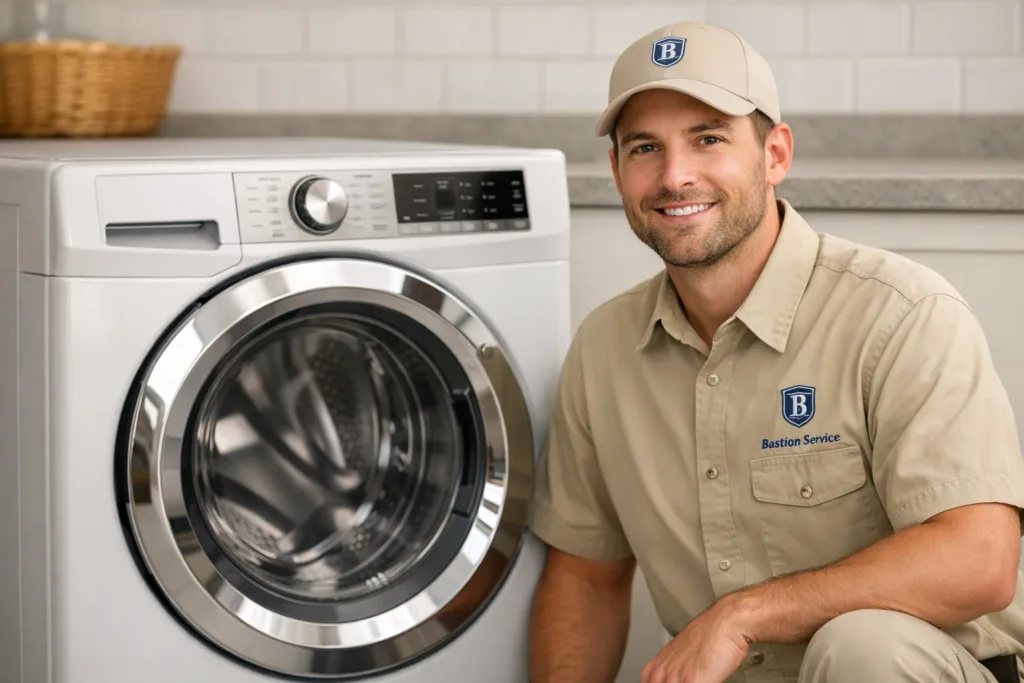
A Maytag washer that leaves clothes soaked, stops partway through a cycle, or starts leaking onto the floor needs attention sooner rather than later. With laundry appliances, one symptom can come from several different failures, so the best next step is to look at when the problem happens during the cycle and what the machine is doing just before it fails.
Start with the exact symptom pattern
Washers often give useful clues. A unit that fills normally but will not drain points in a different direction than one that never begins filling at all. A loud spin-cycle thumping issue is different from a low grinding noise during agitation. Paying attention to the pattern helps narrow down whether the issue is related to water flow, draining, balance, locking, controls, or internal mechanical wear.
For homeowners in Manhattan Beach, this matters because replacing parts based on guesswork can waste time and money. A drain problem, for example, might be caused by a clog, a weak pump, a wiring fault, or a control issue. The symptom may look the same from the outside, but the repair path is not.
Common Maytag washer problems and what they may mean
Not draining or not spinning properly
If the tub stays full of water or clothes come out much wetter than normal, common causes include a blocked drain hose, a failing drain pump, a lid switch or door lock problem, or a balance condition that prevents the final spin from completing. In some cases, the washer may appear to stall because it cannot safely move into the high-speed spin portion of the cycle.
When this keeps happening, avoid forcing repeated cycles. Continued attempts can add stress to the pump and motor and may leave moisture sitting in the tub longer than it should.
Leaking during fill, wash, or drain
Leaks can show up for different reasons depending on when the water appears. A leak during fill can point to an inlet hose or water valve issue. A leak during washing may involve the door boot, tub area, or detergent oversudsing. A leak while draining can indicate a hose split, loose connection, or pump problem.
Even a small recurring leak should be addressed promptly. Water around the washer can affect nearby flooring and trim, and hidden drips behind the machine can continue longer than expected before they are noticed.
Shaking, banging, or walking across the floor
Excessive movement is often more than a simple nuisance. It may come from an unbalanced load, but if the problem repeats, worn suspension rods, shocks, tub support components, or leveling issues may be involved. Front-load and top-load units can both develop vibration problems, though the internal causes are not always the same.
If the cabinet is striking hard during spin, it is wise to stop using the washer until the cause is checked. Repeated heavy vibration can damage other parts and make the final repair more involved.
Will not start or stops mid-cycle
When a Maytag washer has power but will not begin, the issue may involve the door latch, lid lock, control panel, cycle selector, or main control system. If it starts and then shuts down later, technicians often look at latch behavior, water sensing, draining, and board communication.
Intermittent failures are especially frustrating because the washer may run one load normally and fail on the next. Noting whether the stoppage happens during fill, rinse, drain, or spin can make the problem easier to isolate.
Not filling, slow filling, or overfilling
A washer that does not fill correctly may have restricted water supply, a faulty inlet valve, pressure-sensing trouble, or a control problem. Slow fill can also lead to long cycle times, while overfilling raises the risk of leaks and poor cycle performance.
If both hot and cold settings seem affected, the problem may not be limited to one valve side. If only one temperature selection fails, that detail can help narrow the diagnosis.
Poor cleaning results, odors, or residue on clothing
When clothes are not coming out clean, the issue is not always the detergent itself. Drainage problems, low water flow, buildup inside the washer, door gasket contamination, or incorrect cycle behavior can all affect wash quality. Musty smells may suggest retained moisture, residue accumulation, or incomplete draining.
These symptoms tend to build gradually, so many homeowners notice them only after several loads. By that point, the washer may already be showing an underlying maintenance or component problem.
When a repair call makes sense
Scheduling service is usually worthwhile when the same symptom keeps returning, the washer cannot complete normal cycles, water is leaking, or the machine has become unusually loud. Those issues rarely improve on their own. In many cases, the longer the unit continues operating with the fault, the more likely related parts are to be affected.
- Standing water remains in the tub after the cycle ends
- The door or lid will not lock properly
- The washer trips errors repeatedly
- Spin vibration is getting worse over time
- Water is appearing under or behind the machine
- The cycle timer seems stuck or unusually long
If the washer is grinding, leaking significantly, or slamming hard during spin, it is better to stop regular use until the cause is identified.
Repair or replace?
The answer depends on the age of the washer, its overall condition, and which part has failed. Many repairs are sensible when the problem is limited to a pump, latch, hose, inlet valve, suspension part, or similar serviceable component. Replacement becomes a more serious consideration when the machine has multiple major problems, severe rust, tub damage, or costly internal wear such as major bearing failure.
That is why a clear diagnosis matters before making a decision. A washer that seems like it is “done” may only need one focused repair, while a machine with repeated unrelated failures may no longer be the best long-term investment for the household.
What homeowners can note before service
A few details can make troubleshooting more efficient. It helps to note whether the issue appears in every load or only sometimes, whether any codes are displayed, and whether the problem happens during fill, wash, drain, rinse, or spin. If the washer is shaking, noticing whether it happens only with bulky items can also be useful.
Simple observations like these do not replace testing, but they often help narrow the problem faster:
- Whether the tub contains standing water after the cycle
- Whether the machine hums, clicks, or goes silent when it should drain
- Whether leaks appear at the front, rear, or underneath
- Whether the door stays locked after a failed cycle
- Whether the washer fills with hot, cold, both, or neither
- Whether the unit is level and stable on the floor
Residential Maytag washer service in Manhattan Beach
In a household setting, washer problems affect more than the appliance itself. They interrupt routine laundry, create messes, and can lead to water damage if ignored. Focused Maytag washer repair in Manhattan Beach works best when the service approach is based on the actual symptom history of the machine rather than a generic parts swap.
Whether the issue involves draining, filling, leaking, locking, vibration, or poor cycle performance, the goal is to identify the failed component, explain the repair path clearly, and help the homeowner decide on the next step with confidence.