
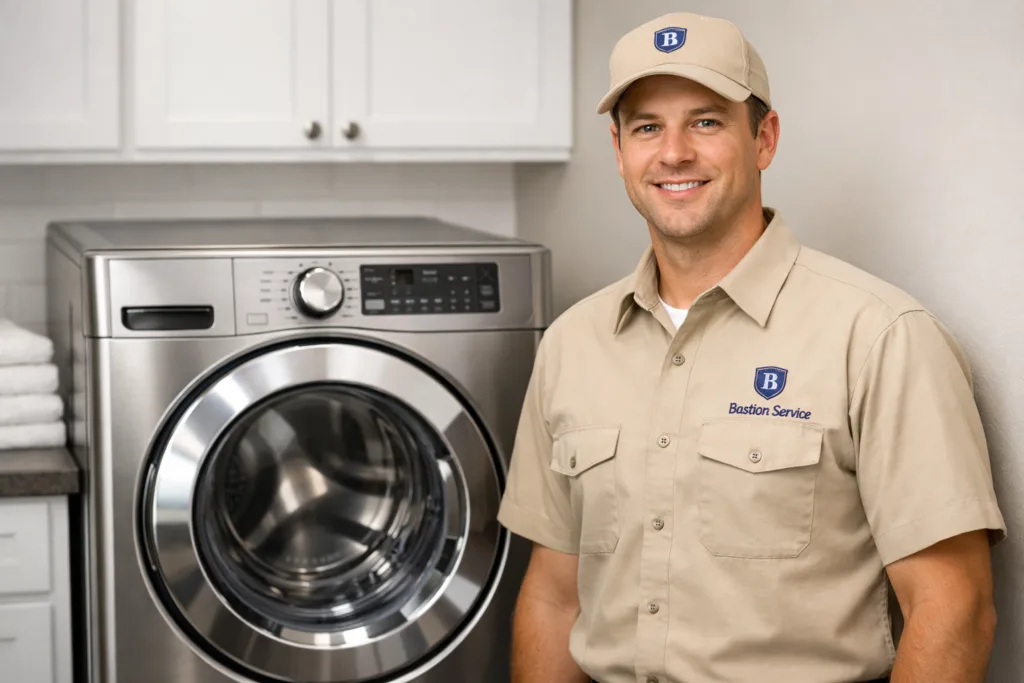




Appliance trouble is easier to solve when the symptom is described clearly instead of reduced to a guess about one bad part. A Maytag refrigerator that runs constantly, a washer that leaves water behind, or a cooktop burner that clicks without lighting can each come from several different systems. Looking at the pattern first helps determine whether the issue is urgent, whether continued use could cause damage, and whether repair is a sensible next step for the household.
For specific Maytag appliance paths in Cheviot Hills, review Maytag Refrigerator Repair in Cheviot Hills, Maytag Freezer Repair in Cheviot Hills, and Maytag Washer Repair in Cheviot Hills.
Start with the symptom pattern
Many Maytag problems sound similar at first but come from very different causes. A dryer that is not drying may have an airflow restriction, a heating failure, a sensor problem, or a power issue. A dishwasher that is not cleaning well may be dealing with low water flow, wash arm blockage, circulation trouble, or poor heating. In Cheviot Hills homes, the most useful clues are often simple ones: when the issue started, whether it happens every cycle, and whether the appliance is getting worse, louder, hotter, colder, or leakier over time.
Across refrigerators, freezers, washers, dryers, dishwashers, ovens, ranges, and cooktops, most faults fall into a few broad groups:
- Power or startup failures
- Cooling or heating performance problems
- Water leaks, filling issues, or drainage trouble
- Unusual noises or vibration
- Ignition, burner, or temperature regulation problems
- Control, sensor, or error-code related issues
Common Maytag appliance problems by type
Refrigerators and freezers
A Maytag refrigerator that is warm inside, building frost, or running almost nonstop may be struggling with airflow, defrost components, condenser conditions, door sealing, sensors, or sealed system performance. Homeowners often notice softer food, condensation on shelves, water near the crisper area, or a freezer that starts producing heavy ice before they realize cooling has become unreliable.
Not every temperature problem means replacement is near. Some cooling issues are repairable if caught early, especially before food loss or compressor strain becomes more severe. A freezer that cannot hold temperature consistently, or a refrigerator that swings between too warm and too cold, should be evaluated sooner rather than later.
Washers
Maytag washers commonly show trouble through standing water, a failure to spin, cycle interruptions, banging during spin, leaking, or error messages. Those symptoms can point to drain pump issues, suspension wear, door or lid lock problems, drive system faults, water inlet trouble, or control failures.
If the washer still runs but clothes are not coming out clean or the machine repeatedly goes off balance, the problem may be more than routine wear. A leak that appears only during fill or only during drain can also be an important clue. Early attention can help prevent floor damage and reduce the chance that one worn part leads to stress on others.
Dryers
A Maytag dryer that tumbles with no heat, takes multiple cycles to dry, stops too early, or begins making thumping, squealing, or scraping sounds should not be ignored. Drying problems often involve airflow restrictions, heating element or ignition issues, thermal components, moisture sensing, or power supply concerns depending on the model.
Noisy operation usually means a moving part is wearing out. Long dry times can also create unnecessary heat buildup and extra wear on clothing. If the dryer exterior seems unusually hot, if cycle times keep increasing, or if the unit shuts down before clothes are dry, it is time to have the cause checked.
Dishwashers
Maytag dishwashers tend to reveal trouble through poor cleaning, cloudy residue, standing water, detergent not dissolving, leaking, or failure to start. In some cases the issue is wash circulation. In others it may involve drain restrictions, inlet valve problems, latch failures, or heating issues that affect both cleaning and drying results.
Intermittent leaks deserve attention even if they seem minor. Moisture under cabinets can go unnoticed until it becomes a bigger household repair. A dishwasher that hums but does not move through the cycle, or one that suddenly takes much longer than normal, may also be signaling a developing mechanical or control issue.
Ovens, ranges, and cooktops
Cooking appliances often show problems through uneven baking, temperature drift, burners that do not ignite, endless clicking, weak flame, elements that stay cold, or controls that stop responding. On Maytag ovens, ranges, and cooktops, the source may involve igniters, bake or broil elements, spark systems, switches, temperature sensors, wiring, or control boards.
If an oven overheats, a burner does not regulate properly, or ignition behavior changes suddenly, continued use may not be the best option. Cooking performance can decline gradually, but safety concerns should always take priority. If there is a strong or persistent gas smell, stop using the appliance and address that immediate concern before arranging repair.
Signs a problem is getting more serious
Some symptoms are inconvenient but stable. Others suggest a fault is progressing. It makes sense to schedule service when a Maytag appliance begins showing any of the following:
- The same error code returns repeatedly
- The unit works only sometimes or stops mid-cycle
- Noises become louder or more frequent
- Leaks spread beyond a small, occasional drip
- Cooling or heating performance is inconsistent
- The appliance trips a breaker or loses power during use
- Odors, overheating, or visible frost buildup start appearing
Intermittent issues are especially worth documenting. A machine that fails only under certain conditions can actually provide better diagnostic clues than one that has fully stopped.
Repair or replace: how homeowners usually decide
The right choice depends on more than whether a part can be changed. Age, overall condition, recent repair history, expected cost, and how important the appliance is to daily routine all matter. If a Maytag washer, dryer, dishwasher, oven, or cooktop has otherwise been reliable and the fault is limited to one main system, repair is often reasonable.
Refrigerators and freezers sometimes require a different calculation because food preservation is time-sensitive and some cooling system repairs are more significant than others. If an older machine has multiple failures at once, replacement may make more sense. If the appliance has been dependable and the problem is isolated, repair is often the better value.
What to note before scheduling service
A few observations can make diagnosis much more efficient. Before service, it helps to note:
- When the problem started
- Whether it happens every time or only sometimes
- Any unusual sounds, smells, or visible leaks
- Any error code or flashing light pattern
- Whether the issue began after a power outage or heavy use
For refrigerators and freezers, note current temperature behavior, frost buildup, and whether the compressor seems to run continuously. For washers and dishwashers, note where the water appears and at what stage of the cycle. For dryers, note whether clothes are damp, cool, or very hot after a normal run. For ovens, ranges, and cooktops, note whether the issue affects one burner, all burners, or oven heat specifically.
Why early attention often saves time and money
Appliances rarely correct themselves. A washer that occasionally fails to drain can become a full no-spin problem. A dryer with restricted airflow can turn into chronic overheating and poor performance. A refrigerator with unstable temperatures can lead to food spoilage before the issue becomes obvious. Acting on early symptoms often keeps the repair smaller and helps avoid secondary damage.
For homeowners in Cheviot Hills, the goal is not just getting the appliance running again for the moment. It is understanding what failed, how serious it is, and whether the repair is likely to restore normal everyday use in a worthwhile way.
A household-focused approach to Maytag appliance problems
Whether the issue involves a refrigerator that is not cooling, a washer that will not complete a cycle, a dryer that runs too long, a dishwasher that leaves water behind, or an oven that no longer heats evenly, the best next step is to evaluate the symptom as it actually appears in the home. That makes it easier to choose between prompt repair, temporary shutdown, or replacement based on the condition of the machine rather than guesswork.


