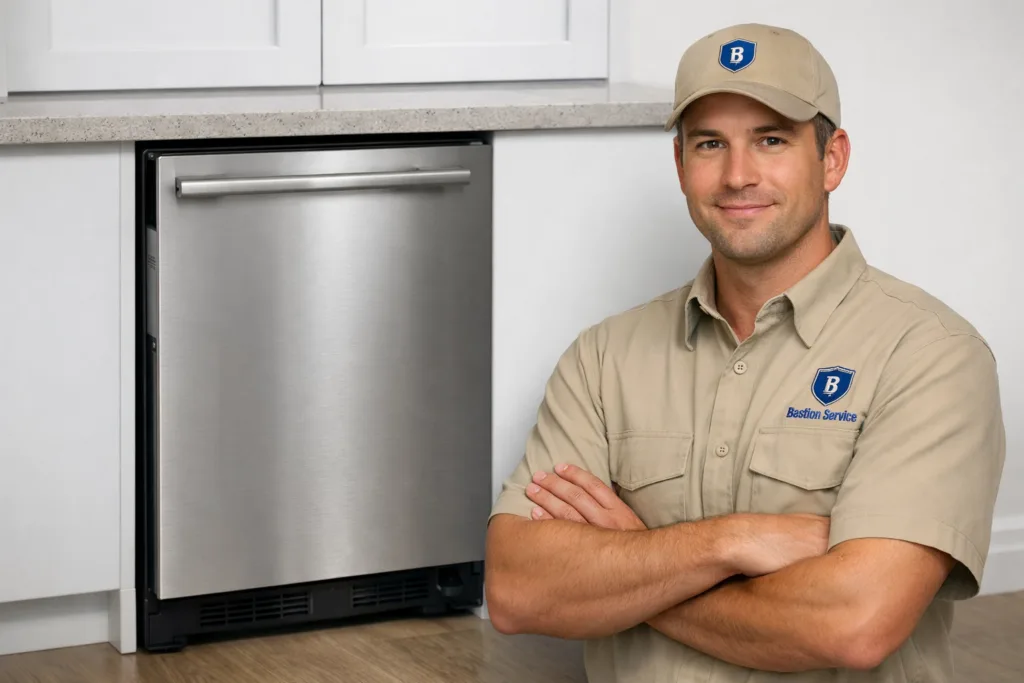
Ice maker failures often show up first as a household inconvenience, but the symptom usually points to a specific system inside the unit. A Marvel ice maker that stops producing, leaks, cycles oddly, or makes poor-quality cubes may have a water supply issue, a drain problem, a control fault, a temperature problem, or a component failure that affects the freeze-and-harvest process. Sorting out which pattern you are seeing is the fastest way to make a smart repair decision.
Start with the symptom pattern
Two ice makers can appear to have the same problem while failing for very different reasons. One unit may produce no ice because it is not getting water. Another may also produce no ice because it is not getting cold enough to complete a normal cycle. A machine that still makes some ice can have a restricted fill, unstable temperature, scaling inside the system, or an early refrigeration issue.
That is why symptom-based diagnosis matters. It helps narrow the problem before parts are replaced, reduces unnecessary trial and error, and gives homeowners a better idea of whether the repair is likely to be simple or more involved.
Common Marvel ice maker problems in Sawtelle homes
No ice production
If the machine has stopped completely, possible causes include a closed or restricted water supply, a failed inlet valve, a sensor or control problem, or cooling issues inside the unit. When the appliance powers on but never completes a cycle, the failure may be in the sequence that tells the machine when to fill, freeze, and release.
Slow ice production
Reduced output is often noticed before a full shutdown. A Marvel unit that cannot keep up with normal use may be dealing with reduced water flow, dirty condenser components, poor airflow around the cabinet, scale buildup, or temperature inconsistency. Slow production is worth addressing early because performance usually continues to decline if the underlying cause is left alone.
Small, hollow, cloudy, or uneven cubes
Changes in cube appearance can be very helpful diagnostically. Small or hollow cubes often suggest that the machine is not getting a full water fill. Cloudy ice may point to water quality or circulation concerns. Misshapen cubes can indicate scaling, leveling problems, or freezing irregularities that affect the harvest cycle.
Ice clumping in the bin
Clumped ice usually means the cubes are partially melting and refreezing together, or that the machine is dropping wet ice that is not freezing properly before storage. This can happen when temperatures are unstable, the door is not sealing well, or the unit is struggling to maintain normal operating conditions.
Water leaking around the appliance
Leaks should be handled promptly. Water around the unit can come from a supply connection, an internal overflow, a blocked drain path, or melt caused by poor cooling. In a built-in installation, even a small leak can affect nearby flooring, trim, or cabinetry if the problem continues.
Buzzing, clicking, rattling, or repeated cycling noises
Unusual sounds can come from a valve trying to open, a fan struggling, loose internal parts, a pump issue, or ice interfering with movement inside the machine. Noise by itself does not always mean a major repair, but noise combined with weak ice output usually points to a problem that should be checked.
What different symptoms often suggest
While testing is still needed to confirm the cause, certain symptoms commonly line up with certain types of problems:
- No ice and no water fill: water supply restriction, inlet valve issue, or control failure
- No ice but the machine runs: cooling problem, sensor issue, or interrupted cycle
- Low output: partial restriction, airflow problem, dirty condenser, or temperature instability
- Wet bin or clumped cubes: melt-and-refreeze conditions, poor sealing, or inconsistent freezing
- Leak under the unit: drain issue, loose connection, overflow, or internal ice melt
- Cube changes before total failure: early warning of fill, scale, or temperature problems
When to stop using the ice maker
Some problems can wait a short time. Others should not. If the unit is leaking, warming up, tripping power, or running for long periods without making usable ice, continued use can lead to more damage. Water can spread beyond the appliance, and repeated operation during a cooling or mechanical failure can put added strain on other components.
It makes sense to schedule service when you notice any of the following:
- The machine stops producing for more than a normal cycle delay
- Ice output falls noticeably during regular household use
- Cubes become smaller, softer, cloudier, or irregular
- Water appears under or around the appliance
- The bin stays wet or ice starts freezing together
- The unit makes new noises that repeat during operation
- The machine runs longer than usual with worse results
Why built-in placement can affect repair
Many Marvel ice makers are installed in tight residential spaces, including undercounter locations with finished cabinetry around them. In Sawtelle homes, that setup can influence both performance and service approach. Limited ventilation, installation fit, leveling issues, and hidden moisture paths can all affect how the problem appears from the outside.
A leak may seem like a simple connection problem but actually begin inside the cabinet. Weak production may look like a water issue while really being tied to airflow or temperature loss. Looking at the installation along with the machine itself helps separate appliance failure from conditions around the unit.
Repair or replace?
Many Marvel ice maker problems are repairable, especially when the fault involves a valve, sensor, control component, drain issue, water feed problem, or another isolated mechanical part. Repair becomes less attractive when the appliance has multiple ongoing failures, significant corrosion, repeated moisture damage, or a more serious refrigeration-system problem.
A reasonable decision usually comes down to:
- The age and overall condition of the unit
- The exact part or system that has failed
- Whether the rest of the machine is operating normally
- How the repair cost compares with the value and expected life of the appliance
If the ice maker has otherwise been reliable and the issue is contained to one system, repair is often the sensible path. If several problems are showing up at once, replacement may be worth considering.
Helpful checks before service
Before booking an appointment, it helps to note what changed and when. Did the machine stop suddenly, or did production taper off over time? Did the cubes change size before the failure? Is there standing water, a wet bin, or a new sound during operation? Details like these can make the problem easier to identify.
You can also do a few basic checks safely:
- Confirm the unit has power
- Make sure the water supply is turned on
- Check for obvious water around the base
- Look for blocked airflow near the front or lower vent area
- Notice whether the door appears to close and seal normally
What usually does not help is forcing repeated restarts or letting a leaking machine keep running in hopes that it clears itself. If the issue involves water, temperature, or cycling, continued operation often adds confusion or causes more wear.
What a service visit should clarify
For homeowners in Sawtelle, the goal is not just to get the machine running again for the moment. A useful service visit should determine why the symptom started, whether other components have been affected, whether continued use is safe, and whether the repair is a good investment for that specific Marvel unit.
When the problem is diagnosed correctly, the next step is much easier to judge: repair the affected system, monitor a minor issue before it worsens, or plan for replacement if the appliance condition no longer supports a worthwhile fix.