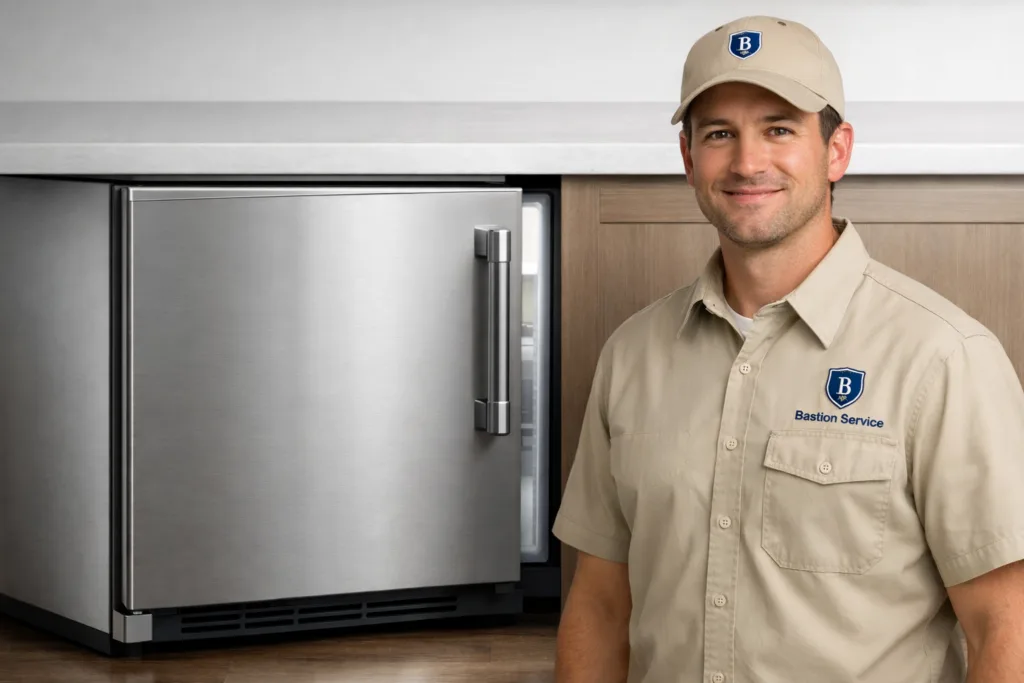
Food texture changes are often the first clue that a Marvel freezer is no longer holding a steady temperature. Ice cream that turns soft and refreezes, packages that feel partially thawed, or frost appearing only in certain sections can all point to different failures inside the unit. Instead of assuming the compressor is bad, it helps to look at the full symptom pattern, including where the frost appears, how long the freezer runs, and whether the door is sealing correctly.
Common Marvel freezer problems and what they can mean
Freezer not staying cold enough
If the freezer still feels somewhat cool but food is not fully frozen, the cause may be restricted airflow, evaporator frost buildup, a weak fan motor, sensor trouble, or declining cooling performance. This symptom deserves quick attention because unstable freezer temperatures can lead to food loss and force the appliance to run harder than normal.
In many cases, homeowners first notice this as inconsistent freezing rather than a complete loss of cooling. One shelf or bin may seem colder than another, or recently added items may freeze slowly. Those details are useful because they help narrow whether the issue is tied to circulation, controls, or a larger cooling-system fault.
Heavy frost or ice buildup
Frost in the wrong places usually means moisture is entering the cabinet or the defrost system is not working as it should. A worn gasket, a door left slightly ajar, blocked air passages, or failed defrost components can all create similar-looking ice buildup. Removing visible frost may give short-term relief, but the problem usually returns if the source is not corrected.
Pay attention to the frost pattern. Thin frost spread evenly can mean something different from thick ice concentrated on a rear panel or around vents. That pattern often helps distinguish a sealing issue from a defrost or airflow problem.
Freezer running constantly or cycling too often
A Marvel freezer that seems to run all day may be trying to overcome warm air leaks, dirty condenser areas, control errors, or weak system performance. Frequent cycling can also happen when the appliance struggles to reach and hold the set temperature. If run times suddenly change, it is usually a sign that the freezer is compensating for an underlying issue rather than operating normally.
Water leakage or interior moisture
Water under the appliance or moisture inside the cabinet can come from a blocked defrost drain, melting ice caused by poor door sealing, or frost buildup that interferes with normal drainage. This is worth addressing early, since ongoing moisture can create odors, add more ice buildup, and affect nearby flooring.
Unusual noises
Buzzing, rattling, clicking, humming, or fan noise can mean very different things depending on when the sound occurs. A fan blade may be hitting frost, a start component may be struggling, or the compressor may be working under strain. Noise complaints become more important when they appear alongside warming, long run times, or frost buildup.
How symptom patterns help identify the real fault
Two freezers can both seem “not cold enough” while needing completely different repairs. One may have an evaporator fan issue that affects airflow. Another may have a defrost problem that slowly chokes circulation with ice. A third may have a gasket leak that lets moisture in and forces long run times. Looking at the full pattern is what separates a useful diagnosis from guesswork.
For homeowners in Marina del Rey, the most helpful details to notice before service are:
- Whether food is fully thawing or only softening
- Where frost is appearing inside the compartment
- Whether the door closes firmly without resistance
- If the freezer runs continuously or starts and stops more than usual
- Whether noise happens during startup, while running, or after the door is opened
- If water appears inside the cabinet or on the floor nearby
These observations can make the repair path much clearer and reduce unnecessary parts replacement.
Why brand-specific troubleshooting matters
Marvel units are not always serviced the same way as a basic freezer model, and symptom-based assumptions can send the repair in the wrong direction. A better approach is to evaluate temperature behavior, control response, airflow, frost pattern, fan operation, drainage, and compressor performance as one system. That kind of testing helps determine whether the issue is a repairable component problem or a deeper mechanical failure.
For a household freezer, that distinction matters. You want to know whether the appliance is likely to return to stable operation after repair or whether the problem points to broader wear that affects long-term reliability.
Signs you should schedule service soon
It is smart to schedule service promptly if your Marvel freezer is warming, leaking, making new sounds, or building frost faster than normal. You should also act quickly if the interior temperature seems uneven, frozen food texture keeps changing, or the unit is running much longer than it used to.
Delaying service can make several common problems worse. A fan pushing against ice can eventually fail. A compressor that runs for long periods without reaching the target temperature can take on added strain. A door-seal problem can keep feeding moisture into the cabinet until frost and cooling issues become more severe.
When continued use may cause more damage
If the freezer is no longer keeping food safely frozen, continued use is usually not worthwhile. The same is true when the unit clicks repeatedly, struggles to start, or develops thick ice on interior panels. Running it in that condition may increase wear and make the eventual repair more involved.
If the appliance is still cooling somewhat, avoid forcing the door shut against ice, chipping frost with sharp tools, or constantly changing temperature settings. Those steps can damage interior parts and make the original issue harder to track down.
Repair versus replacement considerations
Many Marvel freezer issues are still reasonable to repair, especially when the problem involves a fan motor, sensor, control component, door gasket, drain issue, or defrost part and the cabinet itself is in good condition. Repair is usually easier to justify when the appliance has otherwise been reliable and the fault is clearly defined.
Replacement becomes more likely when the freezer has a history of repeat failures, shows signs of major cooling-system trouble, or would require a repair cost that does not make sense for the condition of the unit. The best decision depends on the confirmed failure, overall age and condition, and the likelihood that the repair will restore dependable performance rather than buy only limited time.
What homeowners can expect from a useful service visit
A well-structured visit should focus on the symptoms you can actually observe at home: soft food, uneven freezing, frost location, moisture, changing run times, and new noises. From there, the technician can narrow the cause instead of relying on broad part swapping. That gives you a clearer picture of what failed, what the repair is meant to correct, and whether the freezer is a good candidate for continued use.
For households in Marina del Rey, the goal is straightforward: restore stable freezing performance and understand why the problem happened in the first place. When the fault is identified correctly, the next step is easier to choose with confidence.