
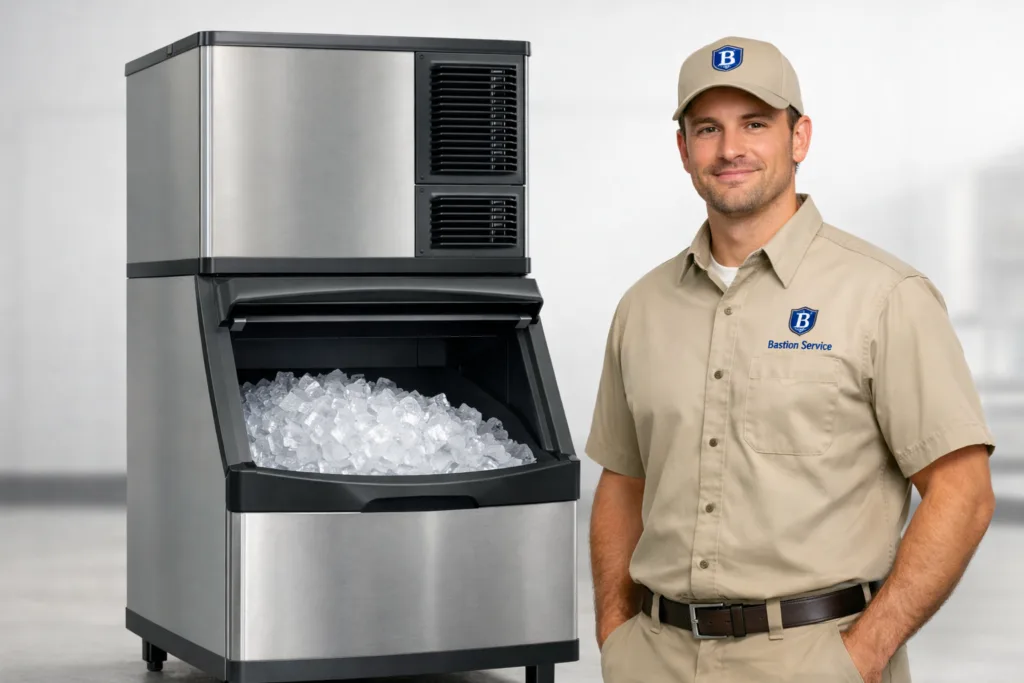




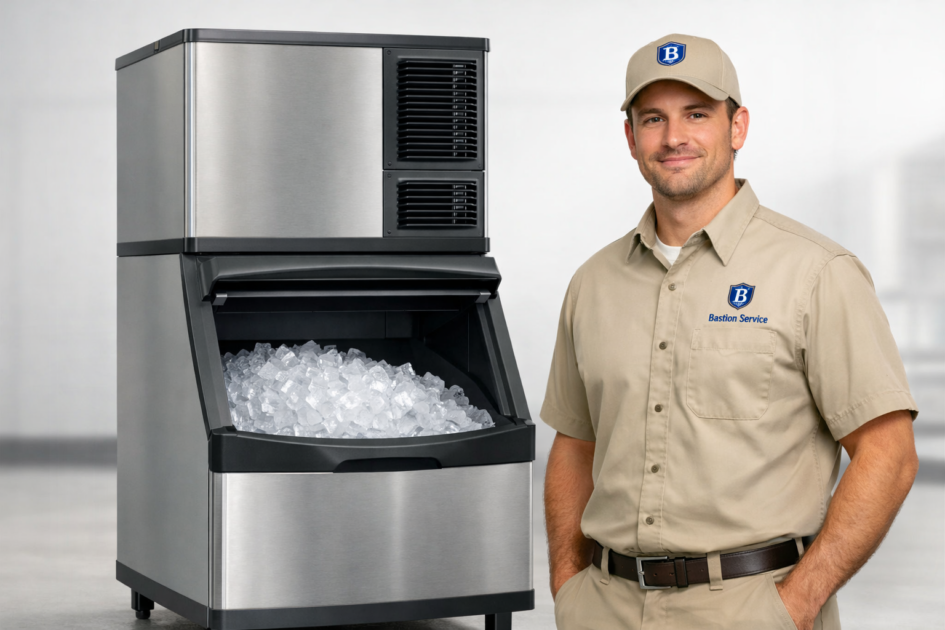
When a Manitowoc ice machine begins leaking, slowing down, stalling in harvest, or producing poor-quality ice, the most important next step is service that identifies the actual fault before the problem spreads. For businesses in Westwood, repair scheduling is often driven by lost production, sanitation concerns, staff workarounds, and the risk of a full shutdown during normal operations. Bastion Service provides repair support for Manitowoc ice machine equipment with symptom-based diagnosis, repair planning, and next-step guidance based on how the machine is performing now.
For specific equipment paths in Westwood, review Manitowoc Ice Machine Repair in Westwood and Commercial Appliance Repair in Westwood.
Common Manitowoc ice machine problems that need repair
Ice machine failures do not always start with a complete stop. Many units continue running while output drops, ice quality changes, or water starts appearing where it should not. Those early changes often point to developing issues involving water supply, drains, scale buildup, controls, sensors, refrigeration components, or harvest timing.
Low ice production or no ice at all
If the bin is not filling as expected, the machine may be dealing with restricted water flow, scaling on internal components, condenser performance problems, sensor faults, control issues, or refrigeration-related trouble. A unit that is still cycling but making much less ice than normal usually needs attention before the strain leads to longer downtime.
This symptom matters quickly in business settings because reduced ice supply can affect beverage service, food holding routines, guest experience, and daily prep. When output is inconsistent, repair is usually more useful than repeated resets or waiting to see if the machine recovers on its own.
Water flow, overflow, and leak concerns
Visible leaks, slow fill, standing water, or overflow during operation can indicate inlet valve issues, clogged filters, drain restrictions, float problems, cracked water lines, or scale interfering with normal circulation. Even a small leak can become a larger operations problem if it affects flooring, nearby equipment, or sanitation procedures.
Water-related symptoms are also important because they often overlap with production and ice quality problems. A machine that is not moving water correctly may produce incomplete batches, pause unexpectedly, or create misshapen ice before the fault becomes obvious.
Harvest cycle problems
Harvest issues often show up as ice that will not release cleanly, partial slab drops, repeated restart attempts, or a machine that seems stuck between freeze and release. On Manitowoc equipment, this can be tied to scale, sensor readings, water distribution problems, timing faults, or worn components affecting the normal cycle.
A machine with harvest trouble may still produce some ice, but the pattern is usually unreliable. Delaying service can increase wear and make the unit harder to depend on during busy periods.
Scale buildup and performance decline
Scale buildup can affect water movement, ice formation, harvest release, and component performance. In some cases, what appears to be a cleaning issue is already affecting probes, pumps, valves, or other parts that need repair attention in addition to maintenance.
If production has been dropping gradually, scale may be only part of the story. An inspection helps determine whether the machine needs descaling alone or whether mineral buildup has contributed to a deeper mechanical or control problem.
Ice quality issues
Cloudy ice, soft cubes, odd shapes, inconsistent batch size, unusual taste transfer, or poor clarity can point to water supply issues, scaling, contamination concerns, temperature regulation problems, or cycle control faults. For businesses that rely on clean, consistent ice presentation, these symptoms are more than cosmetic.
Changes in ice quality often appear before a more obvious breakdown. Addressing them early can help prevent a larger interruption and reduce waste from unusable batches.
What these symptoms often mean in day-to-day operation
Different Manitowoc problems can look similar from the outside, which is why symptom-based diagnosis matters. Low production may come from poor water supply, restricted airflow, failing components, or refrigeration trouble. Leaks may stem from drain blockages, overflowing during abnormal cycling, cracked tubing, or valve issues. Poor harvest may be caused by scale, sensing problems, or uneven water distribution.
Because these symptoms overlap, part replacement without testing can lead to repeat service calls and more downtime. A proper repair visit helps narrow the issue to the component or system actually causing the failure pattern.
- If the machine is running but not keeping up: the issue may already be affecting cycle efficiency and output consistency.
- If the machine leaks during or after a cycle: the cause may involve water entry, drainage, or abnormal overflow conditions.
- If the machine shuts down unexpectedly: controls, safety responses, electrical faults, or deeper performance issues may be involved.
- If the ice looks wrong: the problem may involve water quality, scale, temperature, or cycle regulation.
Signs the machine should be checked before continued use
Some problems allow limited operation for a short time, but others can become more expensive if the machine keeps running through the fault. Active leaking, repeated shutdowns, unusual noise, visible production decline, overflow, or ongoing harvest failures are all signs that service should be scheduled promptly.
Continued use under those conditions can increase wear on pumps, valves, fans, controls, and refrigeration-related components. It can also create avoidable disruption if the machine fails completely during service hours.
How repair decisions are usually made
For businesses in Westwood, the best repair decision is rarely based on one symptom alone. Service planning usually considers the age of the machine, recent repair history, current production demands, sanitation concerns, and whether the issue appears isolated or part of a broader decline in reliability.
In many cases, repairing a specific failed part makes sense when the machine is otherwise in solid condition. In other situations, repeated low output, ongoing scale-related trouble, multiple worn components, or recurring shutdowns may indicate that the unit needs a broader repair plan or replacement discussion. The value of diagnosis is that it gives management a clearer picture of urgency, expected downtime, and the practical path forward.
What a service visit can clarify
A focused inspection helps determine whether the machine can remain in use temporarily, whether shutdown is the safer option, and whether one repair is likely to resolve the issue or a follow-up visit may be needed. That matters when ice production supports food service, hospitality, healthcare, office break areas, or any business routine that depends on a steady supply.
It also helps separate maintenance-related decline from actual component failure. That distinction is important when a machine has both visible scale and performance symptoms, since cleaning alone may not restore normal operation if sensors, valves, pumps, or controls have already been affected.
Scheduling repair for a Manitowoc unit in Westwood
If your Manitowoc ice machine is producing less ice, leaking, struggling to harvest, shutting down, or making inconsistent ice, scheduling repair in Westwood is the practical next step. Service can help identify the cause, explain the risk of continued use, and move the unit toward a repair plan that supports uptime instead of leaving staff to manage around a worsening equipment problem.


