
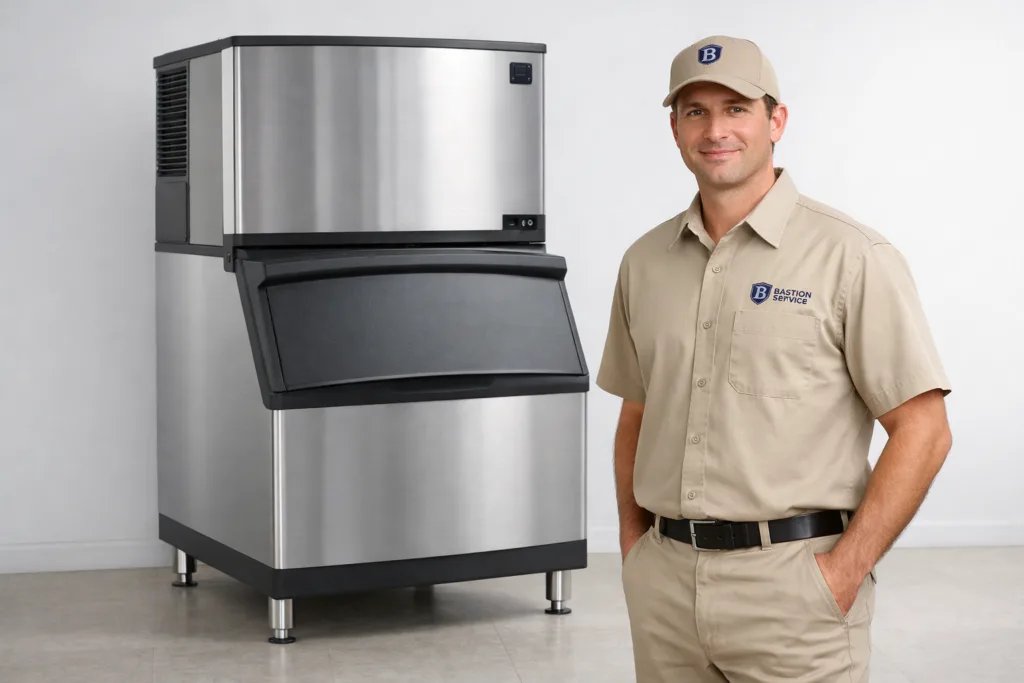




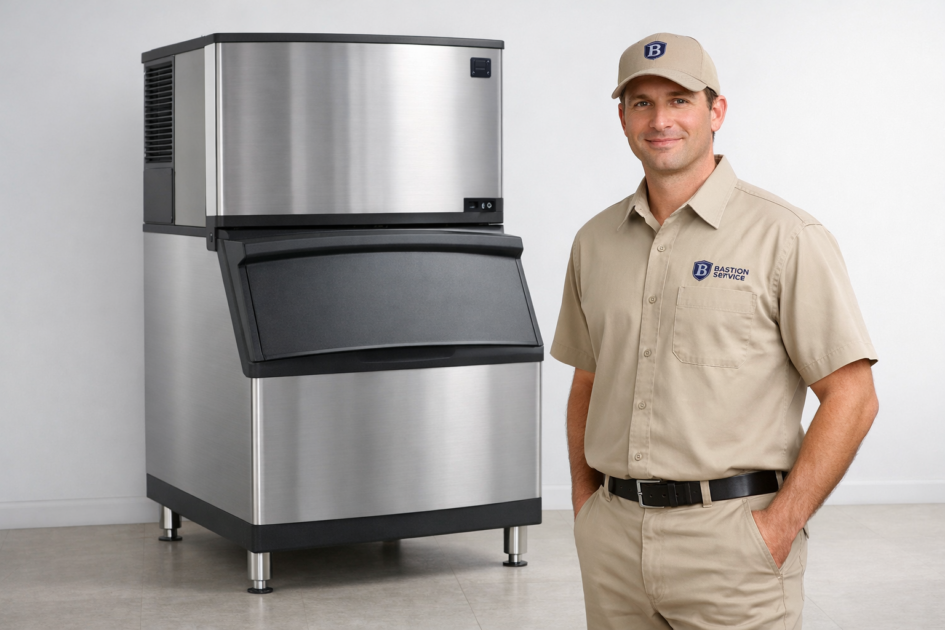
When a Manitowoc ice machine starts missing output targets, leaking onto the floor, or stopping mid-cycle, the decision to keep using it or pull it from service should be based on the actual failure pattern. For businesses in West Los Angeles, ice supply problems can quickly affect beverage service, food holding, staff workflow, and customer experience. Bastion Service provides Manitowoc ice machine repair with a service-first approach focused on diagnosing the fault, identifying downtime risk, and scheduling the next step that makes the most operational sense.
For specific equipment paths in West Los Angeles, review Manitowoc Ice Machine Repair in West Los Angeles and Commercial Appliance Repair in West Los Angeles.
Most ice machine issues are connected to a few core systems: water supply, freeze and harvest performance, drainage, scale accumulation, controls, or refrigeration-related problems. The visible symptom matters, but the repair decision usually depends on what is happening behind that symptom. A machine making small cubes, for example, may have a very different repair path than a machine with a full bin but repeated shutdowns.
Common Manitowoc Ice Machine Problems That Affect Daily Operations
Ice machines often give warning signs before complete failure. Reduced production, unusual cycle times, soft or cloudy ice, water overflow, and intermittent stopping all point to conditions that should be checked before they become larger equipment or sanitation problems.
Low Ice Production or No Ice at All
If the machine is producing less ice than normal, the cause may involve restricted incoming water flow, mineral buildup on water-side components, sensor issues, poor freeze performance, or a refrigeration fault. When production slows gradually, staff may not notice the pattern until bins stop recovering during busy periods. When production stops completely, repeated resets rarely solve the underlying problem and can delay proper repair.
This is one of the most disruptive issues for West Los Angeles businesses because it affects service capacity almost immediately. A diagnosis helps determine whether the problem is tied to water delivery, freeze cycle performance, controls, or a component failure that requires repair before the machine can return to normal output.
Small Cubes, Cloudy Ice, or Inconsistent Ice Quality
Changes in cube size or clarity often indicate water-related issues, scale buildup, uneven distribution, or performance problems that keep the machine from completing cycles correctly. Poor ice quality is more than a cosmetic issue. It can signal internal conditions that reduce production efficiency and create recurring service complaints.
If ice is smaller than expected, wet, misshapen, or inconsistent from batch to batch, the machine should be evaluated before the condition spreads into harvest failures or low-volume operation. In many cases, the symptom starts subtly and then becomes a larger reliability problem.
Water Leaks, Overflow, and Drainage Problems
Water around the base of the unit may come from blocked drains, line issues, overflow conditions, failed internal components, or freeze-related problems inside the machine. Even if the leak seems minor, ongoing moisture around equipment can lead to slip hazards, cabinet damage, and avoidable disruption in the work area.
A leak also changes the repair urgency. Some conditions allow limited use until service arrives, while others warrant shutting the machine down to avoid facility damage or contamination concerns. That distinction is important for managers deciding how to handle the equipment during operating hours.
Harvest Problems and Long Cycle Times
When ice does not release as expected, harvest may take too long, stop midway, or require repeated attempts before the machine moves into the next cycle. Common causes include scale on key surfaces, sensor or probe issues, water flow imbalance, or inefficient cooling performance that prevents proper sheet formation and release.
Harvest issues often begin as an intermittent nuisance before turning into a production problem. Staff may notice delayed bin recovery, incomplete sheets, or a machine that seems to run constantly without delivering expected output. Repair at this stage can prevent extended downtime later.
Unexpected Shutdowns and Intermittent Operation
A Manitowoc unit that stops randomly, trips into a fault condition, or only runs for part of the day should be inspected before normal use continues. Intermittent operation can involve control problems, electrical faults, float or probe issues, overheating, or a protective shutdown triggered by another failing component.
These cases are especially important to diagnose correctly because the visible symptom is only the final result. A machine that shuts down may not actually have a control-board problem; it may be responding to water, temperature, or cycle faults elsewhere in the system.
What Symptom Patterns Often Mean for Repair Decisions
Not every issue has the same urgency, and not every symptom points to the same kind of repair. Looking at how the problem appears during the day can help determine how quickly service should be scheduled.
- Production drops during peak use: often tied to water flow restrictions, scale, or weak cycle performance.
- Machine runs but bin does not refill normally: may point to long freeze times, incomplete harvest, or partial system failure.
- Leaks appear only during certain cycles: often connected to drainage, overflow, or release-related issues.
- Unit restarts after being reset: usually means the fault is still present and will likely return.
- Ice quality changes before output drops: frequently a sign that buildup or water-side problems are already affecting operation.
These symptom patterns help determine whether the equipment may remain in temporary use, whether a same-day response is more appropriate, and whether the machine is showing an isolated issue or a broader wear pattern.
Why Early Service Usually Reduces Total Downtime
Ice machine failures rarely stay limited to one inconvenience. Reduced water flow can affect freeze performance. Scale buildup can interfere with harvest. A drain problem can lead to leaks. Intermittent shutdowns can become a full outage once the machine can no longer recover. Addressing the issue early often keeps the repair smaller and helps avoid a situation where service must be scheduled after complete loss of production.
For businesses in West Los Angeles, early repair planning also helps with staffing and inventory decisions. If management knows whether the unit can stay in limited use, whether parts are likely needed, and whether the machine should be taken offline, the site can respond more effectively and reduce disruption to normal operations.
When Continued Use May Cause More Trouble
Some equipment can keep running briefly while waiting for service, but some symptoms should not be ignored. Continued use may make the problem worse when the machine is leaking, producing poor-quality ice tied to internal buildup, failing to complete harvest, or shutting down repeatedly during operation.
Warning signs that usually justify faster repair scheduling include:
- water pooling around the machine
- staff repeatedly resetting the unit
- ice output falling below what the site needs each day
- ice that looks wet, soft, cloudy, or inconsistent
- cycle times getting longer without explanation
- stop-and-start operation that becomes more frequent
When staff members are compensating manually for lost output or checking the machine throughout the day to keep it running, the equipment has usually moved beyond a minor annoyance and into a repair situation that affects operations directly.
How Repair Planning Helps With Older or Repeating Problems
Some Manitowoc repairs are straightforward. Others reveal repeat scale exposure, multiple worn parts, or a history of performance decline that changes the value of another repair. That is why the service visit should do more than identify one failed part. It should also clarify whether the current symptom is isolated or part of a larger pattern affecting reliability.
For a unit with a solid service history, targeted repair may be the practical choice. For an older machine with repeated shutdowns, poor production, leak history, and ongoing ice-quality concerns, the more important question may be whether another repair meaningfully improves uptime. A thorough evaluation helps management make that call based on actual equipment condition rather than guesswork.
What a Manitowoc Service Visit Should Clarify
A productive ice machine repair visit should answer a few key questions:
- What is causing the current symptom?
- Can the machine stay in use safely while repair is scheduled?
- Is the problem limited to one component or affecting multiple systems?
- How urgent is the repair based on downtime and leak or sanitation risk?
- Is the equipment still a good repair candidate based on its condition?
That kind of assessment is useful because it gives managers a clear path forward instead of leaving staff to monitor worsening symptoms during service hours. If your Manitowoc ice machine in West Los Angeles is producing less ice, leaking, shutting down, struggling through harvest, or delivering poor ice quality, scheduling service is the practical next step to reduce downtime and restore reliable operation.


