
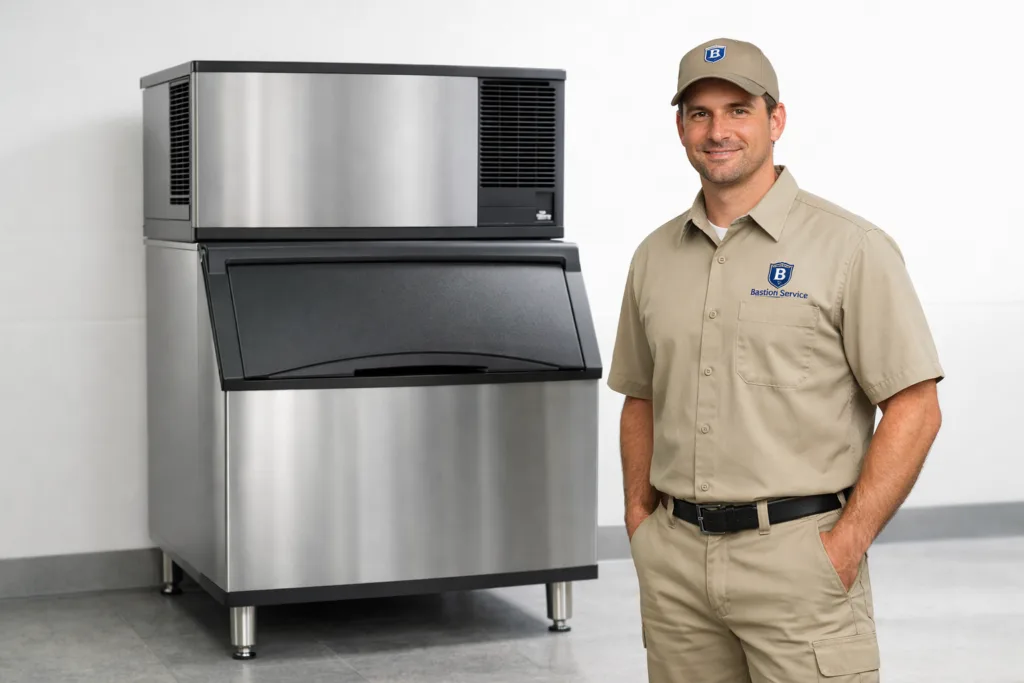




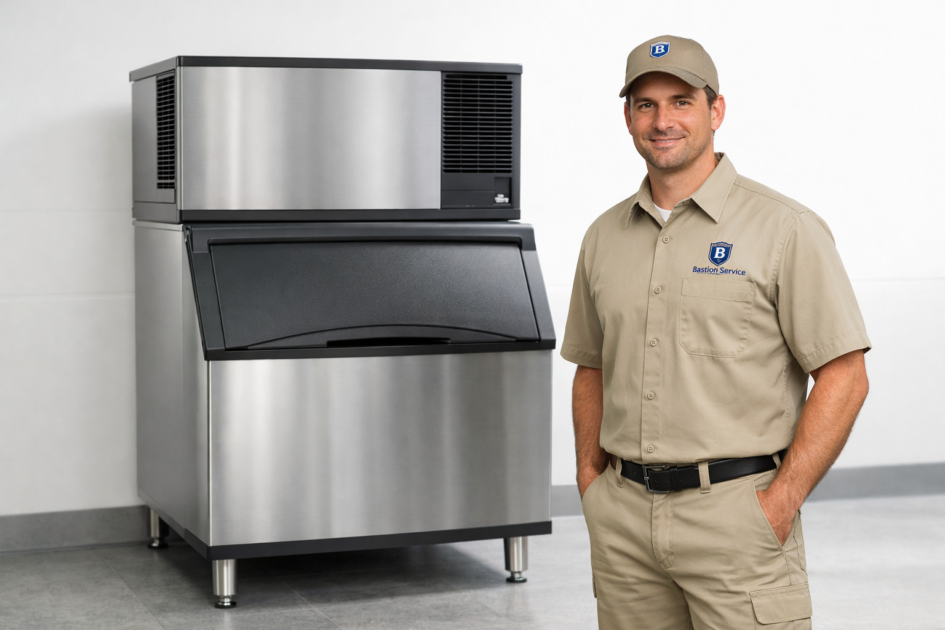
Ice machine problems rarely stay isolated for long. When a Manitowoc unit starts falling behind, leaking, or cycling irregularly, the effect can spread into beverage service, prep timing, food holding, and staff workflow. For businesses in Venice, the most useful next step is service based on the actual symptom pattern so repair decisions match the condition of the machine and the urgency of the downtime risk.
For specific equipment paths in Venice, review Manitowoc Ice Machine Repair in Venice and Commercial Appliance Repair in Venice.
Bastion Service works with Venice businesses that need Manitowoc ice machine repair scheduled around production loss, water issues, shutdowns, and ice quality concerns. The goal is not simply to describe what might be wrong, but to identify whether the machine can stay in operation temporarily, needs prompt repair, or should be taken offline to prevent a more disruptive failure.
Common Manitowoc Ice Machine Problems That Point to Repair
Many Manitowoc machines show performance changes before a complete stop. Slower production, longer freeze cycles, poor harvest, and irregular water behavior often indicate a repair need that goes beyond routine observation. In a business setting, early service can help reduce lost output and avoid a larger interruption later.
Low ice production or no ice
If the bin is not filling as expected, the issue may involve restricted water supply, scaling inside the water system, sensor problems, refrigeration-related performance loss, or controls that are no longer managing the cycle correctly. A machine that still makes some ice can be misleading, because partial production often precedes a full shutdown. When output drops noticeably, service is usually more cost-effective before the machine stops altogether.
Businesses may also notice that production falls at certain times of day, recovery slows after heavy use, or cube formation changes along with lower volume. Those patterns help narrow the likely cause and are useful during diagnosis.
Water flow problems, overflow, or leaks
Water under the machine, inside the bin area, or around connected lines should be treated as a repair issue rather than a minor nuisance. Leaks can come from drain restrictions, inlet valve faults, pump problems, internal hose issues, freezing conditions, or overflow during abnormal cycling. In addition to lost production, water problems can affect nearby equipment and create floor safety concerns.
If the unit is overflowing or leaking repeatedly, continued use may worsen internal damage or lead to another shutdown. Service is especially important when water flow problems are happening alongside low output or inconsistent harvest.
Harvest cycle issues
When ice does not release correctly, falls inconsistently, or forms in ways that interrupt the transition between freeze and harvest, the machine can lose capacity quickly. Harvest issues may be tied to scale buildup, probe or sensor faults, water distribution problems, refrigeration imbalance, or worn components. These problems often show up as long cycle times, partial release, slabs that do not separate correctly, or repeated attempts to complete the cycle.
Because harvest problems place extra stress on the machine, they are worth addressing promptly instead of waiting for a complete lockout.
Scale buildup and changing ice quality
Cloudy ice, irregular cube shape, thin or incomplete cubes, and visible mineral buildup can all signal operating problems that affect both output and consistency. Scale interferes with water movement, heat transfer, and sensing. Over time, that can lead to slower cycles, poor release, restricted flow, and repeat service calls if the underlying condition is not fully addressed.
For businesses that depend on a steady supply of clean, consistent ice, changes in appearance and texture are often one of the earliest signs that repair evaluation is needed.
Unexpected shutdowns and intermittent operation
A Manitowoc machine that starts and stops unpredictably can be harder to manage than one that fails outright. Intermittent operation may point to electrical issues, sensor faults, overheating conditions, board-related problems, water system faults, or safety shutoff responses. The machine may appear to recover temporarily, then fail again during peak demand.
That pattern usually means the problem is developing rather than resolving on its own. Scheduling service early can help prevent a sudden production gap during active business hours.
How Symptom Patterns Help Guide the Repair Plan
One symptom does not always mean one failure. Low production with no leak may suggest a very different repair path than low production combined with overflow, shutdowns, or poor cube formation. Looking at the full pattern helps determine whether the problem is likely centered in the water system, harvest control, sensing, drainage, refrigeration performance, or multiple areas at once.
This matters for repair planning because businesses often need answers beyond the basic cause. They need to know how urgent the issue is, whether operation should be limited, and whether the machine is at risk of a more expensive breakdown if kept online.
- Production loss with normal-looking ice: may indicate water feed, condenser, or control-related issues.
- Production loss with cloudy or malformed ice: may point to scale, water distribution, or freezing-cycle problems.
- Leaks with shutdowns: often suggest a broader issue than a simple external water line concern.
- Harvest trouble with long cycle times: may require more than cleaning and should be evaluated for component wear or control faults.
When Continued Use Can Make the Problem Worse
Some issues allow limited operation for a short period, while others should be addressed before the machine is used further. Persistent leaking, repeated lockouts, severe production drop, unusual noise, drainage failures, and ongoing harvest trouble are all signs that waiting may increase repair scope.
In a busy operation, it is understandable to keep equipment running as long as possible. The problem is that ice machines often do the most damage while still partially functioning. A unit that continues cycling with poor water flow, scale-related restriction, or an unstable harvest process can place extra wear on pumps, valves, controls, and related components.
If the machine is still making some ice but quality is slipping or the cycle looks abnormal, that is often the point when repair service provides the most value.
Repair or Replacement: What Businesses Usually Need to Consider
Not every Manitowoc issue leads to the same recommendation. Some machines return to stable operation with a focused repair that addresses the failed component and any related buildup or water flow problem. Others have multiple recurring faults, longer-term wear, or enough condition-related concerns that replacement becomes the more practical decision.
Useful factors include:
- how often the machine has recently needed service
- whether current problems involve one system or several
- how much ice production your operation needs each day
- whether the machine can reliably support service after repair
- the effect of another breakdown on staff, customers, and daily workflow
For many businesses in Venice, the best choice is the one that restores predictable ice availability with the least disruption, not simply the lowest immediate repair total.
What to Have Ready When Scheduling Service
A few details can make repair scheduling more efficient and help narrow the likely issue before the visit. If available, it helps to note when the problem started, whether the machine is producing any ice at all, and whether there are related symptoms such as leaking, long cycles, unusual sound, poor draining, or inconsistent cube quality.
It is also useful to mention whether the issue is constant or intermittent, whether recent cleaning changed anything, and whether the machine is stopping on its own or has to be reset. Those details can improve the repair approach and help businesses plan around downtime more effectively.
Scheduling Manitowoc Ice Machine Repair in Venice
If your Manitowoc equipment is producing less ice, leaking, shutting down, or struggling through harvest, scheduling service is the practical next step. A repair visit can determine what is driving the symptom pattern, whether the machine should remain in use, and what action is most likely to restore stable output. For businesses in Venice, timely repair helps protect service flow, reduce avoidable downtime, and move the equipment from unreliable operation back to a workable plan.


