
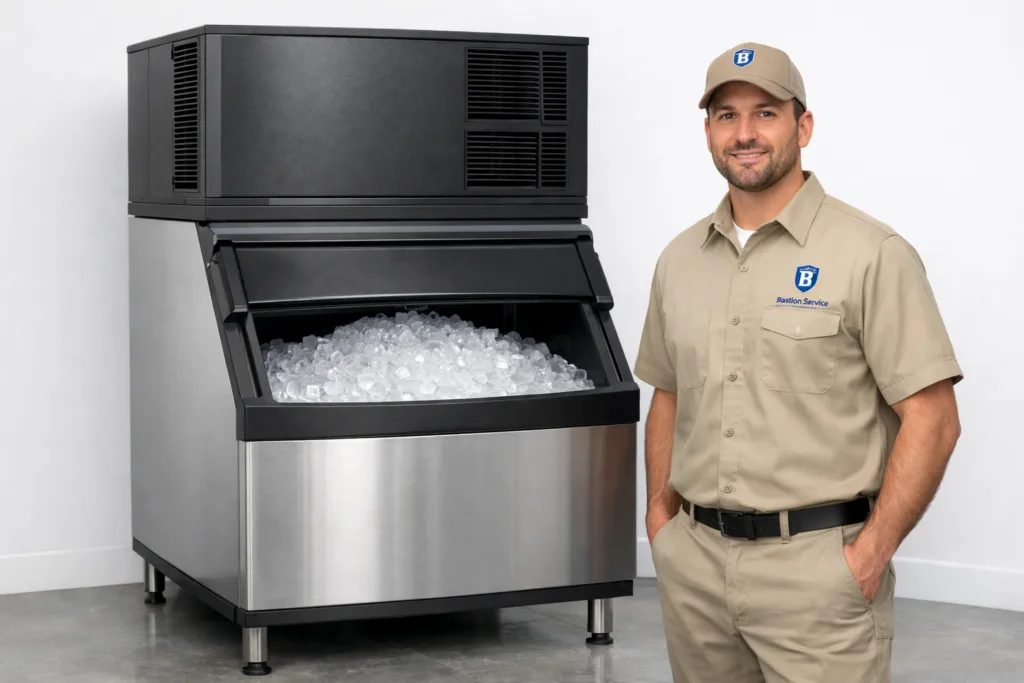




When a Manitowoc ice machine starts falling behind, leaking, shutting down, or producing questionable ice, the priority is usually restoring stable output without creating a bigger equipment problem. For businesses in Pico-Robertson, that means treating symptom patterns seriously and scheduling service based on what the machine is actually doing, not on trial-and-error resets. Bastion Service provides repair support for Manitowoc ice machine equipment with troubleshooting that helps determine whether the issue involves water supply, drainage, scale, sensors, controls, or refrigeration-related components.
For specific equipment paths in Pico-Robertson, review Manitowoc Ice Machine Repair in Pico-Robertson and Commercial Appliance Repair in Pico-Robertson.
Common Manitowoc ice machine problems that need repair attention
Ice machines rarely fail without warning. In many cases, the first signs are slower production, unusual cycling, inconsistent cube formation, water where it should not be, or a machine that runs but does not complete a normal harvest. These symptoms can disrupt beverage service, prep routines, and daily workflow long before a total shutdown happens.
Low ice production or no ice at all
If the bin is not filling as expected, the machine may be dealing with restricted water flow, a failing inlet component, scale buildup, dirty heat-transfer surfaces, sensor trouble, or a refrigeration issue that is affecting freeze performance. Low production can also show up as normal operation during one part of the day and a noticeable drop later, which often points to a system problem rather than simple high demand.
Service is especially important when output keeps declining after cleaning or when the machine appears to run continuously without delivering enough usable ice. A repair visit can separate maintenance-related causes from failed parts so managers know whether the unit can stay online temporarily or should be taken out of service.
Harvest problems and ice that will not release correctly
When a Manitowoc unit makes ice but struggles to release it, businesses may notice sheets of ice hanging up, partial drops, repeated attempts to harvest, or long pauses between cycles. Harvest trouble often points to scale, water distribution issues, thickness control problems, sensing faults, or refrigeration conditions that prevent the machine from reaching the proper transition between freeze and release.
This is one of the most important symptoms to address early because repeated failed harvest attempts can increase wear and extend downtime. If the machine is making ice but not completing the cycle, repair scheduling is usually more effective than waiting for a full stop.
Leaks, overflow, and drainage issues
Water around an ice machine should never be dismissed as normal. Leaks may come from drain restrictions, cracked lines, pump issues, overflow during the fill cycle, loose connections, or internal conditions that cause water to move where it should not. In addition to disrupting the equipment area, leaks can create slip hazards and lead to surrounding damage.
Finding the exact source matters. A machine that appears to have a simple floor leak may actually be showing signs of a drainage problem, a frozen-up condition, or a recurring water system fault that will continue until repaired properly.
Ice quality problems often point to a deeper equipment issue
Poor ice quality is not just a cosmetic concern. Cloudy cubes, hollow cubes, soft ice, misshapen ice, off-tasting ice, or inconsistent size can indicate trouble with water delivery, scale buildup, filtration conditions, freeze timing, or component performance. If quality changes happen alongside lower production or longer cycles, the machine may already be dealing with a broader operating fault.
For Pico-Robertson businesses, ice quality affects both customer experience and day-to-day consistency. When the machine starts producing ice that melts too fast, looks irregular, or no longer matches normal output, service should be considered before the issue develops into a shutdown.
Scale buildup and restricted water flow
Mineral buildup is one of the most common reasons ice machine performance starts to slide. Scale can interfere with water movement, sensor readings, slab formation, and normal freeze or harvest timing. Over time, that can lead to slow production, incomplete cycles, overflow, or repeated safety shutdowns.
In some situations, cleaning and descaling are part of the solution. In others, buildup has already contributed to valve problems, sensor errors, pump strain, or other failures that require repair. If the same symptoms keep returning after routine cleaning, the machine likely needs a closer inspection rather than another reset.
Shutdowns, alarms, and erratic cycling
Intermittent shutdowns are especially disruptive because staff cannot rely on the machine from one shift to the next. Manitowoc equipment may stop to protect itself when it detects abnormal water conditions, temperature problems, or cycle faults. A unit that restarts on its own, stops in the middle of production, or goes into repeated alarm conditions is usually signaling a problem that needs diagnosis.
These symptoms may involve sensors, control boards, wiring, fan or condenser performance, refrigeration faults, or water-related issues that are pushing the machine out of its normal operating range. The longer erratic cycling continues, the more difficult it can become to maintain predictable ice supply.
Signs the machine should not stay in use
Some problems allow limited operation until a scheduled visit. Others should be treated as immediate service issues. Continued use may make the situation worse when the machine is:
- Leaking steadily or overflowing
- Failing repeated harvest cycles
- Shutting down multiple times a day
- Making unusual grinding, buzzing, or knocking sounds
- Producing very little ice despite long run time
- Showing severe ice quality changes together with other symptoms
In those cases, keeping the machine online can increase wear on pumps, motors, controls, or cooling components. A service assessment helps determine whether short-term operation is reasonable or whether shutdown is the safer decision.
Repair versus replacement: what businesses should consider
Many Manitowoc ice machine problems are repairable, especially when the fault is identified before repeated breakdowns affect the rest of the system. Repair often makes sense when the issue is isolated, the machine is otherwise in solid condition, and restoring performance will return the unit to dependable daily use.
Replacement becomes a more serious consideration when the equipment has multiple recurring failures, extensive wear, declining reliability, or repair needs that no longer support the business operationally. The best decision usually depends on the current fault, the machine’s overall condition, expected downtime, and whether repair will meaningfully improve stability.
What to do when symptoms start affecting operations
If your Manitowoc ice machine is producing less ice, leaking, stopping mid-cycle, or creating ongoing quality concerns, the next step is to schedule service before the disruption spreads into normal workflow. Early attention can reduce downtime, limit secondary damage, and clarify whether the problem is maintenance-related, part-related, or a sign of broader system wear. For businesses in Pico-Robertson, timely repair scheduling is often the fastest path back to reliable ice production and more predictable daily operations.


