
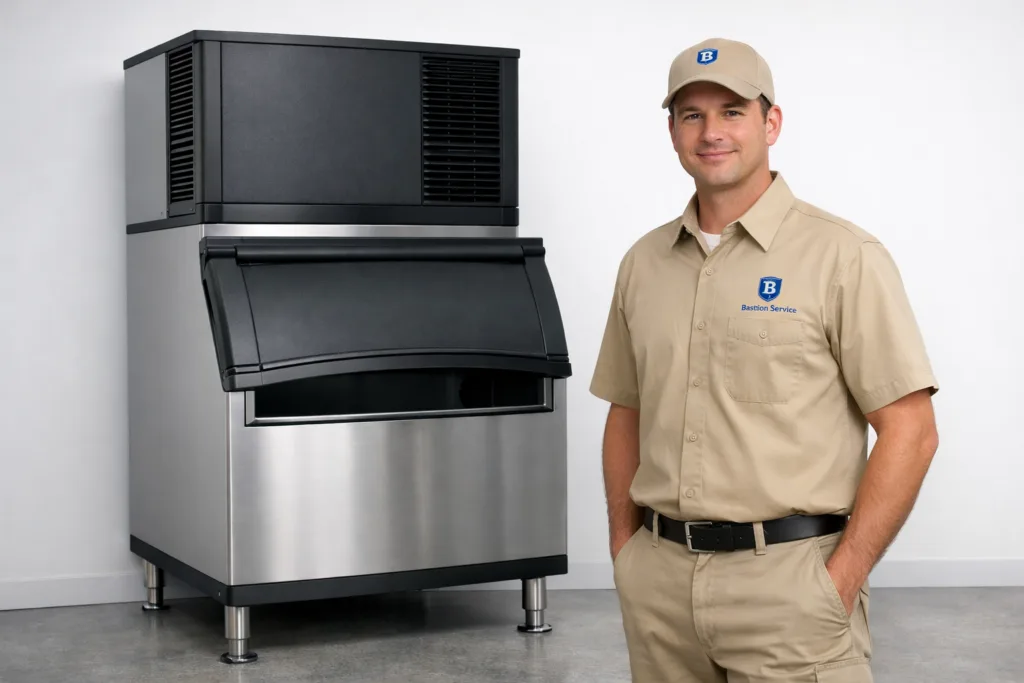




When a Manitowoc ice machine starts slowing down, leaking, producing poor ice, or stopping during business hours, the main priority is getting the problem identified before downtime spreads into service delays, sanitation concerns, or lost production. A repair visit should show what failed, whether the unit can stay in operation for the short term, and what needs to happen next to restore reliable output for a business in Mar Vista.
For specific equipment paths in Mar Vista, review Manitowoc Ice Machine Repair in Mar Vista and Commercial Appliance Repair in Mar Vista.
Bastion Service works with businesses in Mar Vista that need timely ice machine repair based on actual equipment behavior, not guesswork. That matters when a machine is still running but showing signs of trouble, because symptoms such as long freeze cycles, weak harvest, overflow, or cloudy ice often point to larger water flow, control, or component issues that can worsen if ignored.
Common Manitowoc ice machine symptoms that call for repair
Ice machine equipment often gives warning signs before a full shutdown. A unit may make less ice than usual, produce cubes with inconsistent shape, take too long to complete a cycle, leave sheets of ice on the evaporator, or shut off with no obvious pattern. In other cases, the first visible sign is water around the machine, a bin that never fills, or ice that no longer looks clean and usable.
These symptoms can come from different causes, including restricted incoming water, drain problems, scale buildup, sensor or control faults, pump issues, poor heat rejection, or wear in mechanical parts that support the freeze and harvest cycle. The important step is determining which condition is actually driving the problem so the repair plan matches the failure.
Low ice production and slow recovery
Why output drops
If the machine cannot keep up with demand, the issue may involve reduced water flow, mineral buildup on internal surfaces, a dirty or overheating condenser section, a control problem, or a refrigeration-related fault that extends freeze time. Some units continue running without showing an obvious alarm, but they never reach normal production, which creates a shortage during peak hours.
What businesses should watch for
- Bins taking longer than usual to refill
- Ice demand outpacing production during normal service periods
- Noticeably smaller batches
- Long pauses between harvest cycles
- Production that seems normal early in the day but drops later
Low production is often treated as manageable until the machine falls behind completely. Scheduling service early helps determine whether the problem is isolated and repairable or whether multiple conditions are affecting output at once.
Water flow problems, leaks, and overflow
Leaks around a Manitowoc machine should be taken seriously because the water source is not always where the puddle appears. The cause may be an incoming water issue, a drain restriction, overflow during the cycle, a loose connection, a damaged component, or an internal imbalance between freeze and harvest.
Water flow problems can also affect production long before a visible leak develops. Restricted fill, uneven distribution, or incomplete draining can interfere with normal ice formation and release, leading to thin batches, poor cube shape, or random shutdowns. If water is recurring on the floor or the machine is overflowing, leaving it in service can increase the chance of a larger interruption.
Harvest issues and repeated shutdowns
A Manitowoc unit that freezes ice but does not release it correctly may be dealing with sensor problems, thickness setting errors, hot gas or cycle control faults, water distribution issues, or scale interfering with normal harvest. These problems are easy to misread because the machine may complete one cycle and then fail on the next.
Repeated shutdowns are another sign that repair should be scheduled rather than postponed. Restarting the machine may restore operation temporarily, but intermittent stoppages often mean a part is failing under load or a protective shutdown is being triggered by another unresolved issue. The longer that pattern continues, the harder it can be to avoid a complete loss of production.
Scale buildup and declining ice quality
Cloudy ice, irregular cubes, excess film, mineral residue, or poor-looking batches often point to buildup inside the water system or to a related performance problem. Scale does more than affect appearance. It can reduce water movement, interfere with sensing, stress pumps and valves, and make harvest less consistent.
Ice quality complaints can also appear while the machine still seems functional, which is why they are easy to dismiss. In practice, visible ice changes often mean the machine is no longer operating within normal conditions. A service visit can determine whether the issue is mostly buildup, a failed part, or a combination of both.
Signs the machine should not keep running without service
Some equipment problems allow partial operation, but that does not always mean continued use is the safest choice. It is usually smart to stop and assess the machine if you notice:
- Frequent overflow or active leaking
- Abnormal noises during the cycle
- Warm, thin, or poor-quality ice
- Repeated shutdowns after reset
- Heavy visible scale and weak production at the same time
- Harvest failures that leave ice hanging or stuck
Running through those symptoms may turn a contained repair into a more expensive problem, especially when water exposure, extended cycle stress, or repeated restart attempts are involved.
What a repair assessment should help you decide
For many businesses, the urgent question is not only what failed, but whether the machine can remain in use until service is completed. A useful assessment should help answer practical operating questions such as whether production can continue at reduced capacity, whether the unit should be taken offline, and whether the issue is likely to worsen before parts are installed.
That decision matters in kitchens, beverage stations, food-service operations, and other settings where steady ice availability affects daily workflow. Repair planning should account for current downtime, the condition of the machine overall, the risk of repeat failure, and whether fixing the present issue is likely to restore stable operation.
Repair versus replacement considerations
Not every Manitowoc service call leads to the same recommendation. If the problem is limited to one failed component or a correctable water flow or scale-related condition, repair may be the most efficient path. If the machine has a history of recurring production loss, multiple failing parts, or poor reliability even after prior work, replacement planning may make more sense.
The value of diagnosis is that it turns symptoms into a workable decision. Instead of reacting to low ice output or a shutdown in the middle of the day, businesses can compare the likely repair scope, expected reliability afterward, and the operational risk of keeping the unit in service.
Scheduling Manitowoc ice machine service in Mar Vista
The best time to schedule repair is usually at the first sign of lower production, water flow trouble, leaks, harvest inconsistency, or repeated stoppages. For businesses in Mar Vista, fast action can help limit downtime, protect surrounding work areas, and keep a manageable problem from becoming a full shutdown. If your Manitowoc ice machine is affecting daily operations, the next step is to schedule service so the issue can be diagnosed, the repair scope can be confirmed, and your team can make an informed decision about continued use or immediate repair.


