
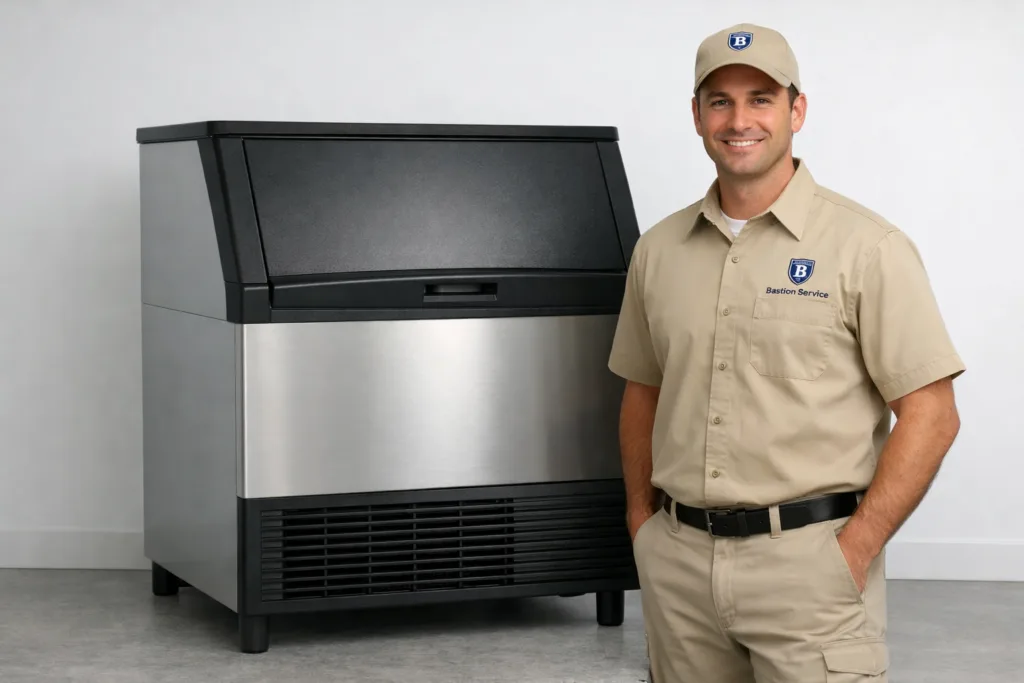




When a Manitowoc ice machine starts missing production targets, holding water, dropping poor-quality ice, or shutting down during service hours, fast service matters before a small issue turns into a larger interruption. For businesses in Manhattan Beach, ice equipment problems can affect beverage service, food holding, staff workflow, and customer-facing operations. Bastion Service helps identify whether the trouble is tied to water supply, scale buildup, refrigeration performance, sensors, harvest function, drainage, or an electrical fault, then helps schedule the repair path around operational needs.
For specific equipment paths in Manhattan Beach, review Manitowoc Ice Machine Repair in Manhattan Beach and Commercial Appliance Repair in Manhattan Beach.
A service visit is most useful when it answers the questions that matter day to day: whether the machine can remain in limited use, whether it should be taken offline, what parts or corrections are likely involved, and how quickly production can be stabilized. That is especially important when the equipment is still running but showing signs of uneven cycles, slower recovery, or declining ice quality.
Common Manitowoc Ice Machine Problems That Need Repair
Ice machine problems often appear as performance changes before a total shutdown. A unit may still operate while producing less ice, taking longer to complete cycles, making undersized or cloudy cubes, or stopping unpredictably. Those symptoms usually point to a repair need rather than a simple inconvenience, especially when they continue across multiple batches.
Low Ice Production or Slow Recovery
If output drops and the bin is no longer keeping up with demand, possible causes include restricted water flow, scale on internal components, refrigeration issues, sensor misreadings, or harvest problems. Low production is often treated as manageable at first, but in practice it can quickly create service delays once demand rises. If the machine is making ice more slowly than normal or not refilling storage as expected, it is usually time to have the system evaluated.
Water Leaks, Overflow, or Drain Issues
Water around the machine may come from clogged drains, fill problems, cracked lines, loose connections, or faults during freeze and harvest cycles. Leaks should not be ignored because they can lead to slip hazards, cabinet damage, and secondary failures in nearby components. A proper repair assessment helps determine whether the leak is isolated or part of a larger water management problem inside the machine.
Freeze Cycle, Harvest Cycle, or Shutdown Faults
When the unit freezes incorrectly, fails to release ice at the right time, or stops in mid-cycle, multiple systems may be involved. Controls, thermistors, water distribution components, and refrigeration-related parts can all contribute to similar symptoms. That is why symptom-based repair is more effective than guessing from one visible issue. If the machine is repeatedly failing to complete a batch, service should be scheduled before more components are stressed.
Scale Buildup and Ice Quality Problems
Scale can interfere with water movement, sensing, heat transfer, and harvest timing. Businesses may notice cloudy ice, uneven cube formation, thin ice, mineral residue, or changes in appearance that make the product less usable. In these cases, the repair plan may involve both correcting the immediate fault and checking whether buildup has already affected valves, probes, pumps, or other parts involved in normal cycling.
How Symptom Patterns Help Identify the Likely Cause
One of the biggest challenges with ice machine repair is that different faults can create similar results. A machine that is short-cycling, underproducing, or shutting down may be reacting to water flow restrictions, sensor errors, a drain problem, or loss of cooling performance. Looking at the full pattern usually provides a better direction than focusing on one symptom by itself.
- Low output with normal operation sounds can point to water flow restrictions, scale, or cycle timing issues.
- Leaks during or after production may indicate drain blockage, fill problems, or overflow conditions.
- Cloudy, thin, or misshapen ice often suggests mineral buildup, water distribution issues, or freeze-cycle irregularities.
- Repeated shutdowns or fault behavior can involve controls, safety responses, or underlying operating conditions that the machine cannot correct on its own.
- Ice hanging up during release may relate to harvest timing, scale interference, or temperature-related performance issues.
For managers and facility teams, that kind of pattern-based diagnosis helps with operational decisions. If the machine is still producing but quality and recovery are falling, repair can often be planned before a complete outage. If it is leaking, stopping repeatedly, or making unusable ice, faster action is usually the better move.
When Continued Use Can Create Bigger Problems
Some equipment issues should not be treated as wait-and-see situations. Ongoing leaks, repeated shutdowns, loud abnormal operation, partial freeze patterns, and persistent harvest trouble can put added strain on pumps, valves, controls, and cooling components. What starts as reduced performance can turn into more expensive downtime if the unit is pushed through heavy use without correction.
Continued use can also create operational problems beyond the machine itself. Poor-quality ice can affect presentation and service consistency. Inadequate production can slow staff during peak periods. Water escaping from the unit can create cleanup, safety, and flooring concerns. If the machine is already showing unstable behavior, having it checked before the next busy stretch is often the more practical choice.
What a Repair Visit Helps Clarify
A repair appointment is not only about confirming that something is wrong. It helps establish whether the condition is isolated, whether other wear is present, and whether the machine can be returned to stable operation without repeated interruptions. That matters when a business is deciding whether to approve a targeted repair now or prepare for a larger equipment decision later.
During evaluation, the goal is to understand:
- whether the unit can safely remain in service for the short term,
- whether the problem is centered on water flow, drainage, controls, harvest operation, or cooling performance,
- whether scale buildup has contributed to multiple symptoms, and
- whether the current issue is likely to cause repeat downtime if left unresolved.
This approach gives businesses in Manhattan Beach a better basis for scheduling work and avoiding unnecessary disruption. It also helps avoid replacing parts based only on assumptions when the real problem may be elsewhere in the cycle.
Repair Versus Replacement Considerations
Not every machine with a performance issue needs to be replaced. In many cases, repair is the practical path when the fault is limited and the rest of the equipment remains in solid condition. That is often true for issues involving drainage, water feed, scale-related interference, controls, or isolated cycle problems.
Replacement becomes a more serious discussion when breakdowns are recurring, prior work has not restored stable production, or several systems are showing wear at the same time. The right choice depends on the machine’s condition, repair history, and how essential dependable ice output is to daily operations. A diagnosis helps frame that decision around actual equipment condition instead of guesswork.
Scheduling Manitowoc Ice Machine Repair in Manhattan Beach
Businesses looking for Manitowoc ice machine repair in Manhattan Beach usually need more than a list of possible causes. They need to know what is happening, how urgently it needs attention, and what next step makes the most sense for operations. If your machine is underproducing, leaking, shutting down, scaling up, or making poor-quality ice, scheduling service promptly can help limit downtime, protect equipment condition, and restore more predictable performance.


