
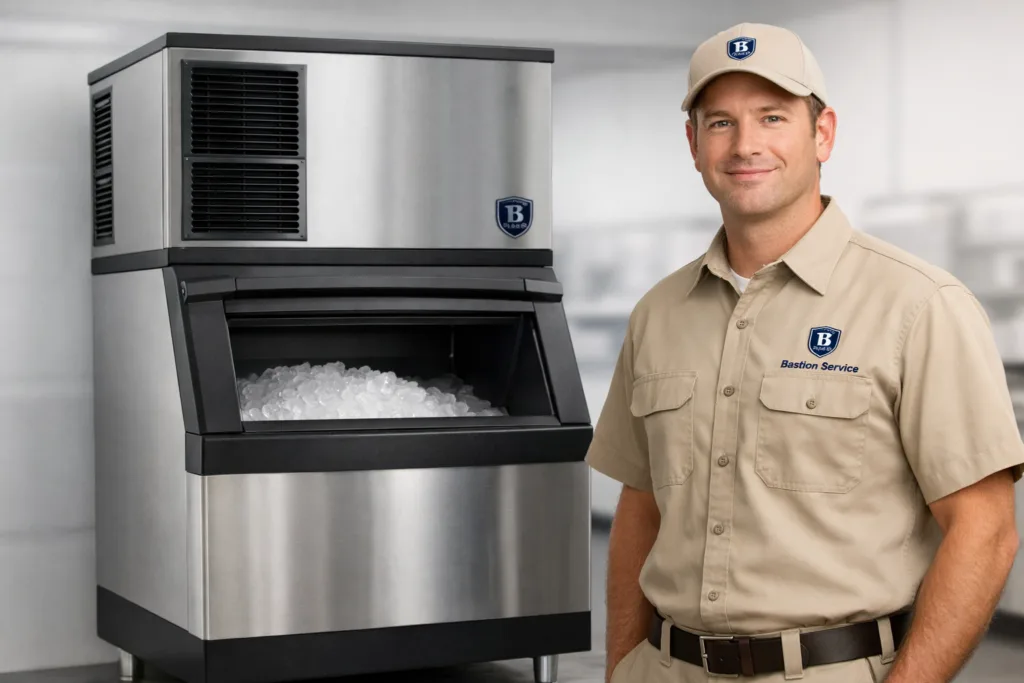




When a Manitowoc ice machine starts missing output expectations, leaking, producing poor-quality ice, or shutting down during use, the repair decision should be based on the actual fault rather than repeated resets or guesswork. For businesses in Inglewood, service is most useful when it identifies what system is failing, whether the machine should remain in operation, and how quickly repair should be scheduled to limit disruption. Bastion Service helps businesses in Inglewood evaluate these problems with symptom-based repair support focused on uptime, sanitation, and equipment reliability.
For specific equipment paths in Inglewood, review Manitowoc Ice Machine Repair in Inglewood and Commercial Appliance Repair in Inglewood.
What Common Manitowoc Ice Machine Symptoms Usually Mean
Many ice machine problems start as performance changes instead of a full outage. A unit may still run while producing less ice, taking longer to complete cycles, or dropping cubes that look soft, cloudy, hollow, or uneven. Those changes can point to water supply restrictions, scale buildup, sensor or control issues, drainage problems, refrigeration faults, or wear in parts that manage freeze and harvest operation.
The important step is separating a minor condition from a problem that can spread. A machine that is still operating can still be causing hidden damage, wasting water, stressing components, or producing ice that is no longer suitable for normal use.
Low Ice Production or No Ice
If the machine is making less ice than usual, the cause may be restricted water flow, a failing inlet valve, scaling in the water system, poor heat transfer, sensor problems, or refrigeration performance issues. In daily operations, reduced output often shows up before complete failure, which is why an early repair visit can be useful even when the unit has not stopped entirely.
If the machine is not making ice at all, the issue may involve power supply, controls, water fill problems, safety shutoff conditions, or a larger system fault. Repeatedly restarting the machine may temporarily restore operation without resolving the reason it stopped.
Leaks, Overflow, or Water Around the Unit
Water on the floor or inside the machine cabinet should be treated as a repair issue, not just a housekeeping issue. Leaks can come from damaged water lines, blocked or slow drains, valve problems, cracked components, or freeze-related irregularities that affect normal water movement. Overflow may also indicate that the machine is not managing fill, circulation, or drainage correctly.
In addition to interrupting operations, leaking water can create slip risk and affect nearby equipment or surfaces. If the same wet area keeps returning, it usually means the machine needs inspection rather than continued operation.
Slow Harvest or Ice That Will Not Release Properly
When a Manitowoc machine struggles to release ice, stays too long in harvest, or forms slabs that do not drop as expected, the underlying cause is not always obvious from the outside. Scale, water distribution issues, thickness control problems, sensor failure, and refrigeration imbalance can all create similar symptoms.
Because several different faults can produce the same visible result, harvest problems are best handled through diagnosis rather than trial-and-error part replacement. Waiting too long can turn an intermittent cycle issue into a no-ice condition.
Ice Quality Problems That Should Not Be Ignored
Changes in ice appearance or texture often signal that the machine is no longer operating within normal conditions. Cloudy cubes, soft ice, hollow centers, irregular sizing, or ice that melts too quickly may point to mineral buildup, uneven water distribution, temperature instability, contamination concerns, or component wear.
For businesses that rely on consistent beverage or food-service presentation, ice quality matters as much as output. If the machine is producing ice with unusual taste, odor, shape, or clarity, the issue should be checked before it affects service standards or leads to a broader shutdown.
- Cloudy or white ice may suggest mineral accumulation or water flow issues.
- Small or incomplete cubes can indicate restricted fill, low water volume, or freeze problems.
- Soft or fast-melting ice may point to temperature or harvest-related faults.
- Unusual odor or taste can signal sanitation problems or water-system contamination concerns.
Scale Buildup and Water Flow Problems
Scale is one of the most common contributors to Manitowoc ice machine performance problems. Mineral buildup can coat internal surfaces, interfere with water movement, affect sensors, and make it harder for the machine to form and release ice correctly. What begins as slower production can eventually lead to repeated errors, poor harvest, or shutdowns.
Water flow problems are not always caused by visible buildup alone. Restricted inlet conditions, valve wear, pump issues, and drain limitations can all reduce performance. A repair assessment helps determine whether the main issue is cleaning-related, part failure, or a combination of both.
Unexpected Shutdowns and Intermittent Operation
If the machine starts and stops unpredictably, powers down during use, or only works after being reset, there is usually an underlying fault that needs attention. Intermittent operation can be tied to controls, sensors, electrical components, overheating conditions, or protective shutdowns related to water or refrigeration performance.
These are high-impact problems for businesses because the machine may appear to recover and then fail again during a busy period. When shutdowns become part of the symptom pattern, the goal of service is not only to restart the unit but to identify why it is going off-line in the first place.
When Continued Operation Can Make the Problem Worse
Some symptoms suggest the machine should not remain in use until it has been inspected. That includes repeated shutdowns, active leaking, poor drainage, visible sanitation concerns, major drops in production, and ice that is clearly abnormal or unusable. Running the unit in that condition can increase wear, damage additional parts, or create cleanup and safety issues that extend downtime later.
Businesses often benefit from stopping use and scheduling repair promptly when they notice:
- Water leaking onto the floor or collecting inside the unit
- Repeated lockouts or unexplained shutoffs
- Long harvest cycles or ice that sticks and does not release
- Sharp decline in output during normal demand
- Ice quality changes that raise sanitation or service concerns
How a Repair Visit Helps With Planning and Downtime Control
A proper repair visit should clarify more than whether the machine can be restarted. It should identify the failing system, check for related wear, explain whether operation should be limited, and help determine if repair remains the right path for the current unit. That matters when scheduling around staffing, service volume, product demand, and the cost of a larger interruption.
In some cases, the repair is straightforward and isolated. In others, recurring symptoms such as repeated low production, chronic leaks, or ongoing shutdowns may point to a broader reliability problem. Knowing that difference helps businesses decide whether to move forward with repair now or begin planning around a larger equipment decision.
Scheduling Manitowoc Ice Machine Service in Inglewood
If your Manitowoc unit is making less ice, showing harvest issues, leaking, developing water flow problems, shutting down unexpectedly, or producing ice that no longer looks right, the next step is to schedule service before the disruption expands. A symptom-based inspection can help confirm the cause, define the repair scope, and determine whether the machine should stay in use while work is planned. For businesses in Inglewood, that approach makes it easier to protect daily operations and move forward with a repair plan based on the machine’s real condition.


