
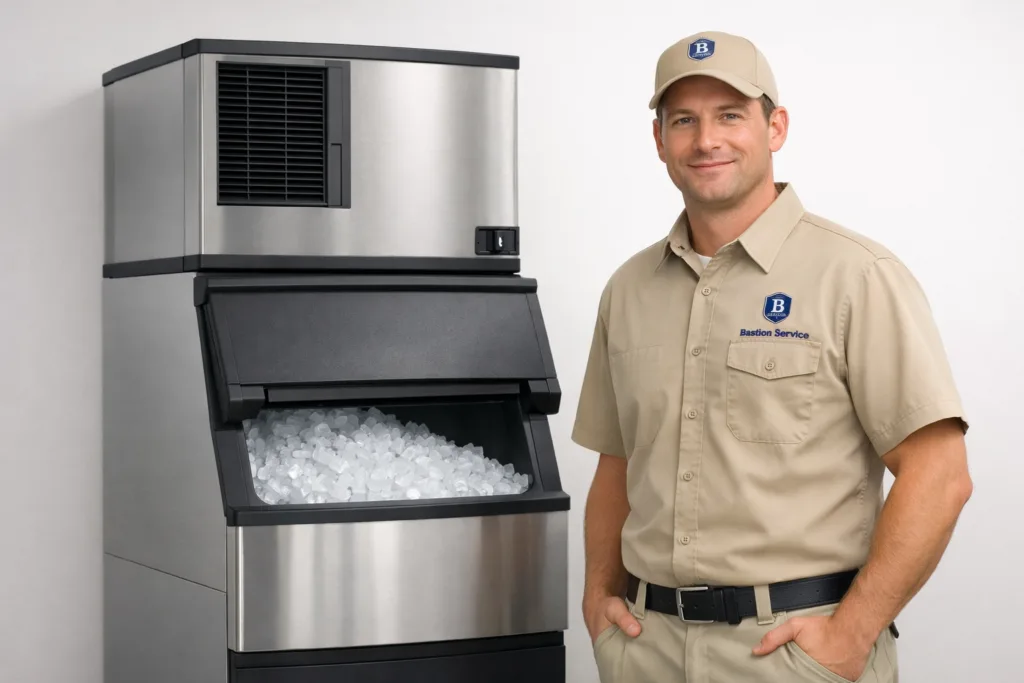




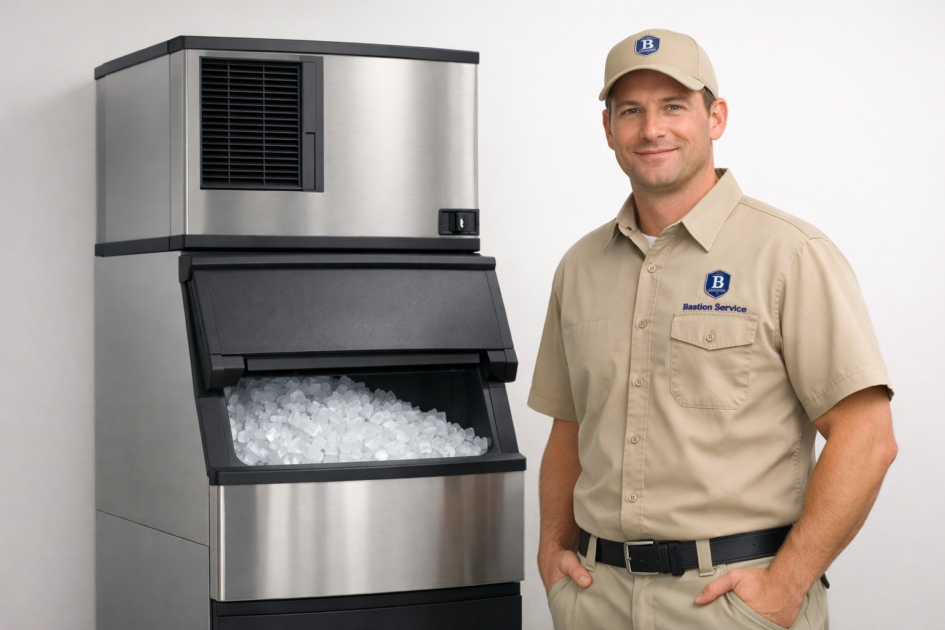
Ice machine problems can disrupt beverage service, prep flow, sanitation routines, and customer experience faster than many equipment issues. When a Manitowoc unit starts falling behind, leaking, shutting down, or producing poor-quality ice, the most effective next step is to schedule service based on the symptom pattern, the urgency of the downtime, and whether the machine can continue operating without creating larger problems for the business.
For specific equipment paths in Cheviot Hills, review Manitowoc Ice Machine Repair in Cheviot Hills and Commercial Appliance Repair in Cheviot Hills.
In Cheviot Hills, businesses often need more than a quick reset or surface cleaning. Ice production issues may come from water supply restrictions, scale buildup, drainage trouble, sensor faults, refrigeration-related performance loss, or control failures. Bastion Service works with businesses to identify what is actually causing the disruption so repair scheduling, part replacement decisions, and short-term operating plans are based on the condition of the equipment rather than guesswork.
Common Manitowoc ice machine symptoms that point to repair needs
Many units show progressive warning signs before a complete outage. A machine may still run, but produce less ice, take too long to recover, form incomplete cubes, delay harvest, or stop unpredictably between cycles. Those symptoms usually mean the machine is no longer operating within a normal range and should be evaluated before the problem affects service more severely.
Low ice production or slow recovery between busy periods
If the bin is not filling as expected or the machine cannot keep up with daily demand, the cause may involve reduced water flow, a restricted filter, a failing inlet valve, scale on internal surfaces, weak refrigeration performance, or a control issue that is extending cycle times. Low production should not be treated as a minor inconvenience, because the machine may continue running while gradually losing capacity until staff are left short during peak hours.
This symptom matters most when the unit previously kept pace and now struggles under the same workload. That change usually indicates a serviceable fault rather than a simple increase in demand.
Ice quality problems, soft cubes, or irregular formation
Cloudy ice, thin cubes, hollow formation, sheets that do not break cleanly, or inconsistent size can point to water quality concerns, scale accumulation, freeze-cycle imbalance, or sensor and control problems. Poor ice quality affects more than appearance. It can signal that the machine is freezing unevenly, harvesting improperly, or operating outside expected temperature and timing ranges.
When ice quality changes suddenly, businesses should treat it as an equipment issue rather than a cosmetic one. Continuing to use the machine without diagnosis can lead to more waste, inconsistent output, and further strain on the system.
Water leaks, overflow, and drainage issues
Water on the floor, backup at the drain line, overflow during fill, or moisture collecting around the machine should be addressed promptly. These problems may come from drain restrictions, pump issues, loose internal connections, line obstructions, or cycle-related faults that prevent proper water movement through the machine.
Even if the unit still makes ice, a leak can create sanitation concerns, slip hazards, and damage around the installation area. Repeated overflow also suggests the machine is not managing water correctly during normal operation.
Harvest failures and ice not releasing properly
When ice sticks to the evaporator, drops unevenly, or the machine stalls during harvest, the issue may involve scale buildup, temperature sensing problems, refrigeration imbalance, or control faults. Harvest-related symptoms are especially important because a machine can appear to be freezing normally but still fail to complete the cycle that actually delivers usable ice to the bin.
If staff notice longer cycle times, partial release, or repeated attempts before the machine moves on, service should be scheduled before the unit progresses to a full shutdown.
Unexpected shutdowns or repeated restarts
A Manitowoc machine that stops without warning, requires manual restarting, or goes into protective shutdown is usually responding to an underlying operating fault. That could involve water flow, temperature conditions, sensor readings, electrical issues, or control board behavior. Repeated resets may temporarily restore operation, but they rarely solve the actual cause.
When shutdowns become part of the daily routine, the equipment is no longer reliable enough to trust during normal business use. That is usually the point where diagnosis becomes more cost-effective than continued interruption.
What different symptoms often mean for service urgency
Not every problem carries the same level of urgency, but several signs usually mean businesses should move quickly:
- Ice production dropping below daily operating needs
- Leaks or overflow affecting floors, walls, or nearby equipment
- Soft, cloudy, or incomplete ice appearing consistently
- Harvest cycles taking too long or failing repeatedly
- Machine shutdowns, error behavior, or constant restarting
- Visible scale buildup paired with weaker performance
In general, any symptom that changes output, water handling, or cycle completion should be treated as a repair issue rather than a routine annoyance. The longer the machine runs under those conditions, the greater the chance that one fault will contribute to another.
Scale buildup and water flow problems often overlap
Two of the most common causes behind Manitowoc performance complaints are scale accumulation and restricted water flow. These conditions often show up together. A machine with mineral buildup may freeze unevenly, harvest poorly, and produce less ice. A machine with water supply or fill problems may create thin cubes, inconsistent slab formation, or erratic cycling.
Because the visible symptom can look similar across different failures, service should focus on confirming whether the problem is primarily maintenance-related, component-related, or a combination of both. That distinction affects whether the machine needs cleaning and correction, part replacement, or broader repair work to restore stable operation.
When it makes sense to stop using the machine until service arrives
Some machines can continue limited operation while waiting for a scheduled visit, but others should be taken out of service. If the unit is leaking, shutting down repeatedly, producing unusable ice, or showing signs that cycles are not completing correctly, continued use may create additional wear or expose the business to sanitation and safety concerns.
It is also a good idea to stop operation when staff are constantly working around the problem by discarding ice, restarting the machine, adjusting routines to compensate for low production, or monitoring it between service periods. Those workarounds usually indicate the equipment is no longer dependable enough for daily use.
Repair versus replacement considerations
Many Manitowoc ice machine issues can be repaired effectively when the fault is isolated and the machine has otherwise met the location’s production needs. Problems involving valves, pumps, sensors, controls, drainage, or scale-related operating issues are often worth correcting if the rest of the machine is in workable condition.
Replacement becomes a more realistic discussion when the unit has recurring breakdowns, severe long-term scale damage, major refrigeration concerns, or repair costs that no longer align with the age and condition of the equipment. A good service evaluation should help management decide not only what failed, but whether the machine is likely to return to steady operation after the repair is completed.
What businesses in Cheviot Hills should expect from a service visit
A useful repair visit should connect the visible symptom to the actual failure path. That means identifying whether the problem starts with incoming water, internal water movement, freeze and harvest timing, refrigeration performance, drainage, or controls. From there, the business can make an informed decision about immediate repair, additional corrective work, or whether temporary operational adjustments are needed until the machine is fully restored.
For businesses in Cheviot Hills, the goal is not simply to get the machine running for a few hours. It is to restore reliable ice production, reduce the chance of repeat interruptions, and choose the repair path that best supports daily operations. If your Manitowoc ice machine is showing low output, leaks, shutdowns, harvest issues, scale buildup, or ice quality concerns, the next practical step is to schedule diagnosis and repair before a partial problem turns into a full loss of service.


