
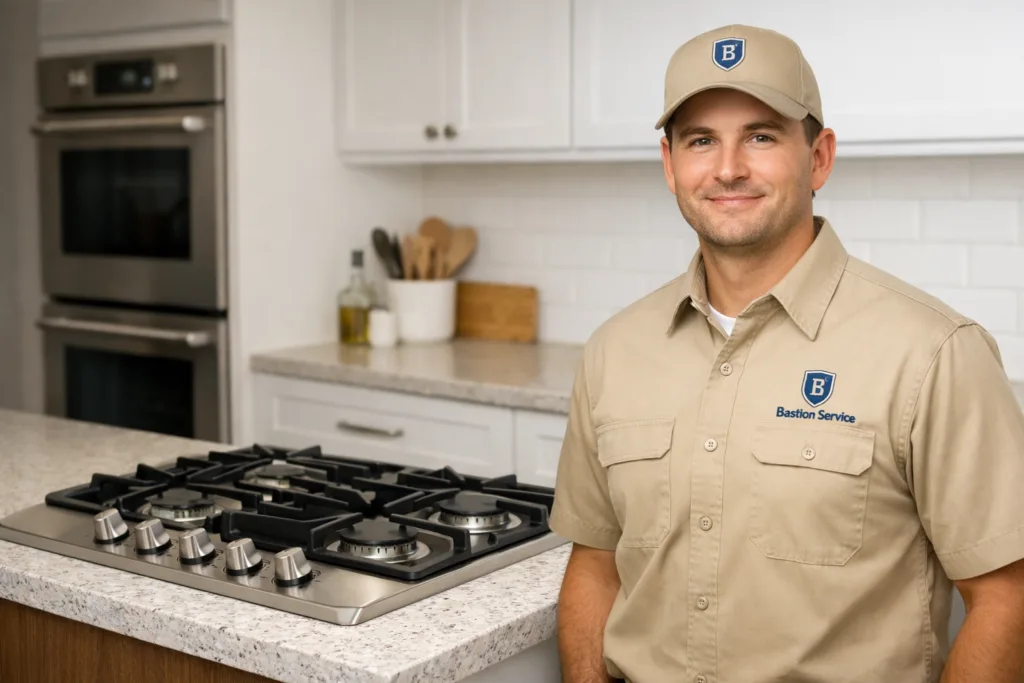





Cooktop problems tend to show up in everyday use before they become complete failures. A burner may start taking longer to ignite, one zone may run hotter than the setting suggests, or the surface may click long after the flame appears. On a Kenmore cooktop, those early symptoms often point to a specific part or condition, and recognizing the pattern helps narrow down whether the issue is related to ignition, heat control, wiring, or physical burner wear.
Related Kenmore and cooktop service paths in Cheviot Hills include Kenmore Appliance Repair in Cheviot Hills, Cooktop Repair in Cheviot Hills, and Kenmore Refrigerator Repair in Cheviot Hills.
Common Kenmore cooktop symptoms and what they often mean
Burners that click but do not light
On gas models, repeated clicking usually means the igniter is trying to spark but the burner is not lighting normally. Sometimes the cause is simple, such as a wet burner area after cleaning, food debris blocking burner ports, or a burner cap that is slightly out of position. In other cases, the issue may involve the spark module, ignition switch, or a problem with gas flow to that burner.
If one burner is affected while the others work normally, the fault is often isolated to that burner assembly. If multiple burners behave the same way, the diagnosis may shift toward shared ignition components or control-related issues.
Burners that heat weakly or not at all
On electric Kenmore cooktops, a burner that stays cold or only warms slightly can indicate a failed surface element, a damaged receptacle, a bad infinite switch, or a wiring problem. On smooth-top radiant units, the burner may appear to cycle on but still fail to produce normal cooking heat. That can point to a weakened element, sensor issue, or control fault affecting how power is delivered.
When the problem appears only at certain settings, homeowners often assume the burner itself is bad, but control components are also common causes. That is especially true when low and medium settings behave unpredictably.
Uneven flame or inconsistent heating
Gas burners should produce a steady, even flame. If the flame looks patchy, lifts unevenly, or concentrates on one side, the burner ports may be obstructed or the cap may not be seated correctly. On electric units, uneven heating often shows up as hot spots, slow pans, or simmer settings that swing too far up or down. Those patterns can reflect element wear or switching problems rather than cookware alone.
Controls that do not respond normally
Knobs that feel loose, settings that do not match actual heat output, or controls that only work in part of their range can signal wear inside the switch or control assembly. If a burner stays too hot even after being turned down, that is a strong sign the control side needs attention rather than the burner being “too powerful.”
Loss of power or breaker trips
A cooktop that suddenly goes dead, resets intermittently, or trips electrical protection should be checked before regular use continues. The cause may be external power supply trouble, but internal wiring, terminal damage, shorted components, and control failures are all possible. Repeated resets are not a normal operating condition.
Problems that deserve prompt service
Some symptoms are more than a convenience issue and should be addressed quickly:
- Burners that spark continuously
- Any visible scorching, melting, or burning smell
- A smooth-top surface with cracking or impact damage
- Burners that will not turn down or shut off correctly
- Intermittent power loss during use
- Repeated breaker trips
For gas models, a strong or persistent gas odor is a stop-use situation. Leave the appliance off and follow appropriate gas safety steps before arranging repair.
How cracked glass changes the repair decision
On radiant or induction-style Kenmore cooktops, glass damage is not just cosmetic. Even a crack that seems small can affect safe operation, especially if moisture reaches internal components or the damaged area expands with heat. If the glass is chipped, spidered, or visibly split, continued use is risky and the cooktop should be inspected before being turned on again.
Whether repair makes sense depends on the extent of the damage, part availability, and the condition of the rest of the appliance. If the cooktop also has failing burners or control issues, replacement may become the more practical path.
Why symptom patterns matter more than guesswork
The same complaint can come from very different causes. A burner that will not heat might need a new element, but it could also have a failed switch or damaged wiring. A burner that clicks nonstop may only need cleaning and repositioning, or it may need ignition-related parts. Replacing parts based on assumptions can add cost without solving the original problem.
That is why homeowners in Cheviot Hills usually benefit most from service that starts with the actual behavior of the cooktop: which burner is affected, whether the issue happens constantly or intermittently, and whether it changes when the appliance is warm, cool, or used on multiple settings.
When repair is usually worthwhile
Repair is often a sensible option when the problem is limited to one or two identifiable parts and the cooktop is otherwise in solid condition. Common examples include a failed igniter, worn switch, damaged burner assembly, faulty element, or isolated wiring issue. If the frame, glass, and controls are in generally good shape, those repairs can restore normal day-to-day use without turning into an open-ended project.
When replacement may make more sense
Replacement starts to become the better option when the cooktop has multiple active issues, major surface damage, recurring electrical faults, or signs of broader age-related wear. It may also be the better choice if the required parts are unusually costly compared with the value and remaining life of the appliance. In those cases, the question is not just whether the unit can be repaired, but whether the result is likely to be reliable enough to justify the investment.
What to note before scheduling Kenmore cooktop repair in Cheviot Hills
A few details can make diagnosis faster and more accurate:
- Which burner or burners are affected
- Whether the problem is constant or intermittent
- Whether the issue started after cleaning, a spill, or heavy use
- If the cooktop trips power, clicks continuously, or smells hot
- Whether the controls behave differently on low, medium, and high settings
Those symptom details often reveal whether the problem is likely centered on ignition, heat regulation, power delivery, or physical burner damage.
What homeowners in Cheviot Hills can expect from a useful service visit
A good service call focuses on how the cooktop is actually failing, not just on swapping the most common part. That means checking burner response, ignition performance, control operation, element behavior, and visible signs of wear or damage. The goal is to identify the failed component, explain whether the repair is straightforward, and help you decide if restoring the unit is the right move for your kitchen.
For many households in Cheviot Hills, the best outcome is not simply getting one burner working again. It is knowing whether the Kenmore cooktop can return to safe, consistent cooking with a repair that makes sense for the appliance’s condition and the way it is used at home.


