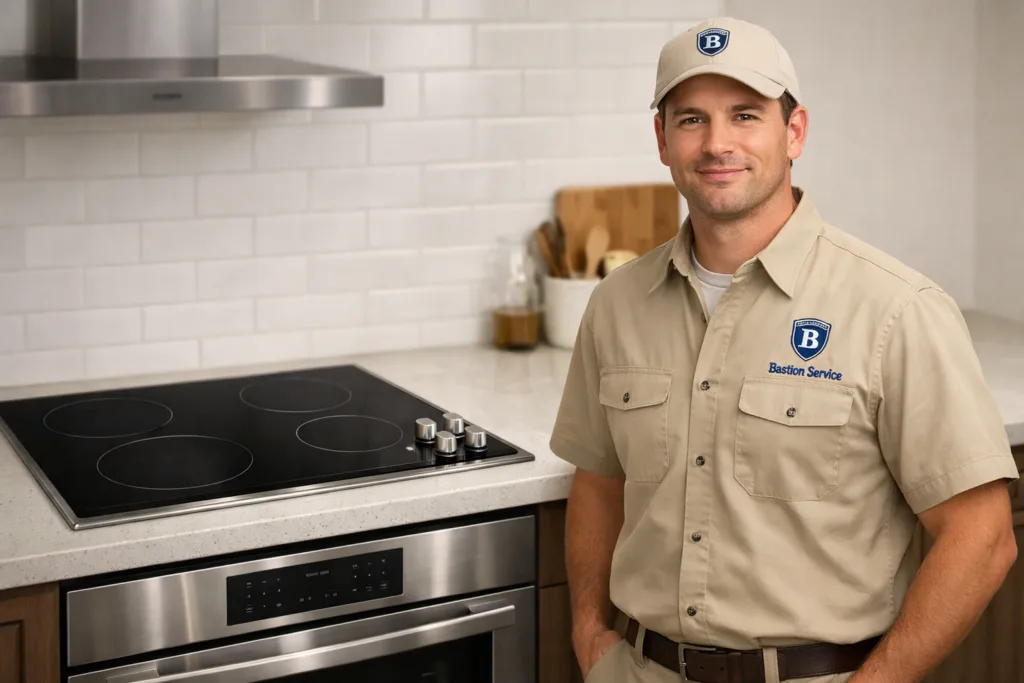
Cooktop problems often show up as one obvious symptom, but the part that actually failed may be somewhere else in the system. A burner that will not heat, for example, may be caused by the burner itself, the switch behind the knob, wiring damage, a faulty spark component, or a power-related issue. For homeowners in Century City, the most useful repair visit is one that matches the symptom to the actual fault before parts are recommended.
Related Kenmore and cooktop service paths in Century City include Kenmore Appliance Repair in Century City, Cooktop Repair in Century City, and Kenmore Refrigerator Repair in Century City.
What common Kenmore cooktop symptoms usually mean
Kenmore cooktops can develop both electrical and mechanical problems over time. Some are straightforward wear issues, while others involve hidden faults under the top surface or behind the controls.
Burner not heating on an electric cooktop
If an electric burner stays cold, heats only partway, or cuts in and out, the problem may involve a failed radiant element, a damaged receptacle, a weakened infinite switch, or a wiring connection that has overheated. In some cases, one burner fails while the rest of the cooktop still works normally, which can help narrow the issue to that burner circuit.
Gas burner clicks but will not ignite
When a gas burner clicks repeatedly without lighting, common causes include a dirty burner head, misaligned burner cap, moisture after cleaning, a worn spark electrode, or a spark module problem. If the burner lights with a match but not from the igniter, that usually points more strongly to the ignition system than to gas flow.
Burner heats unevenly or too slowly
Uneven heat can show up as poor simmer control, slow boiling, or hot spots that make pans cook inconsistently. On electric models, that may indicate a weak element or control issue. On gas models, it can result from blocked burner ports, improper flame distribution, or burner components that are not seated correctly.
Burner gets too hot and will not regulate
A burner that ignores the selected setting and runs hotter than expected often suggests a failing switch or control fault. This is more than a convenience problem. Overheating can damage cookware, shorten the life of surrounding components, and make the cooktop less safe to use during routine meal prep.
Constant clicking or sparking
Repeated clicking after ignition is commonly caused by moisture, food residue around the igniter area, a sticking switch, or a spark system fault. If the clicking continues long after the burner is lit, it should be inspected rather than dismissed as normal behavior.
Cracked glass or loose controls
Physical damage matters on cooktops because the surface and controls are part of safe operation. A cracked glass top can worsen with heat and weight. Loose knobs or damaged stems may also hide switch damage below the control panel.
Signs the problem is getting worse
Some cooktop issues stay relatively stable for a short time, but many become more expensive if they are ignored. It is usually smart to stop normal use and arrange service when you notice any of the following:
- A burner works only intermittently
- The same burner keeps failing after being reset or cleaned
- Heat levels do not match the knob setting
- Clicking continues on its own
- There is scorching, melting, or an electrical smell
- The cooktop trips power or behaves unpredictably
- The glass surface is cracked or a burner assembly feels unstable
These symptoms often point to wear that is spreading beyond a single easy-to-replace part.
When to stop using the cooktop right away
Some failures move beyond inconvenience and into a safety concern. Stop using the cooktop and have it checked promptly if you notice sparking under the surface, visible wire damage, a burner that will not turn down, or signs of heat damage around the controls.
On gas models, a strong or persistent gas odor should never be ignored. Do not continue testing the burner. Shut the unit off and address safety first before scheduling repair.
Why one failed burner does not always mean one bad part
Homeowners are often told that a single dead burner means the burner element or igniter must be replaced. Sometimes that is true, but not always. A nonworking burner can also be caused by a failed switch, damaged harness, poor terminal connection, or a problem in the ignition circuit. That is why symptom-based diagnosis matters: replacing the obvious part without confirming the cause can leave the original problem unresolved.
Repair versus replacement for a Kenmore cooktop
Many Kenmore cooktop problems are worth repairing when the fault is isolated and the rest of the appliance is in good shape. Igniters, burner elements, switches, receptacles, and certain control-related components are often repairable issues.
Replacement may make more sense when there is extensive glass damage, multiple burner failures, widespread wiring deterioration, or parts availability problems. Age alone does not decide the answer. The better question is whether the needed repair is limited and cost-effective compared with the overall condition of the cooktop.
Situations where repair is often reasonable
- Only one burner is affected
- The symptom points to a single switch, igniter, or element
- The cooktop surface and controls are otherwise in good condition
- The appliance has been performing normally until the recent failure
Situations where replacement may be considered
- The glass top is badly cracked or structurally compromised
- Several burners or controls are failing at once
- Internal heat damage has spread to multiple components
- The repair path depends on parts that are no longer practical to source
Issues that often appear after cleaning or heavy use
Cooktop problems sometimes begin right after a deep cleaning, a spill, or a period of frequent cooking. On gas units, moisture can interfere with ignition and cause repeated clicking until the area dries completely. On electric models, boil-overs and heat buildup can contribute to switch wear or damage around burner connections. If the symptom started immediately after a spill or cleaning session, that timing can be helpful in tracing the cause.
What a service visit should help you understand
A useful service call should answer the practical questions that matter at home: whether the cooktop is safe to use, whether the problem is isolated or spreading, and whether repair is sensible for this specific unit. For Century City households, that means getting a repair plan based on the symptom pattern, component condition, and likely next step rather than guesswork.
Cooktop repair that fits everyday household use
Most homeowners do not need a technical deep dive. They need to know why the burner stopped working, whether the clicking or uneven heat will worsen, and what solution makes sense for normal cooking again. With Kenmore cooktops, similar symptoms can come from very different faults, so accurate testing is what turns a frustrating kitchen problem into a straightforward repair decision.