




JennAir appliances are built for performance, but the way a problem appears at home is often less straightforward than it seems. A refrigerator that feels only slightly warm, an oven that suddenly cooks unevenly, or a dishwasher that finishes a cycle with residue still on dishes can each have multiple possible causes. Looking at the full pattern of symptoms usually tells you more than focusing on one complaint in isolation.
How JennAir problems usually show up in daily use
Many appliance failures begin as small changes in behavior rather than a complete shutdown. Homeowners in Venice often notice things like longer run times, unusual sounds, delayed starts, weak heating, poor drainage, moisture where it should not be, or controls that respond inconsistently. Those early signs matter because they can point to wear in electrical parts, airflow restrictions, sensor issues, ignition faults, pump trouble, or problems with sealing surfaces and moving components.
That is especially true with JennAir products, where performance depends on several systems working together. An appliance may still turn on and appear functional while already struggling with temperature regulation, water movement, or control communication. Catching that shift early can help prevent a larger failure.
Kitchen cooling issues: refrigerators and freezers
When a JennAir refrigerator or freezer starts losing consistency, food storage becomes the immediate concern. Common warning signs include soft frozen items, a fresh food compartment that feels warmer than normal, frost accumulation, water under drawers, a noisy fan, or a compressor that seems to run constantly. In some cases, the freezer still cools while the refrigerator section does not, which often suggests an airflow or defrost-related problem rather than a total loss of cooling.
Other symptoms can be more subtle. A refrigerator door that no longer seals tightly may lead to moisture buildup and longer run cycles. Intermittent ice production can point to temperature fluctuations, water supply issues, or ice maker component wear. Water on the floor may come from a blocked defrost drain, a supply connection problem, or excess condensation.
Cooling appliances should not be judged only by whether they are technically still running. If temperatures are drifting, frost is building quickly, or the unit is cycling abnormally, continued use can put extra strain on major components and increase the risk of food loss.
Signs a cooling problem is becoming more urgent
- Milk, produce, or leftovers spoil faster than expected.
- The freezer develops heavy frost in a short period.
- The refrigerator runs almost nonstop.
- Water appears repeatedly inside the cabinet or on the floor.
- Sections of the appliance are much warmer or colder than others.
Dishwasher performance problems that should not be ignored
A JennAir dishwasher may still complete a full cycle and yet not be cleaning correctly. Cloudy glassware, gritty residue, standing water, or detergent that does not fully dissolve can all point to circulation, drainage, spray arm, or dispenser issues. If the machine becomes louder than usual, stops mid-cycle, or leaks near the door, it is worth addressing before the problem leads to cabinet damage or a larger mechanical repair.
Not every dishwasher symptom means the same thing. Poor cleaning can come from wash system problems, but it can also be related to water temperature, blocked spray arms, or reduced pump performance. Standing water at the bottom may suggest a drain restriction, a pump issue, or a control problem that prevents the drain sequence from completing. A leak near the front may involve the door gasket, while water underneath the unit can indicate a hose, pump, or internal seal problem.
Common dishwasher symptom patterns
- Dishes come out dirty: Often related to wash arm blockage, circulation problems, or weak water movement.
- Water does not drain fully: May point to drain restrictions, pump trouble, or cycle interruption.
- Leaking during operation: Can involve seals, door alignment, hoses, or overfilling.
- Unusual grinding or humming: May indicate motor, pump, or debris-related issues.
- Controls stop responding: Can suggest electrical or user interface faults rather than a simple reset issue.
Cooktop, oven, range, and wall oven symptoms
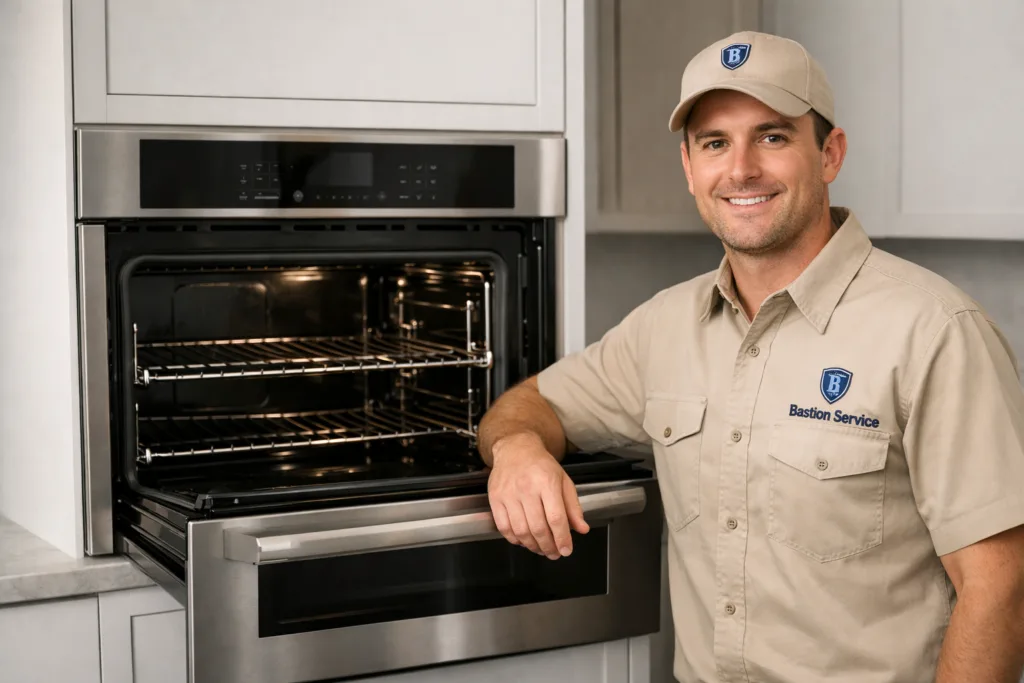
Cooking appliances usually make their problems known through heat inconsistency. A JennAir oven may preheat slowly, overshoot temperature, or bake unevenly from one side to the other. A cooktop burner may click repeatedly, fail to ignite, or heat at the wrong level. A range can show a mix of surface burner and oven issues at the same time, especially when controls or shared electrical components are involved.
In wall ovens and standard ovens, temperature complaints are among the most common. Food browns too quickly on top, remains undercooked in the center, or needs much longer than expected to finish. These symptoms can be tied to sensors, heating elements, relays, calibration drift, door seal wear, or circulation problems inside the cavity. With cooktops, weak or inconsistent burner performance may involve ignition components, switches, heating elements, or wiring issues depending on the configuration.
If a gas unit clicks repeatedly without lighting, that is usually a sign the ignition system needs attention. If there is a persistent gas odor, stop using the appliance and address safety before making any repair decision. For electric units, tripping power, partial heating, or controls that go blank can point to electrical faults that should not be ignored.
Cooking issues that affect everyday use
- Oven temperature does not match the setting.
- Burners heat unevenly or do not respond correctly.
- Preheat takes much longer than normal.
- The appliance shuts off unexpectedly during cooking.
- Controls flash errors or stop accepting input.
What unusual noises, leaks, and error codes often mean
Across appliance categories, a few symptom groups tend to matter more than homeowners expect. Unusual sounds, moisture, and control errors often provide the earliest clues about where a failure is developing.
Unusual noises
Buzzing, rattling, grinding, squealing, or repeated clicking can indicate worn motors, failing fans, pump strain, loose components, or misalignment. The sound itself is important, but so is when it occurs. A noise only during draining suggests something different from a noise during cooling, preheating, or wash circulation.
Leaks or visible moisture
Water around an appliance is never a symptom to overlook. In a refrigerator, it may be related to drainage or condensation management. In a dishwasher, it may involve hoses, seals, or pump components. Moisture can also damage flooring and surrounding cabinetry, so even a small recurring leak deserves attention.
Error codes and flashing displays
When a JennAir appliance shows an error code or starts behaving erratically through the control panel, the problem is usually more than a temporary glitch. Modern appliances monitor temperature, timing, water movement, and other functions. A code may point toward a specific fault area, but repeated resets rarely solve the underlying cause if the same code returns.
When repair is usually worth pursuing
For many households in Venice, repair makes sense when the issue appears isolated and the appliance is otherwise in solid condition. A failed sensor, worn seal, defective igniter, drain issue, or circulation problem may be very different from a major sealed-system or repeated control failure. The age of the appliance matters, but so does its overall condition, maintenance history, and whether the current problem has caused secondary damage.
The best repair decisions usually come from matching the symptom pattern to the likely scope of work. Two appliances can appear to have the same complaint while needing very different solutions. One warm refrigerator may need airflow or defrost repair; another may have a much more serious cooling-system problem. One oven with uneven heating may need calibration or a sensor replacement; another may have a broader electrical issue.
When waiting can make the problem worse
Some appliance issues stay stable for a while, but many do not. A dishwasher with a minor leak can lead to flooring damage. A refrigerator running nonstop can put extra wear on core components. An oven with inaccurate temperatures may become unreliable enough to affect regular meal preparation. Intermittent electrical behavior often becomes less predictable over time, not more.
It is usually smart to schedule service when the appliance is still functioning but clearly no longer normal. That stage often offers the best chance to solve a single developing problem before it expands into multiple failed parts.
JennAir appliance categories commonly evaluated in Venice homes
Homeowners often need help with refrigerator, freezer, dishwasher, cooktop, oven, range, and wall oven issues. While each category has its own failure patterns, the goal is the same: understand what the symptom is actually telling you, determine whether continued use is safe and sensible, and choose the repair path that restores reliable daily use.
If a JennAir appliance has started acting differently, the most useful next step is to evaluate the behavior as a real equipment problem rather than a temporary inconvenience. That approach gives homeowners in Venice a clearer way to decide what to repair, what to monitor, and when to stop using the appliance until the fault is addressed.


