
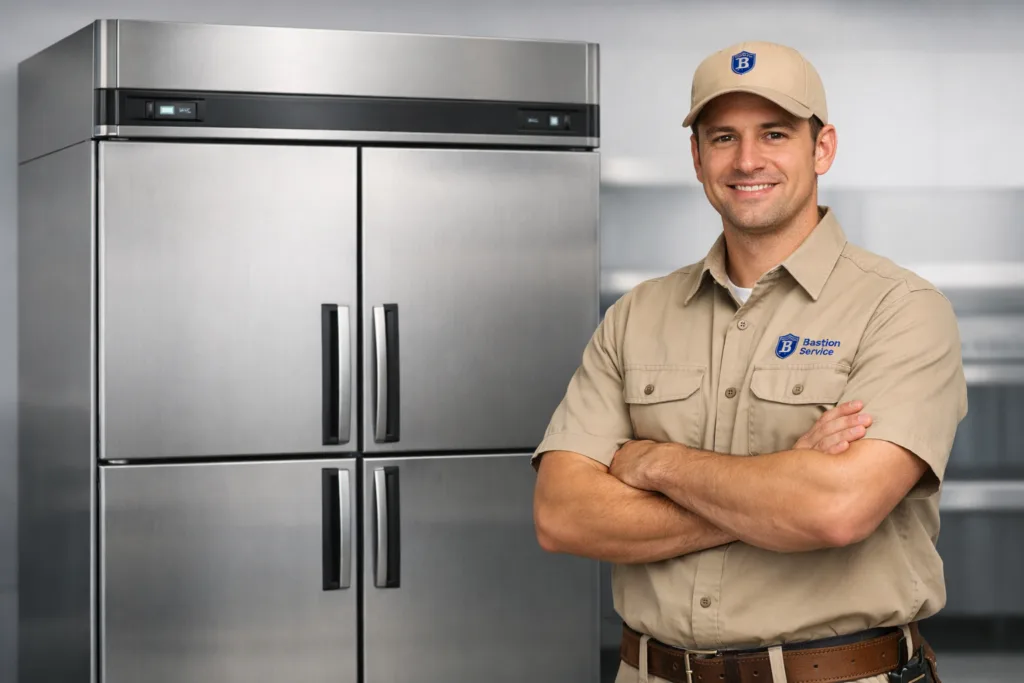




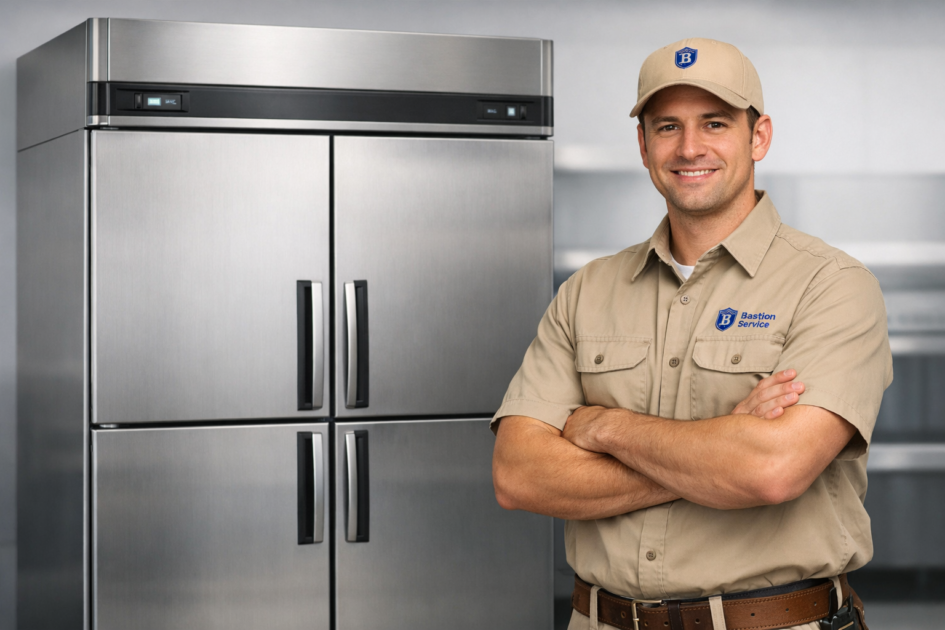
Temperature drift, ice buildup, water around the cabinet, or a refrigerator that runs longer than normal can interrupt storage routines fast and put product at risk. For businesses in Cheviot Hills, service is most useful when the problem is diagnosed by symptom pattern, operating condition, and urgency rather than by assumption alone. Bastion Service provides Hoshizaki refrigerator repair with attention to downtime, repair scheduling, and the next step needed to stabilize the unit.
Related commercial service paths in Cheviot Hills include Hoshizaki Commercial Repair in Cheviot Hills, Commercial Refrigerator Repair in Cheviot Hills, and Hoshizaki Freezer Repair in Cheviot Hills.
Many refrigeration complaints look similar at first. A warm cabinet may be caused by restricted airflow, a failing evaporator fan, a door sealing problem, a control issue, or a refrigeration-system fault. Frost can point to defrost trouble, but it can also come from repeated warm-air intrusion. Identifying the actual cause helps avoid unnecessary parts replacement and gives staff a clearer repair plan.
Common Hoshizaki Refrigerator Problems We Diagnose
Not holding temperature
If a refrigerator is not maintaining its set range, the cause may involve dirty condenser surfaces, weak airflow, fan motor failure, sensor inaccuracy, thermostat or control board issues, worn door gaskets, or sealed-system performance loss. Temperature complaints should be addressed early because even small swings can become larger recovery problems during busy operating periods.
Staff may notice that items near one shelf stay cold while other sections warm up, or that the cabinet seems slow to recover after routine door openings. Those details matter during diagnosis because uneven temperatures often point to circulation or evaporator issues rather than one single failure across the whole unit.
Frost, ice, or heavy condensation
Frost on interior panels, ice near the evaporator area, or moisture around the door opening usually means something in the airflow or defrost cycle is not working correctly. Possible causes include a failed defrost heater, control fault, fan issue, blocked airflow path, damaged gasket, or repeated humidity intrusion from doors that do not fully close.
What appears to be a simple moisture problem can lead to reduced airflow and longer compressor run times. As frost builds, the refrigerator may begin warming gradually, making the original complaint seem inconsistent from one shift to the next.
Water leaks or drain problems
Water inside the cabinet or on the floor can come from a clogged drain, frozen drain line, condensate management issue, poor leveling, or excess condensation caused by temperature imbalance. Leaks should not be ignored because they can create sanitation concerns, damage surrounding surfaces, and add slip hazards in active work areas.
When water shows up intermittently, the source is not always obvious. A drain restriction may only overflow during certain defrost periods, while a door-seal problem may create moisture only during heavier use.
Noise, constant running, or short cycling
Buzzing, rattling, fan scraping, frequent starting and stopping, or a refrigerator that seems to run without reaching temperature can indicate fan motor wear, compressor strain, dirty heat exchange surfaces, control problems, loose hardware, or refrigerant-related issues. These symptoms often show that the unit is working harder than it should.
Even when the cabinet is still cooling, unusual run behavior is worth checking. Extended run times can raise operating stress on key components and turn a smaller service issue into a larger failure later.
Why a symptom-based diagnosis matters
Hoshizaki refrigerator problems often overlap. A warm cabinet does not automatically mean compressor failure, and visible frost does not always mean a major repair. The most effective service visit starts with inspection of cabinet temperature, airflow, fan operation, door condition, drainage, control response, and overall cooling behavior. That process helps separate maintenance-related issues from failing components and supports a more accurate repair decision.
Diagnosis also affects scheduling. Some failures need immediate attention because safe holding conditions are already compromised. Others may allow limited short-term use while parts are planned, provided the unit is monitored and the risk is understood. Knowing which situation applies can make a major difference for kitchens, prep areas, and other business operations in Cheviot Hills.
Warning signs that should not be ignored
- Cabinet temperature rising above the normal operating range
- Cooling that varies noticeably from one section to another
- Frost returning soon after manual clearing
- Water pooling under the unit or inside the cabinet
- Doors that do not close cleanly or gaskets that no longer seal well
- Fans that sound louder than usual or stop intermittently
- Long run times, frequent cycling, or unexplained shutdowns
- Product holding concerns during routine daily use
What businesses can note before service
A few observations from staff can make repair visits more efficient. It helps to note whether the refrigerator is always warm or only warm at certain times, whether frost is forming in one area or throughout the cabinet, whether leaks happen constantly or after defrost, and whether the problem started suddenly or developed over time.
It is also useful to know if the issue follows heavy door traffic, loading changes, recent cleaning, or a recent power interruption. Those patterns can help narrow the diagnosis faster and improve parts planning when service is scheduled.
Repair or replacement: how the decision is usually made
Replacement is not always necessary when performance declines. Many Hoshizaki refrigerator issues are repairable when the cabinet remains in solid condition and the failure is limited to controls, sensors, fans, gaskets, drainage components, or other serviceable parts. A repair is often the better option when the unit has otherwise been dependable and the current fault is isolated.
Replacement becomes more likely when the refrigerator has repeated major failures, significant system deterioration, or a repair outlook that no longer matches the role the unit serves. The right decision depends on overall condition, failure severity, expected repair value, and how important that refrigerator is to daily operations in Cheviot Hills.
Preparing for Hoshizaki refrigerator repair in Cheviot Hills
Before service, businesses should protect temperature-sensitive product as needed, limit unnecessary door openings, and avoid continuing operation if the cabinet is clearly outside its safe holding range. If the unit is leaking, icing heavily, or making severe noise, those details should be shared when booking so the visit is prioritized appropriately.
For Hoshizaki refrigerator repair in Cheviot Hills, the most practical next step is to schedule service when the first signs of unstable cooling, airflow trouble, frost buildup, or leakage appear. Early attention can reduce downtime, support better repair planning, and help restore more consistent performance before a manageable issue becomes a larger disruption.


