





Freezer problems rarely stay isolated for long. A temperature issue that begins as slow recovery after door openings can turn into product loss, frost accumulation, strain on major components, and disruption to normal workflow. For businesses in Rancho Park that rely on Hoshizaki freezers for daily storage, service is most effective when it starts with the actual symptom pattern, how the unit behaves during operation, and whether the problem appears constant or intermittent.
Related commercial service paths in Rancho Park include Hoshizaki Commercial Repair in Rancho Park, Commercial Freezer Repair in Rancho Park, and Hoshizaki Refrigerator Repair in Rancho Park.
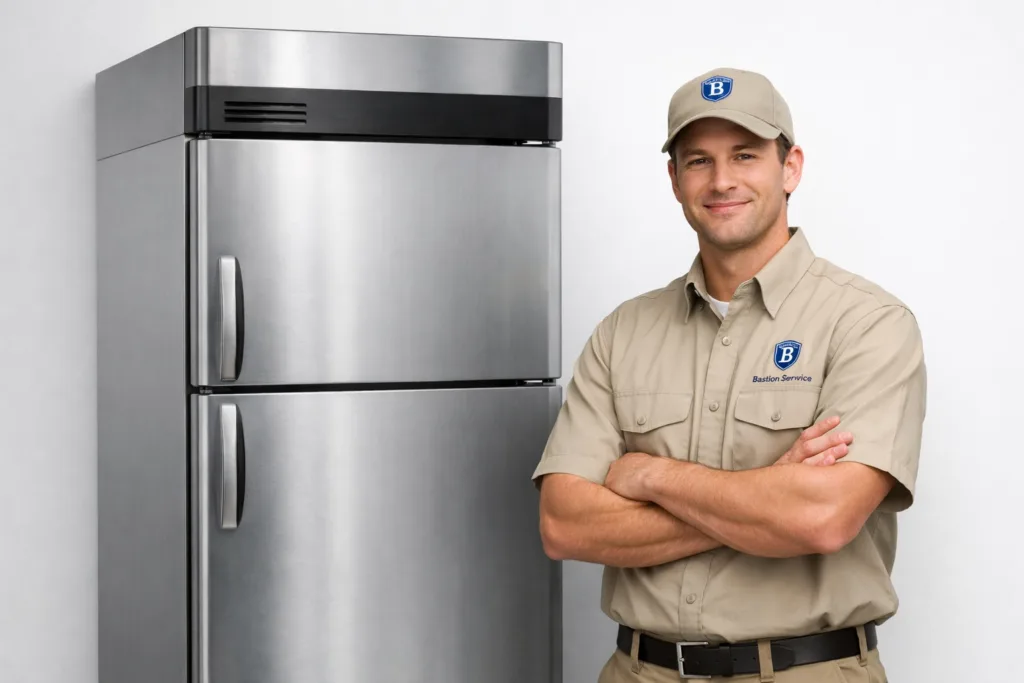
Bastion Service handles Hoshizaki freezer repair for Rancho Park businesses with attention to downtime, repair timing, and the difference between a minor service issue and a larger cooling failure. Whether the freezer is warming, building ice, leaking, or making unusual noise, the goal is to identify the fault before unnecessary parts are replaced or the unit is pushed into a more expensive breakdown.
Common Hoshizaki freezer symptoms and what they often mean
Freezer runs but does not stay cold enough
If the freezer is powered on but the cabinet temperature keeps rising or never fully pulls down, several causes are possible. Restricted condenser airflow, evaporator frost, fan motor trouble, sensor errors, control problems, or refrigeration-side issues can all produce similar results. That is why a freezer that feels only “a little warm” should not be judged by guesswork alone. The repair path depends on whether the problem is airflow-related, electrical, or tied to cooling-system performance.
Frost buildup on the interior or around the evaporator area
Frost usually points to warm-air intrusion or a defrost-related problem. A worn gasket, a door that does not close cleanly, frequent access during busy shifts, or a failed defrost component can all lead to heavy ice accumulation. As frost thickens, airflow drops and the freezer has to run longer to maintain temperature. In many cases, frost is not the primary failure but the visible result of another issue that needs repair.
Fan noise, rattling, buzzing, or unusual cycling
Noise changes matter because they often appear before complete cooling loss. Scraping can indicate ice contact with a fan blade. Buzzing or rattling may point to loose components, stressed motors, or vibration from mounting issues. Short cycling can also signal overheating, sensor faults, airflow restriction, or control trouble. When operation sounds different than normal, early service can prevent a smaller problem from turning into a compressor or motor failure.
Water leakage or unwanted ice formation
Water on the floor, moisture inside the cabinet, or ice in the wrong areas often suggests a drain problem, unstable temperatures, or defrost-related trouble. In a working kitchen, prep area, or storage room, this is not just an equipment concern. It can also create a safety issue and interfere with surrounding operations. Repeated leakage should be treated as a service call, not as a cleanup-only problem.
Why a Hoshizaki freezer may not be staying cold enough
A freezer that is no longer holding temperature is one of the most urgent refrigeration problems because the symptom has many possible causes. Dirty coils can reduce heat rejection. Frosted evaporator sections can choke airflow. Weak fan motors may keep cold air from circulating properly. Sensors or controls may misread cabinet conditions. In other cases, the problem can involve refrigerant loss or poor compressor performance.
The important point is that “not cold enough” is a symptom, not a diagnosis. Two Hoshizaki freezers in Rancho Park may show the same temperature problem and require entirely different repairs. A correct inspection helps determine whether the unit needs cleaning-related service, a control repair, a fan or defrost correction, or deeper refrigeration work.
Signs the problem is getting worse
Many freezer failures develop in stages. Staff may first notice longer run times, then slower recovery after openings, then frost buildup, then alarms or higher cabinet temperatures. These smaller changes are often the best warning signs because they appear before total loss of cooling.
- Product feels softer than usual or freeze times are inconsistent
- The freezer runs almost constantly
- Door frames sweat or ice forms near the opening
- Alarms repeat or reset temporarily, then return
- Interior airflow seems weak in part of the cabinet
- Noise levels increase during normal operation
When these symptoms continue for several days, service is usually more cost-effective than waiting for a complete shutdown.
Why door gaskets and airflow issues matter so much
Door sealing problems are easy to underestimate, but they can affect nearly every part of freezer performance. A leaking gasket allows warm, moist air into the cabinet. That extra moisture turns to frost, the frost restricts airflow, and the restricted airflow makes the system run longer. Over time, that can increase wear on motors and cooling components.
Airflow issues create similar chain reactions. If the condenser cannot reject heat efficiently or the evaporator cannot move air through the cabinet, temperature stability suffers even when the freezer still appears to be “running.” In busy operations, these conditions often show up as slow recovery, uneven temperatures, or recurring ice buildup rather than instant failure.
When continued use can increase repair costs
Some freezers can continue operating in a weakened state for a while, but that does not always mean continued use is the right choice. A fan motor pushing against ice, a compressor running extended cycles without reaching setpoint, or a condenser starved for airflow can all create added wear. What starts as one serviceable fault may expand into several.
If the freezer is warming noticeably, frosting heavily, or repeatedly alarming, it is worth assessing whether it should remain in service while awaiting repair. That decision depends on holding conditions, inventory risk, and the specific symptom involved, but in many cases early intervention limits both downtime and total repair scope.
Repair decisions should be based on condition, not assumptions
Not every Hoshizaki freezer with a cooling problem needs major work, and not every unit with repeated symptoms is a good candidate for another temporary fix. A useful service visit helps separate isolated repairable faults from signs of broader equipment decline. Problems involving fan motors, gaskets, sensors, drains, controls, and some defrost components are often straightforward when caught in time. Repeated reliability problems, severe wear, or ongoing cooling instability after prior repairs may point to a more difficult decision.
For businesses in Rancho Park, the practical question is usually not just “Can it be repaired?” but “Will this repair return the freezer to stable operation without creating more downtime next month?” That is where symptom history, current condition, and inspection findings matter most.
How to prepare for a freezer service visit
A little preparation can speed up diagnosis and help clarify urgency. Before service, it helps to note when the problem started, whether it is constant or intermittent, what temperatures have been observed, and whether the issue changed after cleaning, loading, or heavy door use. Staff should also mention any alarms, leaks, noise changes, or visible frost patterns.
- Record recent temperature readings if available
- Note whether the freezer is warm all the time or only during certain periods
- Identify any recent power interruption or cleaning event
- Point out where frost, water, or unusual noise is occurring
- Confirm whether product has already been moved or protected
These details help narrow down the fault more quickly and support better scheduling decisions if parts or follow-up work are needed.
Service-focused support for Rancho Park businesses
Hoshizaki freezer repair should be approached with the realities of daily operations in mind: repeated access, time-sensitive storage, staff workflow, and the need to avoid unnecessary outage time. When a freezer starts running warm, freezing unevenly, leaking, or making abnormal noise, the next step should be a service call built around diagnosis, repair planning, and the condition of the equipment itself. For Rancho Park businesses, timely inspection and symptom-based repair can protect inventory, reduce avoidable downtime, and make it easier to decide whether the unit should be repaired now or reevaluated for longer-term reliability.


