
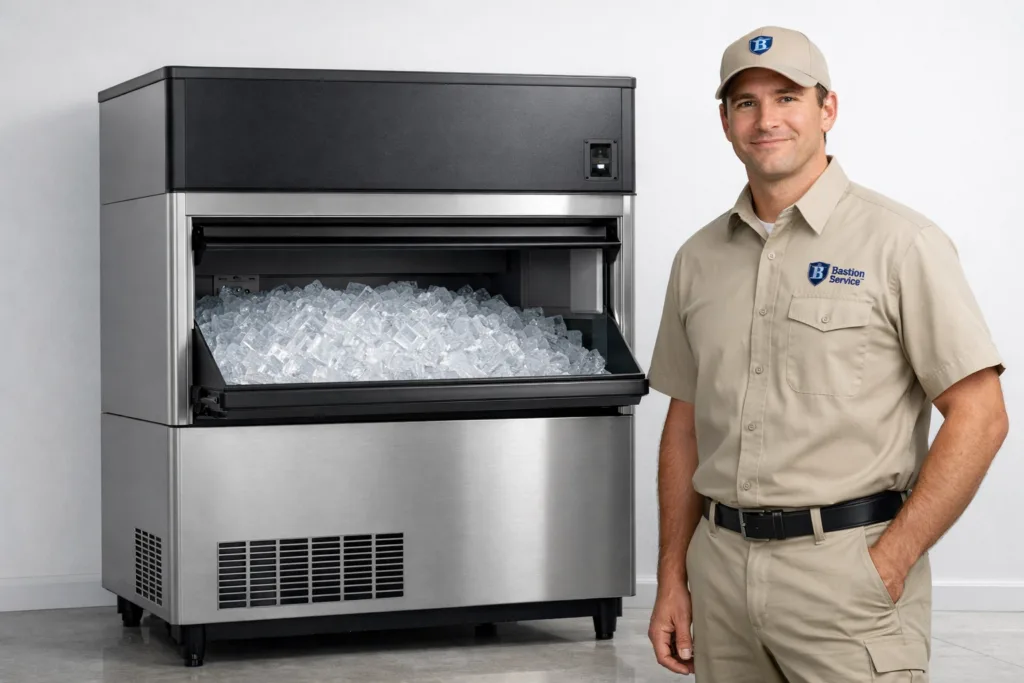




When a Hoshizaki ice machine starts missing cycles, leaking, shutting down, or producing inconsistent ice, the right next step is service that identifies the failure and maps out what should happen next. For restaurants, bars, markets, healthcare settings, and other businesses in Venice, ice problems can quickly affect beverage service, food handling, staff workflow, and day-to-day uptime. Bastion Service provides Hoshizaki ice machine repair support with symptom-based diagnosis, repair scheduling, and a practical plan based on how the machine is actually behaving.
For specific equipment paths in Venice, review Hoshizaki Refrigerator Repair in Venice, Hoshizaki Freezer Repair in Venice, and Hoshizaki Ice Machine Repair in Venice.
This type of service is especially important when staff are trying to manage around the issue by resetting the machine, reducing demand, or cleaning more often without solving the underlying problem. A repair visit helps determine whether the issue is tied to water supply, drainage, scale, controls, sensors, harvest operation, or a broader reliability concern that should be addressed before the next busy shift.
Common Hoshizaki Ice Machine Problems That Need Repair
Most ice machine failures show warning signs before output stops completely. Watching those symptom patterns early can help prevent a larger shutdown and avoid added wear on pumps, valves, controls, and refrigeration components.
Low ice production or no ice at all
If the machine is running but producing far less ice than usual, the problem may involve restricted water flow, inlet valve trouble, scale accumulation, sensor issues, freeze-cycle imbalance, or declining system performance. When the unit stops making ice entirely, repeated restart attempts usually do not solve the real cause. Service is useful here because low output can look like a simple water problem when the actual issue is tied to timing, control response, or a component that is no longer operating within range.
This symptom matters most when your business is already using reserve ice, adjusting service routines, or noticing that production cannot keep up with normal demand.
Harvest problems and incomplete release
A Hoshizaki machine that forms ice but struggles to release it may show long cycle times, partial drops, clumping, slab issues, or shutdowns after repeated failed harvest attempts. In many cases, these symptoms point to scale buildup, temperature-related faults, board issues, or worn components affecting cycle control. If the machine keeps freezing but cannot complete harvest correctly, continued operation can turn an intermittent problem into a full loss of production.
Leaks, overflow, and drain-related issues
Water around the machine should never be treated as a minor inconvenience. Leaks can come from clogged drains, loose connections, damaged tubing, float problems, pump issues, overfill conditions, or internal water-management faults. In a business setting, even a small recurring leak can create sanitation concerns, slippery floors, and disruption around prep or service areas. Repair helps confirm whether the problem is limited to one water path or whether multiple components are contributing to overflow or poor drainage.
Scale buildup and water flow restrictions
Scale is one of the most common causes behind poor ice production, erratic cycles, and water distribution problems. As buildup increases, the machine may run longer, produce uneven ice, struggle during harvest, or shut down on safety controls. A machine can appear to be operating while scale is steadily reducing performance. If cleaning no longer restores normal operation, repair service may be needed to address blocked flow paths, affected valves, sensor response, or parts that have already been damaged by mineral accumulation.
Cloudy, small, hollow, or poor-quality ice
Changes in ice appearance often reveal deeper performance issues. Small cubes, soft ice, cloudy batches, odd taste, or inconsistent shape can point to water quality concerns, restricted flow, poor fill behavior, scale, or timing faults during the freeze and harvest sequence. For businesses that rely on consistent beverage presentation or food-safe handling, ice quality problems are often a strong reason to schedule service before the machine reaches total failure.
Unexpected shutdowns and intermittent operation
If the machine runs for part of the day and then stops, the cause may involve control faults, safety shutoffs, sensor problems, overheating, drainage issues, or cycle errors that appear only under load. Intermittent operation is frustrating because it can seem resolved after a reset, only to fail again during higher demand. This is one of the clearest signs that the machine needs diagnosis rather than repeated workarounds.
What a Service Diagnosis Helps Confirm
Repair is not just about replacing the first part that appears suspicious. A proper evaluation helps confirm how the machine is filling, freezing, harvesting, draining, and responding to control inputs. On Hoshizaki ice machine equipment, that often means checking timing behavior, water delivery, float response, drain performance, scale impact, ice formation, and the condition of wear-related parts.
That information matters because businesses in Venice often need more than a yes-or-no answer on whether the unit is broken. They need to know whether the machine can remain offline safely until repair, whether continued operation risks more damage, whether the issue is likely isolated, and whether the repair makes sense compared with ongoing reliability concerns.
Signs the Machine Should Not Stay in Use
Some symptoms suggest the unit should be taken out of service until it is inspected. These include:
- Recurring leaks or overflow
- Repeated shutdowns during normal operation
- Failed or incomplete harvest cycles
- Severely reduced production during periods of normal demand
- Visible scale buildup paired with performance decline
- Abnormal noise, vibration, or cycling behavior
- Ice quality changes that are persistent rather than occasional
When staff have to monitor the machine constantly, restart it manually, or adjust operations around unreliable output, the issue is already affecting business performance. Waiting longer often means more downtime at a worse moment.
Repair Decisions Based on Symptom Severity
Not every service call leads to the same repair path. Some machines have isolated problems involving water valves, drains, sensors, pumps, or control-related components that can be addressed without a major rebuild. Others show a pattern of ongoing decline, where repeated shutdowns, scaling, and production loss suggest broader wear and reduced reliability.
The value of diagnosis is that it separates a targeted repair from a machine that has become unpredictable. That helps managers decide whether to schedule repair immediately, plan around part availability, or stop relying on the unit until the underlying fault is corrected.
Why Early Service Matters for Venice Businesses
Ice machine issues rarely stay limited to one symptom. Low production can turn into missed harvests. Scale can create water flow trouble that leads to shutdowns. A slow drain can become overflow at the worst possible time. Early repair gives businesses in Venice a better chance to control downtime, protect service flow, and avoid escalating damage that affects both equipment condition and daily operations.
If your Hoshizaki ice machine is producing less ice, leaking, shutting off, struggling during harvest, or making poor-quality ice, scheduling service is the most practical next step. A repair visit can confirm the cause, identify whether the machine should remain out of use, and help you move forward with repairs that support more stable operation.


