
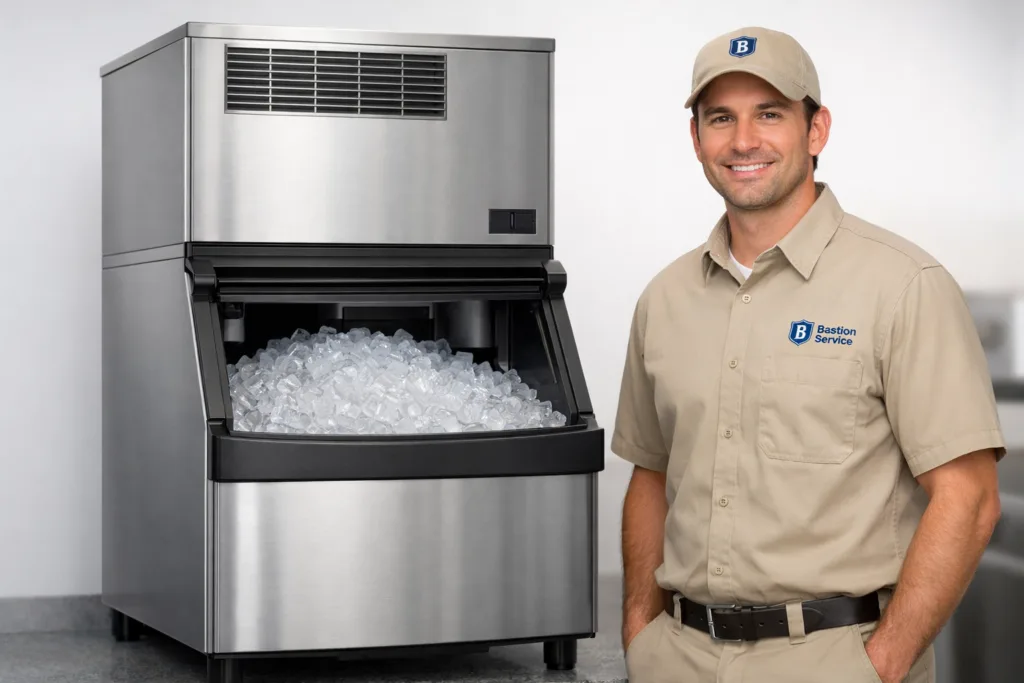




When a Hoshizaki ice machine starts missing production targets, dropping in ice quality, or shutting down during service hours, the next step should be service-oriented rather than guesswork. In Brentwood, businesses often need to know not just what failed, but whether the unit can stay in operation, how quickly repair should be scheduled, and what steps will reduce further downtime while the issue is being addressed.
For specific equipment paths in Brentwood, review Hoshizaki Refrigerator Repair in Brentwood, Hoshizaki Freezer Repair in Brentwood, and Hoshizaki Ice Machine Repair in Brentwood.
Bastion Service works with local businesses to diagnose Hoshizaki ice machine problems based on actual symptom patterns, operating conditions, and equipment wear. That matters when the machine supports beverage service, food holding, guest service, or any daily workflow that depends on a steady, sanitary ice supply.
Common Hoshizaki Ice Machine Problems That Affect Daily Operations
Ice machine issues usually show up before a complete failure. A unit may still run, but take longer to recover, produce less ice than expected, create inconsistent cubes, leak during cycles, or stop intermittently. These symptoms often point to different underlying problems, so early repair evaluation helps prevent wasted time and repeat disruptions.
On Hoshizaki equipment, service calls commonly involve:
- Low ice production or no ice
- Slow freeze cycles or poor recovery
- Harvest problems where ice does not release correctly
- Scale buildup affecting water movement and sensors
- Leaks, overflow, or drain-related issues
- Shutdowns tied to controls, safeties, or temperature conditions
- Cloudy, small, hollow, or irregular ice
Low Ice Production or No Ice
If the machine is making less ice than normal, the problem may involve restricted water flow, inlet valve issues, dirty internal components, freeze-cycle faults, or refrigeration stress. A complete no-ice condition can also be tied to control failures, sensor problems, or shutdown protections. For a business, the main concern is not just reduced output, but whether the unit is heading toward a full stop during peak demand.
When production drops gradually, operators sometimes compensate by pushing the machine harder or changing storage habits, but that usually does not solve the root cause. A repair visit helps determine whether the issue is isolated and repairable or part of a broader performance decline.
Harvest Issues and Ice Release Problems
Harvest problems are especially disruptive because the machine may appear to be running while failing to complete the cycle correctly. Ice can stick, release unevenly, bridge together, or cause timing issues that trigger shutdowns. On Hoshizaki systems, these symptoms may relate to scale, water distribution problems, sensor faults, or components that are no longer allowing the unit to move cleanly from freeze to harvest.
When harvest is inconsistent, the machine often produces less usable ice even before staff notices a complete interruption. That makes this one of the more important symptoms to address early.
Leaks, Overflow, or Water Around the Unit
Water on the floor should never be treated as a minor nuisance. Leaks can come from blocked drains, loose fittings, cracked water lines, overflow conditions, internal icing, or poor water control during fill and harvest. In addition to affecting the ice machine itself, active leaking can create slip hazards, damage surrounding areas, and interfere with nearby equipment.
If leaking is ongoing, it is usually best to have the machine inspected promptly instead of continuing normal operation and hoping the problem stays contained.
Shutdowns or Intermittent Operation
A machine that runs, stops, restarts, and then fails again can be harder to evaluate without proper testing. Intermittent shutdowns may point to overheating, control board issues, sensor errors, abnormal cycle timing, or safety responses to operating conditions that are out of range. These cases often lead to repeat service calls when parts are replaced based on symptoms alone rather than confirmed causes.
For businesses trying to plan staffing and service flow, intermittent faults are often more frustrating than a hard failure because they make the equipment seem temporarily usable when it is not truly reliable.
Why Water Flow and Scale Buildup Matter So Much
Many Hoshizaki ice machine problems trace back to water-related conditions. When water flow is restricted or inconsistent, the machine may produce small cubes, incomplete batches, slow cycles, or poor harvest results. Supply issues, valve problems, filter restrictions, and drain limitations can all affect performance in ways that look similar from the outside.
Scale buildup is another common factor. Mineral deposits can interfere with water distribution, narrow internal passages, affect sensor readings, and make it harder for ice to form and release properly. Over time, scale can turn a manageable performance issue into repeated shutdowns, higher component stress, and more expensive repair needs.
This is why a symptom such as “not enough ice” should not be treated as a simple capacity complaint. The real problem may involve water flow, scale, controls, or multiple conditions at once.
What Ice Quality Problems Can Indicate
Ice appearance often gives useful clues about what is happening inside the machine. Cloudy cubes, hollow centers, thin formation, irregular shape, or wet batches can indicate water quality issues, uneven fill, scaling, freeze-cycle irregularities, or parts that are no longer performing consistently. Even when the machine is still producing volume, poor ice quality can affect customer-facing service and signal that the unit is operating outside normal conditions.
In a business setting, ice quality matters for more than presentation. It can also point to sanitation concerns, inconsistent dispensing, and operating inefficiencies that reduce confidence in the equipment. A repair assessment helps determine whether the solution is cleaning-related, component-specific, or part of a larger system issue.
When Continued Use Can Increase Downtime
Some machines can remain in limited use while service is being arranged, but others should be taken more seriously right away. Continued operation may make the situation worse when the unit is:
- Actively leaking or overflowing
- Failing to harvest correctly
- Shutting down repeatedly
- Making unusual mechanical noise
- Producing poor-quality or questionable ice
- Showing obvious scale-related performance decline
In these situations, a short delay can lead to more component damage, sanitation concerns, or a complete interruption at the worst possible time. For businesses in Brentwood, the practical question is often whether temporary operation is reasonable or whether taking the machine offline is the safer choice until repairs are made.
Repair Decisions Based on Condition, Not Assumptions
Not every Hoshizaki problem means replacement is near. Many issues can be resolved with targeted repairs once the failed component or operating fault is confirmed. The more useful decision point is whether the repair is likely to restore stable performance based on the unit’s age, overall condition, service history, level of scale exposure, and frequency of recent problems.
When a machine has recurring shutdowns, multiple overlapping faults, or visible wear that affects reliability, repair planning becomes more important than simply restoring operation for the moment. A thorough evaluation helps businesses compare the value of repair against the risk of more interruptions in the near future.
What a Service Visit Helps Clarify
A service appointment does more than identify a bad part. It helps clarify whether the issue is tied to water supply, drainage, harvest timing, controls, refrigeration performance, scale buildup, or broader equipment wear. It also helps answer practical questions that matter to operations, including how urgent the repair is, whether the machine can be used safely before work is completed, and whether the next step is repair, cleaning, part ordering, or replacement planning.
If your Hoshizaki ice machine in Brentwood is dealing with low production, water flow problems, leaks, shutdowns, harvest issues, scale buildup, or ice quality concerns, the right next move is to schedule diagnosis and repair based on how the machine is actually performing. That approach protects uptime, reduces avoidable disruption, and gives your business a clearer path back to dependable ice production.


