
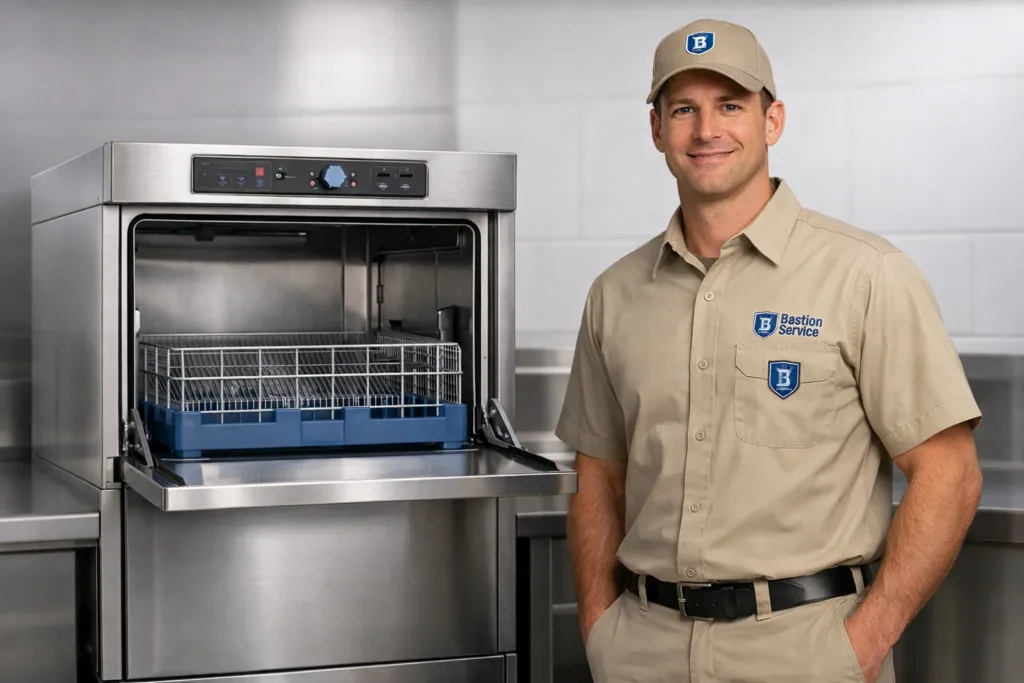




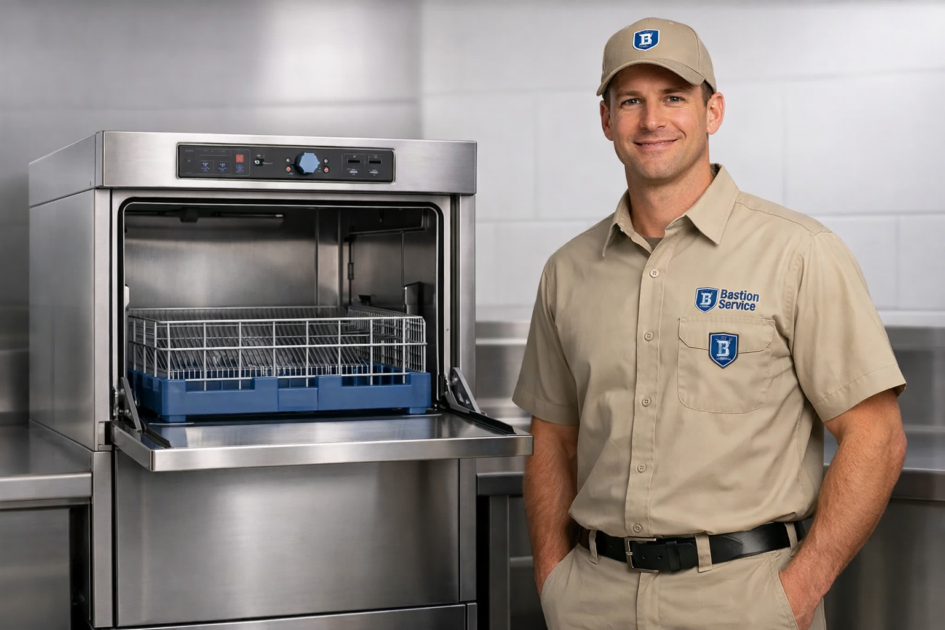
When Hobart warewashing equipment starts missing racks, stalling during cycles, leaking, or failing to reach proper rinse conditions, the problem usually reaches beyond one machine and starts affecting labor, dish flow, and sanitation routines. For businesses in Redondo Beach, service is most useful when it quickly identifies the actual fault, explains how the symptom pattern affects daily operation, and helps schedule repair before a manageable issue becomes a longer outage. Bastion Service provides Hobart warewashing equipment repair with a service-focused approach built around diagnosis, parts-related repair decisions, and practical next steps for getting equipment back into usable condition.
For specific equipment paths in Redondo Beach, review Hobart Dishwasher Repair in Redondo Beach and Commercial Appliance Repair in Redondo Beach.
What Hobart warewashing equipment problems usually lead to repair calls
Warewashing equipment often gives warning signs before a complete shutdown. A machine may still run while showing weak wash action, inconsistent fill levels, slow draining, rinse temperature issues, control errors, or visible leaking. Those symptoms matter because they usually point to specific failures in water delivery, heating, pumps, controls, or drain components rather than a general decline with no identifiable cause.
In busy kitchens and food-service settings, even a partial performance problem can create a chain reaction: more rewash, slower turnover, extra labor, and concern about whether the machine is meeting expected wash and rinse conditions. Repair service is meant to narrow the issue quickly so a business can decide whether the unit should stay in operation, be limited, or be taken offline until corrected.
Poor wash results and repeat rewash
If dishes, utensils, or racks come out with soil, film, spots, or inconsistent cleanliness, the issue may involve blocked wash arms, pump wear, low water circulation, detergent delivery problems, or temperature-related faults. Hobart dishwasher problems in this category are often mistaken for chemistry or loading issues when the real cause is mechanical or hydraulic. A symptom-based inspection helps separate user-side variables from actual equipment failure.
Signs that poor wash performance is repair-related include:
- Results that worsen even after normal cleaning procedures
- One cycle cleaning acceptably and the next leaving visible residue
- Weak spray action or unusual wash sound during operation
- Longer cleanup time because racks need to be run again
Fill problems and low water conditions
A warewasher that does not fill correctly may stop a cycle, run with inadequate wash action, or trigger irregular behavior from the start of operation. Fill problems can be tied to inlet valves, float-related issues, sensors, supply restrictions, or control faults. In some cases, the machine fills too slowly. In others, it underfills or overfills, creating inconsistent wash performance and possible overflow concerns.
Because fill faults affect how the rest of the cycle behaves, they are often at the center of several complaints at once, including weak cleaning, cycle interruptions, heater problems, and drain irregularities.
Drain issues and standing water
When water remains in the machine after a cycle or drains inconsistently between runs, the cause may involve a blocked drain path, drain pump trouble, valve failure, or a control problem that prevents the unit from completing the drain sequence. Standing water is more than an inconvenience. It can slow the next load, create sanitation concerns, and lead staff to spend time manually managing a problem the machine should be handling on its own.
Drain-related service is often needed when you notice:
- Water left in the tank or chamber after operation
- Cycles ending early with water still present
- Slow draining followed by normal draining on later attempts
- Backups or overflow behavior during repeated use
Leaks under or around the machine
Leaks can come from door seals, hoses, pumps, fittings, valves, or internal components that only show a problem under operating pressure. A small leak can quickly become a bigger disruption if it reaches flooring, nearby equipment, or electrical areas. It can also signal wear in more than one part of the water system.
If leaking appears during fill, wash, rinse, or drain, that timing is useful information because it helps narrow the likely source. Ongoing use without inspection can increase the chance of water damage, repeat shutdowns, and larger repair scope.
Rinse temperature and sanitation-related concerns
One of the most urgent warewashing complaints is failure to maintain proper rinse temperature or consistent heated operation. If the machine seems to run cool, takes too long to recover, or shows irregular behavior tied to heating, service should be scheduled promptly. These symptoms may involve heating elements, boosters, thermostatic controls, sensors, relays, scale buildup, or control-board issues.
Temperature-related faults matter because they affect both cycle confidence and output. Staff may start questioning whether ware is safe to put back into service, and that uncertainty alone can slow the operation. A proper diagnosis checks whether the problem is truly a heating failure, a water-flow issue affecting heat delivery, or a control problem that is preventing the correct sequence.
Common signs of a temperature-related fault
- Rinse conditions that seem inconsistent from load to load
- Extended cycle time while the machine appears to wait on heat
- Error conditions connected to heating or ready status
- Machines that run but do not perform as expected during final rinse
Control faults, shutdowns, and cycle interruptions
A Hobart unit that will not start, stops mid-cycle, resets unexpectedly, or shows control-related inconsistency usually needs direct testing rather than guesswork. Door switches, relays, interface components, wiring faults, boards, and sensor feedback problems can all create symptoms that look similar from the outside. Staff may see a cycle interruption and assume a temporary glitch, but repeated stoppages usually point to a fault that will continue until repaired.
Control problems often become more disruptive over time because they are unpredictable. One shift may complete several cycles with no issue, while the next sees multiple interruptions. That kind of inconsistency makes it hard to plan dish flow and can force manual workarounds that cost time.
When the equipment should not stay in regular use
Some warewashing issues allow limited short-term operation while repair is being scheduled, but others are strong indicators that the machine should be evaluated before normal use continues. If the unit is tripping breakers, producing a burning smell, leaking heavily, overflowing, failing to drain, or repeatedly shutting down mid-cycle, continuing to run it can increase damage and expand the repair.
For businesses in Redondo Beach, the real decision is not just whether the machine still turns on. It is whether the equipment can reliably support service without causing sanitation concerns, labor strain, or additional failure. A service visit helps answer that with a recommendation based on actual operating condition.
How symptom patterns help shape the repair plan
The most efficient repair process starts by matching the complaint to when it occurs in the cycle. For example, a machine that leaks only during drain points to a different path than one that leaks during fill. A unit that cleans poorly but heats normally needs a different approach than one with both wash and temperature complaints. Looking at the full pattern helps avoid replacing parts based on assumptions.
Useful details to have ready when scheduling service include:
- Whether the problem happens every cycle or intermittently
- At what stage the issue appears: fill, wash, rinse, or drain
- Any recent changes in noise, smell, or visible leakage
- Whether the machine still completes a full cycle
- If staff have noticed error displays, resets, or temperature inconsistency
That information helps connect the complaint to the likely system involved and can make repair planning more efficient once the machine is inspected.
Repair decisions for busy operations
Warewashing repair is rarely only about the failed component. Businesses also need to weigh downtime, dish volume, staffing pressure, and whether temporary adjustments are realistic while service is underway. In many cases, targeted repair is the right move because the underlying machine remains serviceable and the fault is limited to a defined set of parts. In other cases, repeated breakdowns across multiple systems can make continued repair harder to justify.
A good service process should help clarify the repair scope, whether related wear is present, and what the next scheduling step should be. That is especially important when a kitchen depends on steady throughput and cannot afford repeated interruptions from an unresolved issue.
Service support for Hobart warewashing equipment in Redondo Beach
If your Hobart warewashing equipment is leaving racks dirty, struggling to fill or drain, leaking, failing to maintain rinse conditions, or stopping mid-cycle, it makes sense to arrange service before the problem spreads into broader downtime. Prompt diagnosis helps determine whether the issue is isolated or part of a larger performance decline, and it gives your team a practical path to repair scheduling, safer operation decisions, and more consistent warewashing performance in Redondo Beach.


