
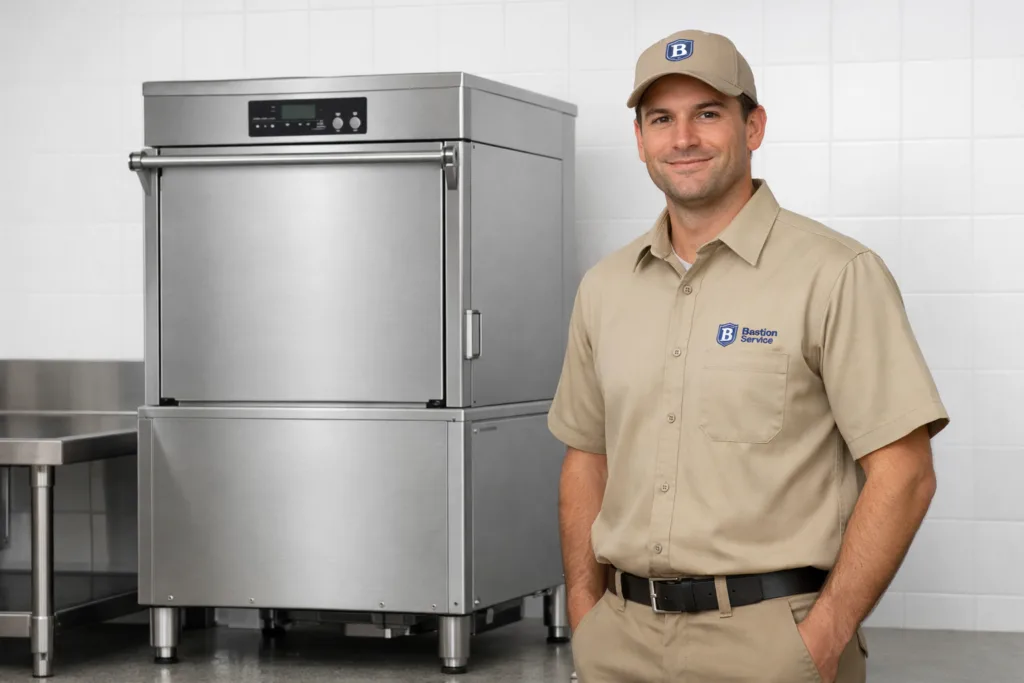




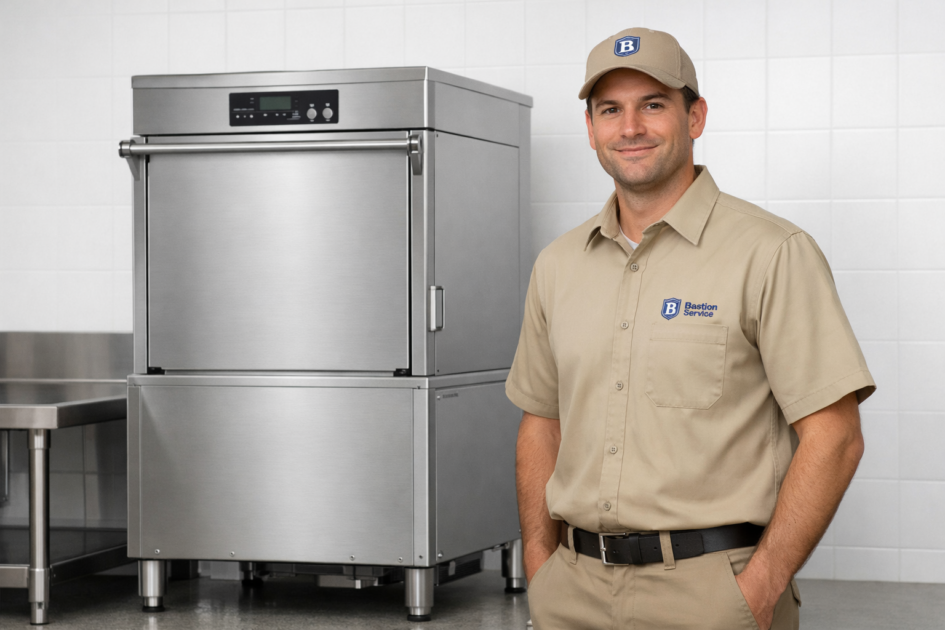
When Hobart warewashing equipment starts slowing down dish flow, producing inconsistent results, or stopping mid-shift, service should focus on the symptom pattern, the likely failed system, and how quickly the unit needs to be stabilized for daily operations. For businesses in Rancho Park, repair decisions often come down to downtime impact: whether the machine can stay in limited use, whether sanitation performance is affected, and whether parts planning is needed right away. Bastion Service works with Rancho Park businesses that need a service-oriented diagnosis, repair scheduling that fits operating demands, and a realistic next step based on how the equipment is actually behaving.
For specific equipment paths in Rancho Park, review Hobart Dishwasher Repair in Rancho Park and Commercial Appliance Repair in Rancho Park.
What Hobart warewashing equipment problems usually need repair
Warewashing equipment problems are not always caused by a single obvious failure. A dishwasher that leaves dishes dirty may have a wash-arm issue, low water fill, heating trouble, or a control problem. A unit that will not drain may have a blockage, pump fault, or sensor issue. Because one visible symptom can point to several internal causes, repair is most effective when the machine is evaluated as a system rather than treated as a single-part failure.
Common service calls involve:
- Poor wash performance or repeat rewash loads
- Slow filling, no fill, or overfilling
- Standing water or incomplete draining
- Leaks around the door, underneath the machine, or near connected lines
- Low rinse temperature or inconsistent final rinse results
- Sanitation complaints tied to cycle completion or heat performance
- Control faults, shutdowns, and machines that stop mid-cycle
These symptoms can affect labor flow just as much as equipment condition. When racks back up, dish turnover slows, and staff starts compensating manually, the repair issue quickly becomes an operations issue.
Wash performance problems and why they matter
If dishes, utensils, or trays are coming out with residue, spotting, film, or food soil, the problem may be tied to wash pressure, spray distribution, water level, heat, or timing. In many cases, operators first notice that loads are taking longer to come out acceptable, or that some racks clean properly while others do not. That inconsistency is often a sign that the machine is operating, but not within normal performance range.
Residue, film, and incomplete cleaning
When wash results decline, possible causes include restricted spray components, weak pump performance, poor fill volume, or controls that are not advancing the cycle correctly. If the machine is still running, it may be tempting to continue using it while staff rewashes affected items, but that usually increases water use, labor time, and shift disruption. Repeated poor results are a strong sign that repair should be scheduled before the fault becomes a full shutdown.
Long cycle times or weak wash action
A Hobart unit that seems slower than normal or sounds different during the wash stage may be dealing with pump wear, internal restrictions, low incoming water performance, or an electrical issue affecting how the cycle runs. Even if the dishwasher finishes, extended cycle time can reduce throughput enough to create service delays in kitchens and other food-service settings.
Fill and drain issues that can interrupt operations
Water movement problems are among the most disruptive warewashing faults because they can stop a machine from starting, finishing, or resetting for the next load. Fill and drain complaints also tend to create confusion because operators may only see one part of the problem, such as no water entering or water remaining after the cycle, while the actual failure is elsewhere in the sequence.
No fill, slow fill, or overfilling
If the machine does not fill correctly, it may fail to start the wash stage, may run with poor wash quality, or may trigger overflow concerns. Causes can include inlet valve faults, level sensing issues, supply restrictions, or control-related failures. Overfilling should be addressed promptly because it can lead to floor hazards, internal strain, and unreliable operation from cycle to cycle.
Standing water after the cycle
Water left inside the unit after operation can point to drain blockages, pump problems, sensor failures, or control faults preventing a proper drain sequence. This symptom affects both sanitation confidence and turnaround time. If wastewater is not clearing as expected, the machine may no longer be suitable for routine use until it is inspected and the source of the fault is confirmed.
Leaks, overflow, and water where it should not be
Leaks are often treated as a simple gasket issue, but the source can vary widely. Water on the floor may come from door seals, loose connections, cracked components, overfill conditions, drain problems, or internal circulation issues. The repair priority depends on where the leak appears, when it happens in the cycle, and whether it is getting worse.
Signs that leak-related service should not be delayed include:
- Water appearing during every cycle
- Drips or pooling under the machine between cycles
- Overflow during fill or rinse stages
- Visible door sealing problems
- New slip hazards in the dish area
Even when the machine still operates, a leak can expand into a broader facility problem if surrounding surfaces, nearby equipment, or electrical areas are exposed to repeated moisture.
Rinse temperature and sanitation concerns
Temperature-related faults are especially important because a machine can appear to be running normally while still not reaching expected rinse or sanitizing conditions. Operators may notice inconsistent cycle completion, unsatisfactory results, or concerns about whether the dishwasher is performing as intended during busy periods.
Low heat or inconsistent rinse performance
Heating failures can involve elements, thermostatic controls, relays, sensors, wiring, or board-related issues. In some cases, the machine may heat intermittently, which makes the problem harder to identify without testing under operating conditions. If rinse temperature is inconsistent, the unit should be evaluated before businesses rely on it for normal daily volume.
Why sanitation complaints should trigger service
When staff starts questioning final rinse performance, cycle completion, or overall wash reliability, that is usually enough reason to move from observation to repair scheduling. A machine that is technically running but not meeting expected performance can still create a serious workflow problem through repeat loads, manual intervention, and uncertainty at the dish station.
Control faults, shutdowns, and intermittent operation
Some of the most frustrating dishwasher problems are the ones that do not fail the same way every time. A unit may stop mid-cycle one day, refuse to start the next, and then run again with no clear pattern. Intermittent faults often involve controls, switches, wiring, sensors, safety devices, or connections that are failing under certain conditions.
Typical warning signs include:
- Machine will not power on
- Cycle does not start after loading and closing
- Unit stops before rinse or drain completes
- Error behavior that comes and goes
- Unexpected reset needs or breaker-related interruptions
These symptoms are difficult to judge from the outside because the visible failure may not match the actual root cause. That is why symptom history matters. Knowing whether the problem happens during fill, wash, drain, or heat-up can make diagnosis more efficient and improve repair planning.
When continued use may make the repair worse
Not every equipment issue requires an immediate full stop, but some conditions should be treated as high risk. Repeated failed cycles, active leaking, incomplete draining, overheating concerns, burning odors, or erratic controls can lead to added component damage if the dishwasher stays in service. What starts as a manageable repair can become a larger outage when motors, pumps, heaters, or boards are stressed through repeated unsuccessful operation.
For businesses in Rancho Park, the practical question is often whether to keep the machine running until service arrives or remove it from use. That answer depends on the specific symptom, how often it occurs, and whether the unit is still operating safely and predictably.
How to prepare for a repair visit
A faster service call usually starts with a better symptom description. Before scheduling, it helps to note what the machine is doing, when the issue began, and whether the failure is constant or intermittent. Details from staff who use the dishwasher throughout the day can be especially useful when the problem only appears during heavier demand.
Helpful information includes:
- Whether the issue is related to washing, filling, draining, leaking, heating, or controls
- The point in the cycle where the problem occurs
- Any unusual sounds, smells, or visible overflow
- Whether the machine has stopped completely or is still running with reduced performance
- Whether the problem affects every load or only certain cycles
That information supports a more targeted diagnosis and helps determine whether the unit may remain in limited use while repairs are arranged.
Repair decisions should match the workload
Some Hobart warewashing equipment problems can be resolved with a focused repair that returns the machine to normal use quickly. Others involve multiple worn systems, recurring breakdowns, or components that make the overall repair decision more complicated. The right path depends on the machine’s condition, the severity of the symptom, and how essential that unit is to daily output.
If your Hobart warewashing equipment in Rancho Park is creating dish flow delays, wash quality concerns, fill or drain problems, leaks, temperature issues, sanitation worries, or control-related shutdowns, the next step is to schedule service based on the actual operating symptoms. A timely repair visit can help limit downtime, determine whether the machine should stay in service, and move your operation toward a stable return to normal production.


