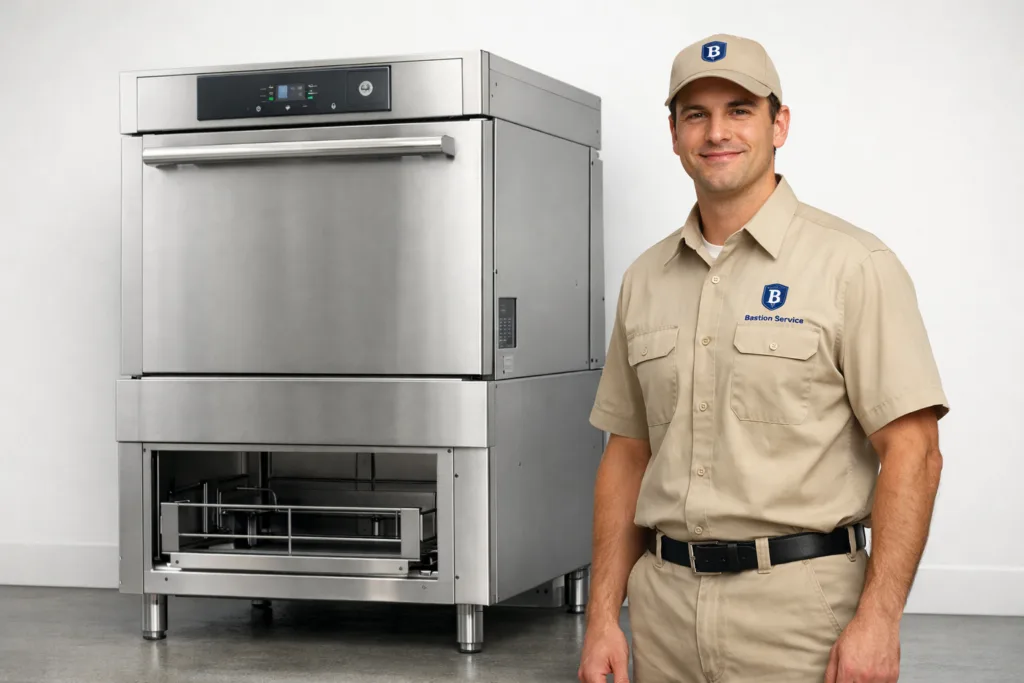




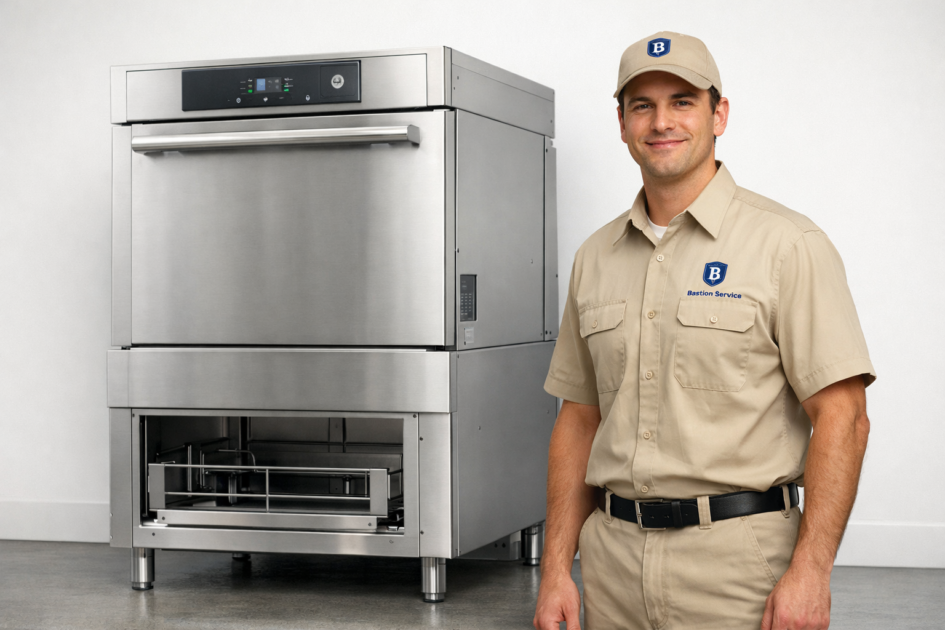
When Hobart warewashing equipment starts interrupting dishroom flow, the most useful next step is service that identifies the actual fault before small performance issues turn into missed turns, rewashing, or full shutdowns. For businesses in Pico-Robertson, a repair visit should do more than confirm that the machine is acting up. It should clarify whether the problem involves wash action, water fill, drainage, rinse temperature, controls, or a developing mechanical issue that could affect uptime if left in service.
For specific equipment paths in Pico-Robertson, review Hobart Dishwasher Repair in Pico-Robertson and Commercial Appliance Repair in Pico-Robertson.
Bastion Service works with businesses in Pico-Robertson that need symptom-based troubleshooting, repair scheduling, and a realistic plan for getting Hobart warewashing equipment back into reliable operation. That includes helping operators understand what the current symptom pattern suggests, what conditions may require immediate attention, and whether continued use is likely to create larger repair needs.
What Hobart warewashing equipment problems usually point to
Warewashing equipment rarely goes from normal operation to total failure without warning. More often, operators notice inconsistent cleaning, unusual cycle behavior, standing water, leaks, temperature complaints, or controls that stop responding as expected. These symptoms matter because they usually indicate a specific system that needs testing rather than a vague performance problem.
On Hobart dishwashing equipment, the most common service calls tend to involve wash performance, fill and drain faults, rinse temperature issues, sanitation concerns, and control-related interruptions. Looking at those symptoms in context helps determine whether the machine needs immediate repair, limited operation pending parts, or a full shutdown until the fault is corrected.
Dirty ware, spotting, film, or weak cleaning results
If racks come out with food residue, cloudy surfaces, streaking, or inconsistent soil removal, the issue may be tied to wash pressure, pump performance, spray arm obstruction, water flow, rinse delivery, or heat-related problems. What looks like a detergent issue can also be caused by a failing component that prevents the machine from completing the cycle correctly.
In a busy operation, weak wash results create more than an appearance problem. Staff may start rewashing loads, extending handling time, or sorting items that should have been processed in one pass. That added labor is often the first sign that the machine needs repair attention rather than routine adjustment.
Slow filling, no fill, overfilling, or interrupted wash cycles
Fill problems can show up in different ways. The machine may take too long to start, fail to bring in enough water, add too much water, or stop mid-cycle because expected water levels are not reached. These symptoms may involve valves, sensors, float-related faults, incoming supply issues, or control problems that interfere with normal timing.
When fill behavior becomes inconsistent, cycle performance usually becomes inconsistent with it. Wash action, heating, and rinse results can all suffer if water levels are not being managed properly. A service inspection helps identify whether the problem is limited to one part of the fill system or connected to a broader control fault.
Drain problems, standing water, or incomplete emptying
Water left in the tank after operation is a common reason businesses schedule repair. Slow draining, repeated drain errors, or water that backs up into the machine can point to blockages, drain pump issues, valve trouble, or controls that are not sending the proper command at the right point in the cycle.
Standing water should not be treated as a minor inconvenience. It can interrupt the next cycle, contribute to odor and sanitation complaints, and place unnecessary strain on components when staff keep restarting the unit to force operation. Identifying the reason for poor drainage early usually helps limit broader wear.
Low rinse temperature or sanitation complaints
Temperature-related problems are especially important because they affect both final results and confidence in the machine’s output. If the rinse side is not reaching proper conditions, ware may come out looking acceptable while still raising concerns about sanitizing performance. In other cases, the unit may display temperature alarms, stall while trying to heat, or complete cycles without delivering consistent rinse conditions.
These issues can involve heating elements, boosters, thermostats, sensors, relays, wiring faults, or control board problems. A proper diagnosis matters because the visible symptom may be temperature-related even when the root cause is electrical or control-related.
Leaks, unusual noise, vibration, or signs of mechanical wear
Leaks around the base, dripping during operation, grinding sounds, harsher pump noise, or increased vibration are all signs that the machine may be developing a mechanical fault. Common causes include worn seals, hose issues, pump problems, motor strain, or internal wear that is becoming harder to ignore under load.
These symptoms often start gradually. Operators may notice that the machine still runs, but not as smoothly as before. That is usually the stage when repair service is most useful, because continued use can turn a contained issue into a more expensive failure that affects multiple assemblies.
Why symptom-based diagnosis matters before approving repair
Two machines can show the same visible problem and still need very different repairs. Poor cleaning, for example, might come from weak wash pressure, low fill, rinse faults, heating problems, or a control sequence issue. Likewise, a cycle that stops unexpectedly could be caused by a sensor condition, a drain fault, an electrical interruption, or a board problem.
That is why the first goal of service is not simply replacing a suspected part. It is confirming the fault path so the next step makes operational sense. For businesses in Pico-Robertson, that helps answer practical questions quickly:
- Can the equipment stay in use safely until repair is completed?
- Is the issue isolated to one system or affecting several functions?
- Will continued use likely increase downtime or parts cost?
- Should the repair be scheduled immediately or planned around service hours?
A focused diagnosis also makes repair-versus-replacement discussions more useful when a unit has recurring issues or multiple failures developing at once.
When continued operation can make warewashing problems worse
Some operators try to work around a struggling dishwasher for a few more shifts, especially when the machine still starts and completes at least some cycles. The problem is that warewashing equipment can continue running while performing badly enough to create labor loss, inconsistent results, and avoidable component damage.
It is usually time to stop stretching operation when staff are doing any of the following on a regular basis:
- rewashing racks because results are inconsistent
- waiting through longer or repeated cycles to get acceptable output
- resetting the machine to clear shutdowns or fault conditions
- mopping recurring leaks or working around water on the floor
- changing loading routines just to get the unit to finish a cycle
- questioning whether rinse temperature or final results are reliable
At that point, the issue is already affecting daily operations. Repair service becomes less about convenience and more about controlling risk, labor waste, and unplanned downtime.
What a service visit should help clarify
For Hobart warewashing equipment in Pico-Robertson, a productive service call should give management a clearer picture of machine condition and next steps. That includes identifying the likely failed component or system, checking whether related wear is present, and confirming whether the equipment can reasonably stay in use before follow-up work is completed.
It should also help operators understand the business impact of the problem. A machine that still runs but cannot maintain wash performance, drain correctly, or reach proper rinse conditions may be creating more disruption than a visible shutdown. In those cases, timely repair can reduce repeat handling, preserve dishroom flow, and restore more predictable output.
Repair planning for businesses in Pico-Robertson
Businesses in Pico-Robertson often need repair decisions that fit around active kitchen schedules rather than generic troubleshooting advice. That means looking at symptom severity, how often the fault appears, whether sanitation or temperature performance is affected, and whether the machine can support normal volume without increasing risk. The right plan may involve immediate repair, scheduled return work, or taking the unit offline until the problem is corrected.
If your Hobart warewashing equipment is leaving ware dirty, filling incorrectly, draining slowly, leaking, failing to maintain proper rinse conditions, or showing erratic control behavior, scheduling service is the practical next step. A targeted repair assessment helps reduce downtime, protect workflow, and move from recurring symptoms to a repair decision that fits real operating needs in Pico-Robertson.