
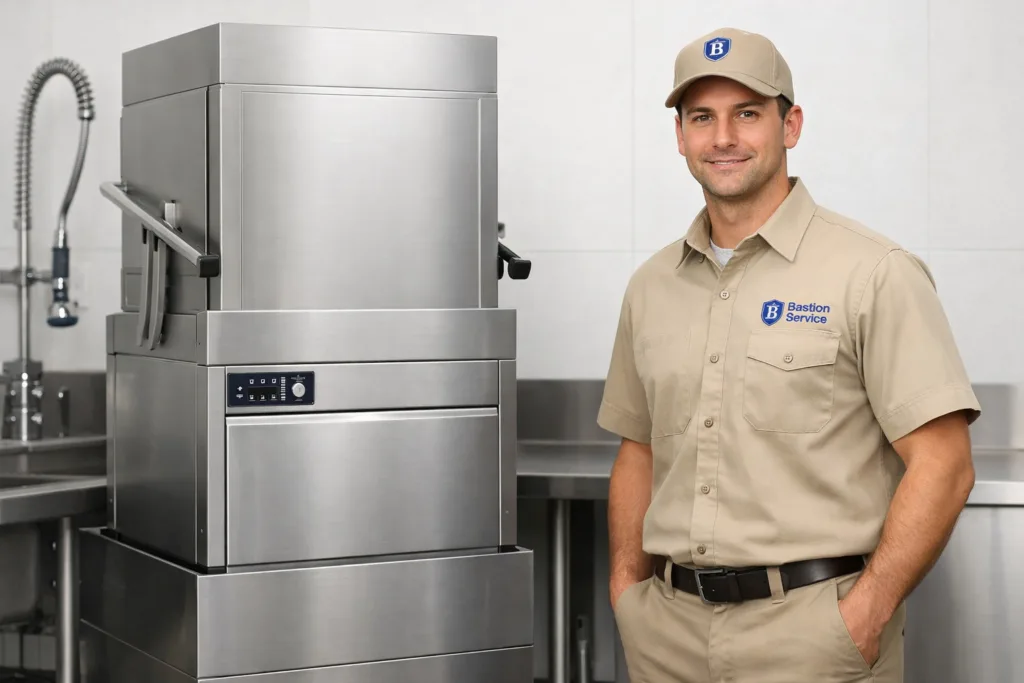




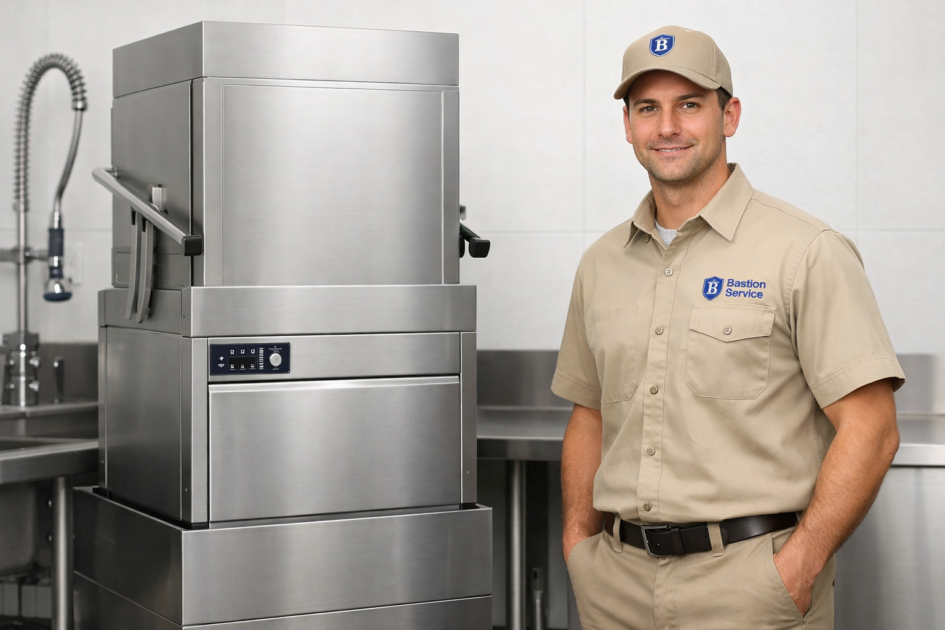
When Hobart warewashing equipment begins disrupting kitchen flow, the priority is fast symptom-based service that leads to a repair decision managers can act on. For businesses in Mar Vista, that usually means identifying whether the problem involves wash performance, filling, draining, rinse temperature, leaks, or a control fault before downtime spreads into sanitation delays, labor inefficiency, or service bottlenecks. Bastion Service provides repair support for Hobart warewashing equipment with a service-first approach focused on diagnosis, repair scheduling, and the practical next step for the unit in front of you.
For specific equipment paths in Mar Vista, review Hobart Dishwasher Repair in Mar Vista and Commercial Appliance Repair in Mar Vista.
What Hobart warewashing equipment problems usually need repair attention?
Most warewashing issues show up as repeatable operating symptoms before a full shutdown. If racks are not coming out clean, the machine is slow to fill, water remains in the tank, rinse performance is inconsistent, or the unit stops during a cycle, those are signs that a part, sensor, pump component, valve, heating circuit, or control system may need inspection.
Early service matters because a warewashing problem rarely stays isolated for long. A drain issue can strain pumps. A temperature issue can create sanitation complaints. A leak can damage surrounding flooring and force an unexpected stoppage. A control problem can move from intermittent resets to a machine that will not run at all.
Common Hobart dishwasher symptoms and what they may indicate
Poor wash results, residue, or spotty cleaning
If dishes, glasses, or utensils come out with soil, film, or inconsistent cleaning, the issue may involve clogged or damaged wash arms, weak pump performance, restricted water flow, scale buildup, heating problems, or chemical delivery faults. In a busy kitchen, poor wash results often create a second problem immediately: rewash volume increases, racks back up, and staff loses time trying to work around equipment that is no longer keeping pace.
This symptom is worth checking promptly because operators sometimes assume the problem is loading or chemistry alone when the real cause is mechanical wear or reduced circulation inside the machine.
Slow fill, no fill, or overfilling
Filling problems can point to inlet valve trouble, float-related issues, sensor faults, blocked screens, or control-related errors. If the machine is taking too long to fill, not filling enough, or continuing to fill beyond normal levels, the unit may not complete cycles correctly and may create overflow or leak conditions.
Overfilling should not be ignored. Even when the machine still runs, excess water can affect wash consistency, place stress on related components, and increase the chance of water on the floor during active service.
Drain issues and standing water after the cycle
When water does not drain fully, common causes include obstructions, pump problems, hose restrictions, drain valve issues, or controls that are not completing the cycle correctly. Standing water inside a dishwasher can quickly affect daily operations because the next load is delayed, odors may develop, and sanitation confidence drops.
If staff notices repeated draining trouble instead of a one-time interruption, it is usually a sign that repair is more appropriate than continued resets or repeated manual draining.
Rinse temperature problems or sanitation complaints
Warewashing equipment that is not reaching proper rinse temperature may leave operators with wet items, inconsistent final results, or concerns about whether the machine is performing as expected. These faults can involve heating elements, boosters, thermostats, sensors, contactors, relays, limit devices, or board-level controls.
Temperature issues deserve prompt service because they affect more than convenience. In many operations, rinse performance is directly tied to workflow confidence, pass-through speed, and the ability to maintain normal dish turnover during peak periods.
Leaks, drips, or water around the machine
Leaks may come from door gaskets, pump seals, hoses, valves, loose fittings, cracked components, or fill-and-drain-related faults. Some leaks appear only during certain parts of the cycle, which can make them easy to underestimate at first. But even small leaks can become safety concerns and may indicate that additional wear is already developing inside the unit.
If water is repeatedly appearing around the machine, service should focus not only on where the leak is visible, but also on why pressure, sealing, or water movement has changed.
Cycle failures, shutdowns, or control faults
If the dishwasher will not start, stops mid-cycle, flashes error conditions, or responds inconsistently to normal inputs, the problem may involve door switches, latches, wiring, timers, boards, relays, sensors, or other control components. Intermittent control behavior is especially disruptive because the machine may seem usable one moment and fail during the next rush.
These problems often require direct testing rather than guesswork, since symptom overlap between wiring faults, safety circuits, and control failures can be misleading.
Why symptom patterns matter in warewashing repair
For businesses in Mar Vista, repair decisions are easier when the symptom pattern is clear. A machine that leaks only during fill points in a different direction than one that leaks during wash circulation. A unit that reaches wash temperature but struggles during final rinse suggests a different fault than one that never heats consistently at all. The timing, frequency, and severity of the symptom help determine urgency, likely causes, and whether the equipment should remain in use while service is arranged.
This is also why recurring “temporary fixes” tend to waste time. Restarting the machine, draining it manually, or rerunning loads may get through part of the day, but it does not reduce wear on pumps, controls, valves, or heating components that are already failing.
When to stop using the dishwasher until it is repaired
Some warewashing issues allow limited short-term scheduling flexibility, while others justify taking the machine out of service immediately. Continued use is riskier when the unit is:
- Leaking enough to create a floor hazard
- Failing to drain and leaving repeated standing water
- Overfilling or showing signs of overflow
- Not maintaining proper rinse temperature
- Stopping mid-cycle without predictable recovery
- Making unusual grinding, straining, or pump-related noise
- Showing unstable control behavior or electrical irregularities
In those situations, waiting can turn an isolated failure into damage affecting multiple systems. Early repair planning often protects both the machine and the surrounding operation.
Repair versus replacement for aging warewashing equipment
Not every service call leads to the same recommendation. Repair is often the right path when the fault is concentrated in one system and the rest of the machine remains structurally sound. Replacement becomes a more serious consideration when the equipment has repeat failures across multiple systems, major internal wear, significant control damage, or repair costs that no longer align with reliable remaining service life.
The useful part of a service visit is not simply identifying a bad part. It is understanding whether the machine is a good repair candidate, whether related wear is likely to trigger another outage soon, and how the decision affects daily throughput.
What businesses should note before scheduling service
Before repair is scheduled, it helps to note what staff is seeing during normal use. Useful details include:
- Whether the problem happens every cycle or only intermittently
- At what stage the issue appears: fill, wash, rinse, or drain
- Any visible leaks, unusual noises, or strong odors
- Whether cleaning quality, drying, or temperature changed gradually or suddenly
- If the machine shuts off, stalls, or displays control-related issues
These observations can help narrow the likely fault path and support faster troubleshooting once the equipment is inspected.
Hobart warewashing equipment service for businesses in Mar Vista
If a Hobart dishwasher is no longer cleaning properly, is filling or draining incorrectly, has developed a leak, is not reaching expected rinse performance, or is showing control faults, scheduling service is the practical next step. For businesses in Mar Vista, prompt repair support helps protect sanitation flow, labor efficiency, and day-to-day uptime. A focused inspection can confirm the cause, outline repair options, and help management decide whether the unit should stay in operation, be repaired right away, or be evaluated for replacement based on current condition and downtime risk.


