
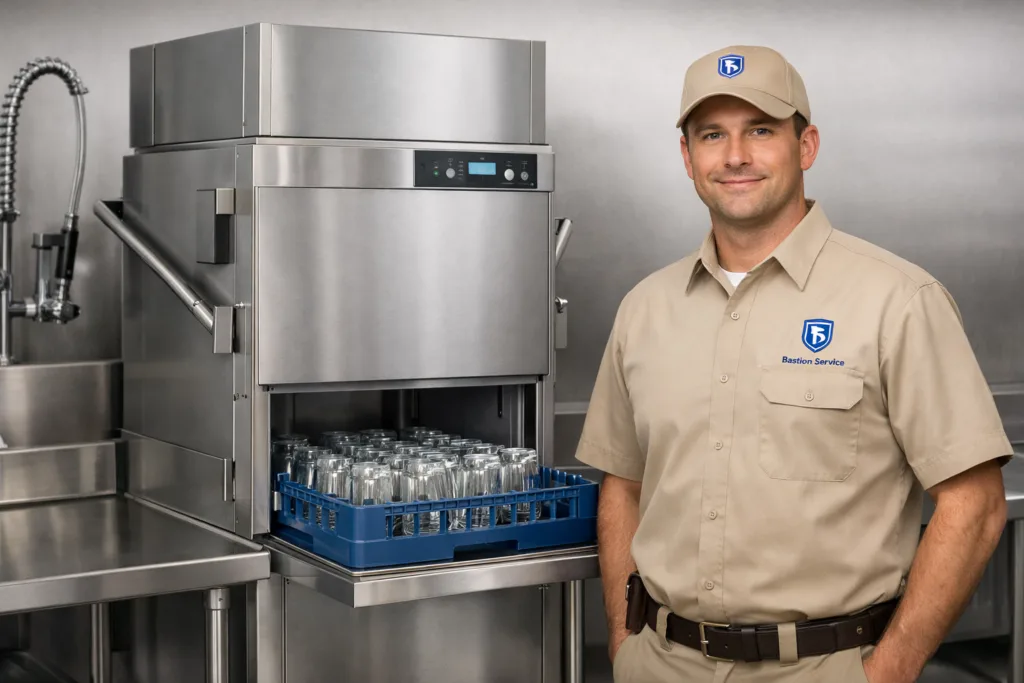




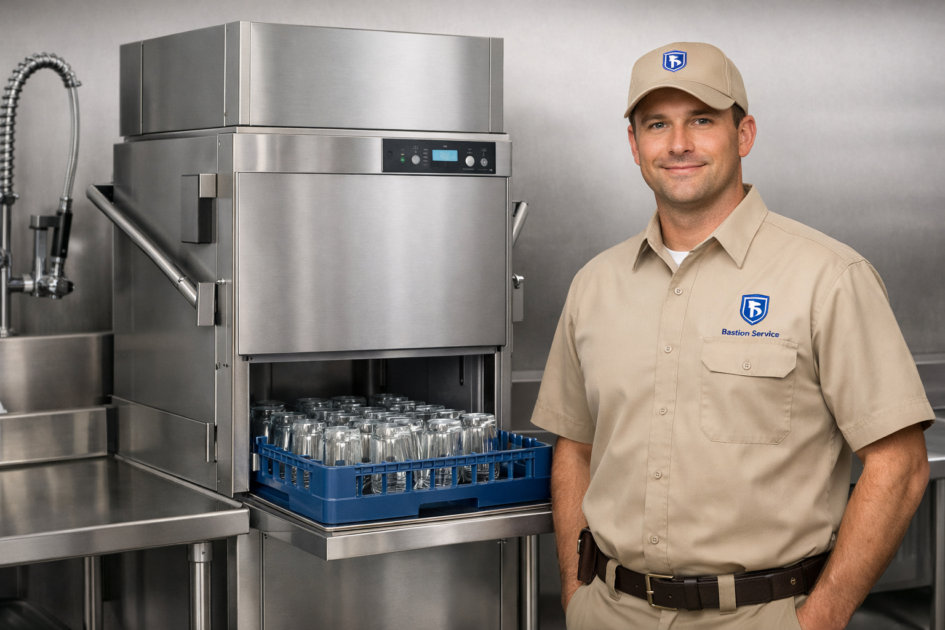
Warewashing problems rarely stay isolated to the machine itself. When a Hobart unit starts leaving residue on dishes, stopping mid-cycle, leaking onto the floor, or struggling to hold temperature, the disruption spreads quickly into prep, service pace, labor use, and sanitation routines. The most useful first step is to match the visible symptom to the likely system involved so the repair path is based on how the equipment is actually failing.
For specific equipment paths in Los Angeles, review Hobart Dishwasher Repair in Los Angeles and Commercial Appliance Repair in Los Angeles.
What Hobart warewashing equipment problems do you troubleshoot?
Los Angeles operators usually call for service when a Hobart dishwasher shows one or more of these problems:
- Dishes, glasses, or utensils coming out spotted, cloudy, greasy, or still soiled
- Wash cycles that take too long, stall, or stop before completion
- Units that will not fill, overfill, or fill more slowly than normal
- Standing water left in the tank or poor draining after a cycle
- Water leaks around the door, underneath the machine, or near connected lines
- Low wash temperature, weak final rinse temperature, or sanitizing concerns
- Controls that do not respond correctly, show errors, or behave intermittently
- Failure to start, unexpected shutdowns, or repeated power-related interruptions
These symptoms can come from very different causes, including pump wear, heating faults, drain restrictions, valve issues, sensor failures, control problems, scale buildup, or worn seals. That is why symptom-based troubleshooting matters more than guessing from one visible issue alone.
Wash performance problems that affect dish quality
If racks are coming out with food soil, film, streaks, or uneven rinse results, the problem may not be a single “washing issue.” Poor results can come from blocked wash arms, weak pump performance, low water temperature, rinse delivery problems, chemical feed irregularities, or internal buildup that changes how water moves through the machine.
In a busy kitchen, this symptom often shows up first as extra rewashing. Staff may compensate for a while, but that usually means more water use, more labor, and slower turnaround during service. When poor wash quality starts appearing across multiple loads rather than one isolated rack, it usually points to a machine condition that should be inspected rather than worked around.
Fill and drain issues that interrupt normal cycles
Slow filling or no fill
When a Hobart dishwasher fills too slowly or does not fill at all, the machine may never move into a stable wash cycle. Possible causes include inlet valve trouble, supply restrictions, sensor faults, or control interruptions. Operators sometimes notice this as a unit that seems to sit idle longer than usual before beginning the wash process.
If filling becomes inconsistent from one cycle to the next, that pattern is important. Intermittent fill problems often become full stoppages under heavier daily use.
Standing water and incomplete draining
Draining problems are another common reason warewashing equipment falls behind during a shift. A machine that ends a cycle with standing water may have a clogged drain path, pump-related fault, or control issue that prevents proper completion. Standing water should not be treated as a minor inconvenience because it can affect the next load, contribute to odors, and signal a condition that may worsen quickly.
When the same unit shows both wash quality problems and drain trouble, the overlap can help narrow the diagnosis. It may suggest a circulation issue, a pump problem, or a broader performance fault rather than two unrelated complaints.
Temperature and sanitizing concerns
Heat-related problems deserve prompt attention because they affect both machine performance and sanitation confidence. If the dishwasher is not reaching expected wash or rinse temperature, takes too long to recover between cycles, or produces inconsistent results during heavy use, likely causes can include heating element failure, thermostat or sensor issues, wiring problems, or control faults.
Temperature complaints often start subtly. Staff may notice longer cycle recovery, then inconsistent final results, then a point where the machine cannot keep up at all. In operations that rely on steady rack turnover, delayed heating can create a bottleneck even before the dishwasher fully stops working.
Leaks, overflow, and visible water around the unit
Water on the floor around warewashing equipment can come from door gaskets, hoses, fittings, pump seals, drain connections, or internal overflow conditions. Small leaks are often ignored at first because the machine still runs, but recurring water loss around the unit can damage nearby surfaces, create slip risk, and indicate wear that may lead to a more disruptive failure.
If the leak appears only during certain parts of the cycle, that timing can help identify whether the source is related to filling, washing, draining, or rinse operation. Noting when the leak occurs is useful information for service planning.
Control faults and intermittent shutdowns
Some of the most frustrating dishwasher problems are the ones that do not fail the same way every time. A Hobart unit may start normally in the morning, then stop responding later in the day, pause mid-cycle, reset unexpectedly, or fail to start altogether. These symptoms may involve electrical connections, controls, safety circuits, switches, or components that break down under load.
Intermittent faults are especially disruptive in Los Angeles kitchens because they make staffing and timing harder to manage than a machine that is consistently down. When the unit behaves unpredictably, repeated resets and workarounds usually waste more time than scheduling service early.
When continued operation can make the repair larger
Some symptoms allow limited short-term use, but others should be addressed before the machine stays in rotation. Continued operation is usually a poor choice when the dishwasher is leaking, not draining, not heating correctly, shutting down during cycles, or producing visibly poor wash results. In those cases, ongoing use can increase internal wear, create sanitation problems, and turn a contained repair into a broader one.
A practical service plan starts with the actual symptom pattern: what changed, how often it happens, whether the problem is getting worse, and whether the machine can still support daily demand without creating larger risks for the operation.
How Los Angeles businesses can describe the problem before service
The most helpful service calls are usually the ones that describe what the machine is doing, not just that it is “not working.” Useful details include:
- Whether the issue happens on every cycle or only sometimes
- If the machine fills, washes, drains, and heats in the normal order
- Whether dishes are dirty, wet, spotted, or not fully sanitized at the end
- If water is visible under the machine or around the door
- Whether the unit stops at the same point each time
- If the problem became worse gradually or appeared suddenly
That information helps separate operator-facing symptoms from the likely failed system and makes it easier to determine whether the equipment should stay offline until repair.
Repair or replacement considerations for warewashing equipment
Many Hobart dishwasher problems are still repairable when the machine is structurally sound and the fault is limited to serviceable components. Repair often makes sense when the issue is clearly defined, the rest of the unit remains stable, and restoring the machine returns the kitchen to normal workflow.
Replacement becomes a more serious consideration when breakdowns are recurring, multiple systems are showing wear at the same time, or the dishwasher no longer supports the pace of daily operations even after prior service. The decision is less about age alone and more about whether the equipment can return to reliable use without repeated interruptions.
What businesses usually need from a service visit
For most operators, the goal is not simply getting the dishwasher to run one more cycle. The goal is understanding why wash performance changed, whether the problem is isolated or part of broader wear, and what scope of repair best fits the kitchen’s workload. A dependable diagnosis should identify the failed system, explain the operational risk, and clarify the next step in plain terms.
For Hobart warewashing equipment in Los Angeles, that symptom-first approach is usually the fastest way to reduce downtime and avoid unnecessary part replacement. Whether the issue involves cleaning results, fill and drain behavior, leaks, heating, or controls, the right repair path starts with how the machine is performing in real service conditions.


