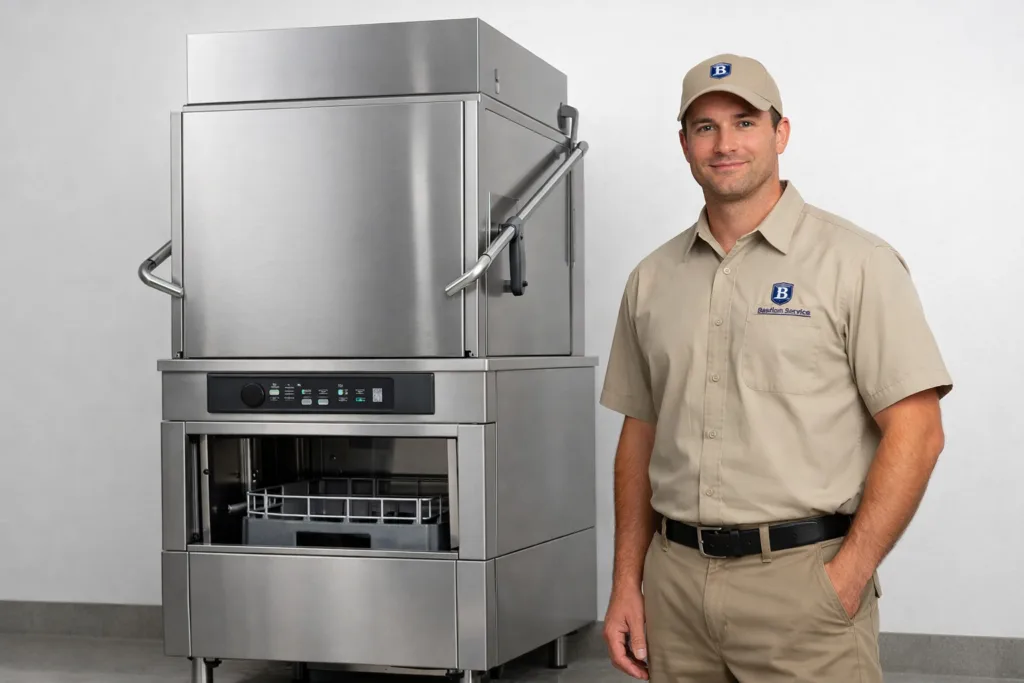




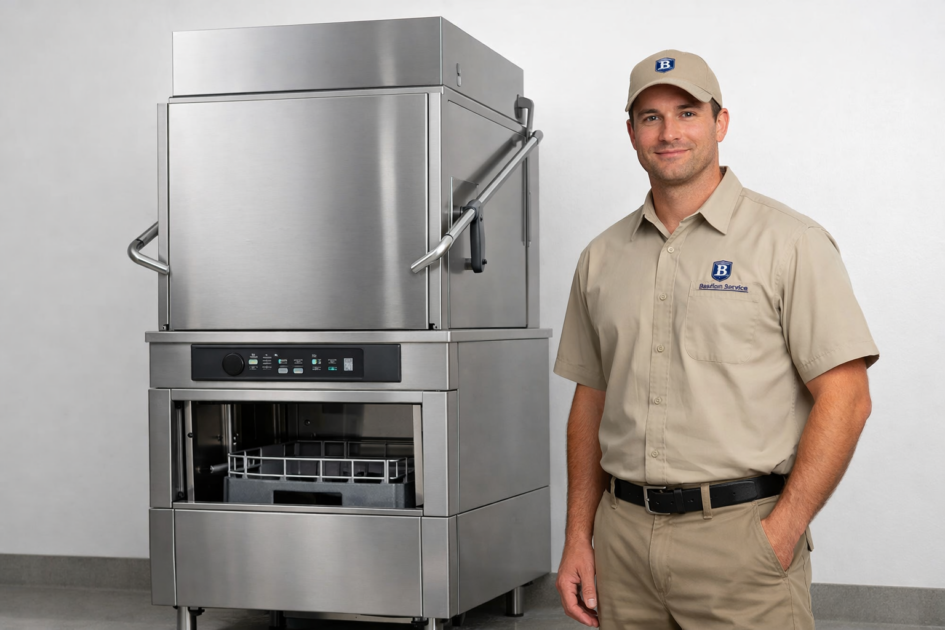
When Hobart warewashing equipment begins slowing down dish flow, leaving inconsistent results, or interrupting back-of-house routines, the repair decision usually comes down to speed, safety, and whether the unit can keep supporting daily volume. For restaurants, hospitality kitchens, and other food-service operations in Brentwood, symptom-based service is the most useful next step because wash quality, fill behavior, draining, heat, and controls often overlap. Bastion Service provides repair support for businesses that need to move quickly from equipment trouble to a workable scheduling plan.
For specific equipment paths in Brentwood, review Hobart Dishwasher Repair in Brentwood and Commercial Appliance Repair in Brentwood.
How warewashing problems usually show up in daily operations
Most failures do not begin with a full shutdown. A dishwasher may still run while leaving racks dirty, stopping between cycles, draining slowly, or taking longer to recover between loads. That partial operation can make the problem look manageable, but it often creates hidden strain on staff and can lead to rewashing, backups, and sanitation concerns during busy service windows.
Looking at the symptom pattern helps separate a simple operating issue from a repair need. If performance changes have become repeatable rather than occasional, the machine should be evaluated before the problem affects more than one part of the wash process.
Wash performance that drops off
If glasses, plates, utensils, or pans come out with food debris, spotting, film, or uneven results, the problem may involve spray action, pump performance, water delivery, cycle timing, or a control-related interruption. In many kitchens, poor wash results first appear as extra labor rather than obvious equipment failure because staff begin rewashing loads to compensate.
- Racks look inconsistent from one cycle to the next
- Heavier soil remains after normal washing
- Results decline during rush periods
- Wash action sounds weaker than usual
- Cycle completion does not match actual cleaning results
When output quality becomes unpredictable, service is usually more useful than trial-and-error adjustments because the root issue may be mechanical, electrical, or tied to water movement inside the machine.
Fill problems that delay or stop cycles
A dishwasher that fills too slowly, fails to fill fully, or overfills can quickly disrupt kitchen timing. Fill faults may involve valves, sensors, float-related issues, controls, or water supply restrictions affecting normal operation. Operators often notice this as a machine that sits idle longer than expected, starts inconsistently, or behaves differently from one cycle to another.
Overfilling can also contribute to leaking or unstable cycle performance, while underfilling may reduce wash effectiveness and create misleading symptoms that look like a pump or spray issue.
Drain issues and standing water
Water left in the tank, slow draining, or repeated drain failures can point to obstructions, drain pump problems, hose issues, or sensor faults. In a busy kitchen, drainage problems do more than interrupt a single cycle. They can create messy floors, slow turn times, and increase the chance that staff continue using the machine in a condition that causes broader wear.
Drain complaints are worth scheduling promptly when you notice:
- Standing water after the machine should be empty
- Unusual pauses during drain portions of the cycle
- Repeated resets to get the machine moving again
- Water backing up where it normally clears
- Combined leak and drain symptoms during the same shift
Leaks around the machine or underneath it
Leaks may come from door gaskets, fittings, hoses, valves, pump-related wear, or overflow conditions. Even a small amount of escaping water matters in a food-service environment because it can create slip hazards, damage nearby surfaces, and point to a condition that worsens under heavier use.
Leak diagnosis is especially important when the source is not obvious. What looks like a bad seal can sometimes be connected to fill control, drain restrictions, or internal pressure changes during the cycle. A repair visit helps determine whether the problem is isolated or part of a larger operating fault.
Rinse temperature and sanitation concerns
If warewashing equipment is not reaching expected rinse performance, usable output can drop quickly. Temperature-related issues may involve heating components, thermostats, sensors, relays, or control problems that interfere with proper operation. In some cases the machine completes cycles, but final results suggest that heat recovery or rinse conditions are not where they should be.
Businesses usually call for service when they notice:
- Inconsistent results tied to heating cycles
- Longer recovery time between loads
- Cycles that finish without expected final performance
- Warning signs related to heat or operating status
- Output concerns that affect confidence in sanitation workflow
Control faults and cycle interruptions
When the dishwasher will not start, stops mid-cycle, restarts unpredictably, or shows inconsistent behavior from one rack to the next, the issue may involve switches, sensors, wiring, boards, or power-related faults. These symptoms can be difficult to judge from the front panel alone because multiple systems depend on controls working in the correct sequence.
Repeated reset attempts may keep the machine limping along for a shift, but they rarely resolve the underlying issue. If the controls are interfering with normal cycle completion, repair scheduling is usually the right move before the unit becomes completely unavailable.
When continued use creates more risk than value
A Hobart dishwasher does not need to be fully down to justify service. In many operations, the bigger problem is a machine that still runs but is no longer trustworthy. If staff are avoiding certain cycles, washing the same rack twice, mopping around leaks, or building extra time into dish flow because the machine has become unpredictable, the equipment is already affecting labor and throughput.
Service should be prioritized when symptoms involve recurring leaks, poor draining, heat loss, frequent interruptions, unusual noises, or noticeable decline in cleaning quality. Those signs often mean the issue is no longer isolated to routine wear and should be assessed before it expands into a longer outage.
What a repair-focused evaluation should clarify
For business operators, the most important questions are usually straightforward: what is causing the failure, can the unit remain in limited use, how urgent is the repair, and does the machine still make sense to fix? A service visit should help answer those points based on actual operating symptoms rather than assumptions.
That evaluation is useful for:
- Determining whether one fault is affecting several symptoms
- Identifying whether the machine should stay in service or be shut down
- Separating a targeted repair from a wider reliability issue
- Planning around kitchen timing and downtime impact
- Helping management decide between repair and replacement
Repair or replacement: how businesses usually decide
Not every warewashing problem points to replacement. Many calls involve isolated failures that can be corrected without changing the overall equipment plan. Repair often makes sense when the issue is limited, the machine otherwise supports production well, and the rest of the unit remains in serviceable condition.
Replacement becomes a stronger consideration when there are repeated failures across multiple systems, a history of recurring control or heating trouble, visible wear affecting reliability, or repair costs that no longer align with the machine’s remaining useful life. The goal is not only to restore operation for the current shift, but to avoid repeating the same downtime pattern.
What businesses in Brentwood usually want from service
Most operators want clarity, realistic timing, and a repair path that fits actual kitchen demands. That means understanding whether the problem is tied to wash performance, fill and drain behavior, leaks, temperature concerns, sanitation issues, or control faults, and then scheduling the next step accordingly.
If your Hobart warewashing equipment is slowing production, affecting dish turnover, or creating uncertainty in daily operations, the right next move is to arrange service and have the symptom pattern evaluated before downtime widens. For businesses in Brentwood, timely repair support can help restore predictable performance and make the decision process much easier.