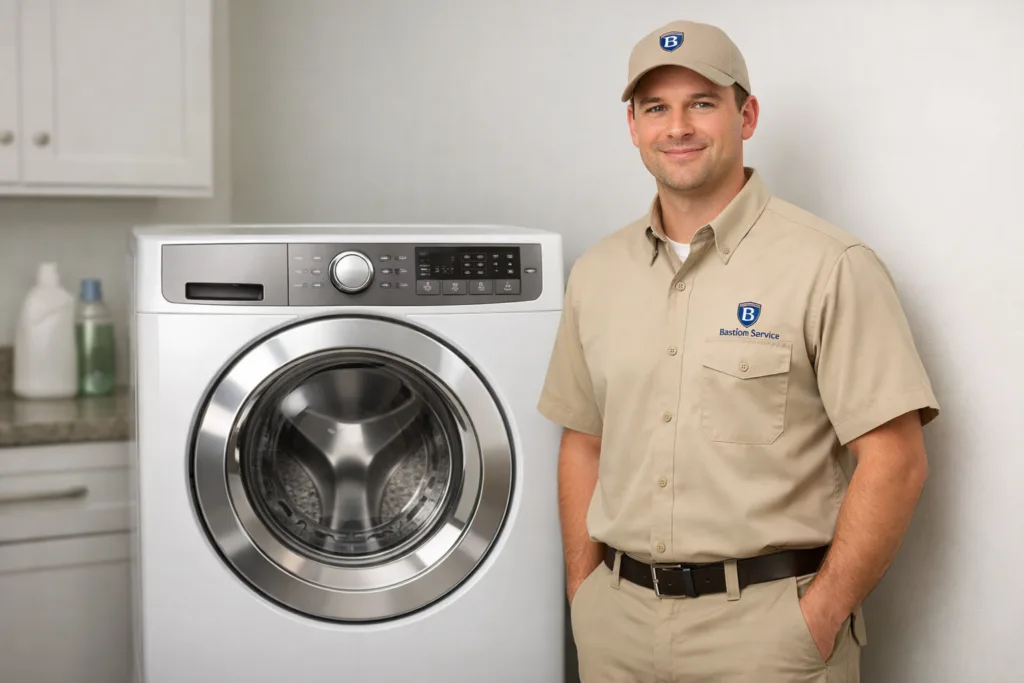
Washer problems are easiest to solve when the symptoms are narrowed down by stage of cycle. A GE washer that stops during fill points to a different repair path than one that fills normally but will not agitate, drain, or spin. Paying attention to when the failure happens, what sounds you hear, and whether the display shows an error can help identify whether the issue is related to water supply, drainage, balance, the drive system, or electronic controls.
Related GE and washer service paths in Century City include GE Appliance Repair in Century City, Washer Repair in Century City, and GE Refrigerator Repair in Century City.
How GE washer symptoms usually point to the cause
Many washer complaints sound similar at first, but the pattern matters. If the machine does not start at all, the problem may involve power, the lid or door lock, the user interface, or the main control. If it starts and then stalls, the cause may be a sensing issue, a drain fault, a motor problem, or a control interruption. If it completes the cycle but the clothes still come out dirty or soaked, the washer may not be filling correctly, washing effectively, or reaching full spin speed.
In Century City homes, this kind of symptom-based troubleshooting is often the fastest way to avoid unnecessary parts replacement. A pump, valve, sensor, or control issue can all affect cycle performance, but each requires a different repair approach.
Common GE washer problems and what they often mean
Washer will not drain
Standing water in the tub is one of the most common service calls. This can happen because of a clogged drain pump filter area on certain models, debris in the drain hose, a failed pump, or a restriction in the drain setup. Some washers will stop mid-cycle and remain locked when they cannot drain properly. If you hear humming without water leaving the tub, that often suggests the pump is trying to run but cannot move water effectively.
Clothes come out too wet after spin
When laundry is still heavy at the end of the cycle, the washer may be skipping or reducing the final spin. Common reasons include imbalance, worn suspension components, drainage problems that prevent full spin, or a lid lock or speed-sensing issue. On some GE models, the machine will protect itself by slowing down or stopping spin if it detects an out-of-balance load repeatedly.
Poor wash results or detergent residue
If clothing is not coming clean, or detergent remains on fabrics, the washer may not be filling with enough water, distributing wash action correctly, or rinsing properly. A partially restricted inlet valve, low household water pressure, oversudsing, or an issue with load sensing can all affect cleaning performance. Residue can also build up when cycles are interrupted before a full rinse and spin sequence finishes.
Leaks during fill, wash, or drain
Leaks should be tracked by timing and location. Water appearing at the start of the cycle may come from inlet hoses, connections, or an overfill problem. Water leaking during agitation or wash can point to tub, hose, or dispenser issues. Water showing up during drain or spin is often associated with the pump, drain hose, or movement-related strain on connections. Front-load models may also leak from a damaged door boot or from buildup that prevents a proper seal.
Shaking, banging, or movement across the floor
Some vibration is normal, especially with bulky items, but repeated hard banging is not. Leveling problems, uneven loads, worn suspension parts, or internal basket movement can all cause the cabinet to shake. If the washer is walking or striking the sides during spin, it is best to stop using it until the cause is checked, since continued operation can worsen wear and create new damage.
Will not fill or fills too slowly
When a GE washer will not begin because water is not entering, the issue may be as simple as a supply valve problem or a kinked hose, but it can also involve inlet screens, the water valve assembly, or pressure and sensing components. Slow fill problems are often mistaken for control failure because the cycle seems unresponsive, when the washer is actually waiting for the expected water level.
Cycle stops, resets, or shows an error code
Electronic faults can appear as random pauses, flashing lights, locked controls, or error codes that return even after restarting the machine. The code is helpful, but it does not always identify the exact failed part by itself. Wiring issues, communication problems between boards, sensor faults, and moisture-related control issues can present in similar ways.
Signs the problem may be getting worse
Some washer issues start small and become more expensive if ignored. Watch for these warning signs:
- Drain times getting slower from one load to the next
- Spin cycles that work sometimes but not consistently
- A burning smell, grinding sound, or loud hum
- Water appearing only during larger loads
- Repeated imbalance errors on normal-size loads
- Controls that respond intermittently or freeze mid-cycle
These symptoms often indicate wear that has moved beyond a one-time glitch. Addressing them early may prevent a mid-cycle shutdown or a leak that affects the laundry area.
When to stop using the washer right away
It is smart to stop using the machine if it is leaking steadily, tripping the breaker, making metal-on-metal noises, failing to drain with water trapped inside, or shaking violently during spin. A washer that smells hot or shows signs of electrical trouble should also be taken out of use until it is inspected. Continuing to run the appliance in these conditions can increase repair costs and may lead to water or electrical damage in the home.
Repair or replace: what usually makes sense
Repair is often the better option when the washer is in otherwise good condition, the failure is limited to one system, and the cabinet, tub, and major structure are still solid. Replacement may make more sense when the unit has multiple ongoing problems, significant rust, a damaged tub assembly, or repeated control-related failures combined with age and wear.
For many homeowners in Century City, the real question is whether the repair restores normal laundry use without creating another interruption a few months later. That decision depends on the exact failed component, the overall condition of the washer, and how the machine has been performing before the current issue.
Helpful details to note before service
If you are scheduling GE washer repair in Century City, a few observations can make the next step easier. Try to note:
- Whether the problem happens during fill, wash, drain, or spin
- If water remains in the tub after the cycle stops
- Any error code or flashing pattern on the display
- Whether the issue affects every cycle or only certain settings
- If the washer is louder than normal, and at what point
- Whether the problem began suddenly or got worse over time
Even simple notes like “stops before spin” or “leaks only while draining” can help narrow the likely cause faster.
Why model-specific GE washer diagnosis matters
GE washers can differ quite a bit by design, control style, and wash system. Top-load and front-load units can share the same complaint while needing very different repairs. A no-spin condition on one model may be tied to drain performance, while on another it may relate more directly to balance sensing, lock function, or the drive system. That is why model-specific diagnosis matters more than guessing based on a general symptom alone.
Practical next steps for Century City homeowners
If the washer is still operating but performance is getting worse, avoid overloading it or repeatedly restarting the same cycle just to force completion. If the machine is leaking, failing to drain, or making severe noise, leave it off until the cause is identified. The most efficient path is to match the symptom pattern to the affected system and then decide whether the repair is worthwhile based on the age, condition, and expected reliability of the appliance after service.