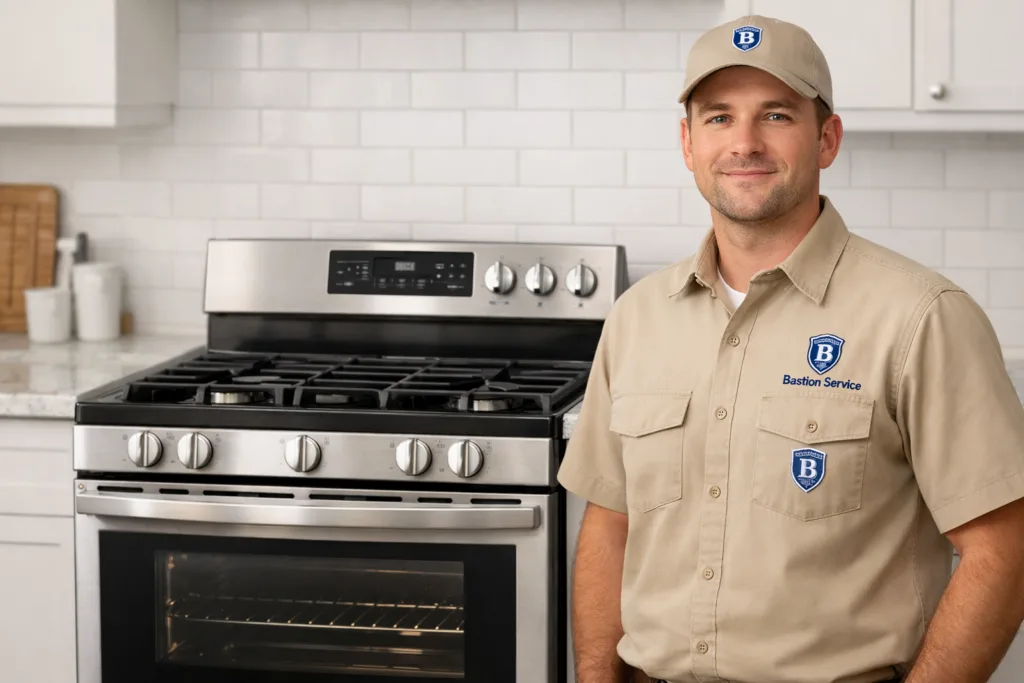
Common GE range symptoms and what they may mean

Range problems usually show up as a cooking symptom first: a burner that clicks but will not light, an oven that preheats slowly, a surface element that stays cold, or controls that stop responding at the wrong time. The useful next step is matching that symptom to the system involved, whether that is ignition, heating, sensing, wiring, or the electronic control.
Related GE and range service paths in Century City include GE Appliance Repair in Century City, Range Repair in Century City, and GE Refrigerator Repair in Century City.
Many GE ranges also develop intermittent issues before they fail more completely. In Century City homes, that can look like a burner that works after several tries, an oven that is fine one week and noticeably off the next, or a display that responds inconsistently. Intermittent behavior often points to a part that is weakening rather than one that has fully failed.
Burners that click, spark poorly, or do not ignite
On gas models, repeated clicking is one of the most common complaints. Sometimes the cause is simple, such as moisture around the igniter or a burner cap that is not seated correctly. In other cases, the issue traces back to clogged burner ports, a failing spark module, a worn switch, or ignition components that no longer fire reliably.
If one burner has the problem but the others work normally, the fault is often more localized. If several burners begin acting up at the same time, diagnosis may need to focus on shared ignition components or power-related issues. Continued clicking after the flame is lit should not be ignored, because it can indicate that the ignition system is not sensing normal operation correctly.
Electric elements that stay cold or heat unevenly
On electric GE ranges, a surface element that does not heat may have a failed element, a damaged receptacle, a switch problem, or a wiring issue. Uneven heat can be just as disruptive, especially when one side of a pan runs hotter than the other or the element cycles improperly.
Signs that point to an electrical heating problem include:
- An element that never glows or warms
- Heat that cuts in and out during use
- A burner that only works on certain settings
- Visible damage at the element connection point
Oven temperature problems and slow preheating
If the oven takes much longer than usual to preheat, bakes unevenly, or cannot hold a steady temperature, the problem may involve the igniter, bake element, broil element, temperature sensor, or control board. Home cooks often notice this first through food results rather than through the appliance itself: longer bake times, underdone centers, overbrowned tops, or recipes that suddenly stop coming out as expected.
Temperature drift can be especially frustrating because the oven may still appear to run. A range that turns on is not necessarily heating correctly. When performance changes gradually, it is easy to blame cookware or recipe timing, but a weak heating component or inaccurate sensor can be the real cause.
Control panel and display issues
Modern GE ranges rely on electronic controls to manage oven functions, timers, temperature settings, and in some models additional cooking modes. If the keypad is unresponsive, the display flashes, settings reset on their own, or error codes appear, the issue may involve the interface, main control, or related electrical connections.
Control faults often start small. A delayed response when selecting bake or broil can turn into a full loss of oven operation later. When a range behaves unpredictably, repeated resets usually do not solve the underlying fault for long.
How symptom patterns help narrow the repair path
The most efficient repair decisions come from looking at the full pattern, not just one isolated moment. For example, a burner that fails only after cleaning may suggest moisture or cap placement. An oven that runs hot on every cycle may point toward sensor or control problems. A range that loses function after preheating may suggest a component that fails under heat load.
Useful details to note before service include:
- Whether the problem affects the cooktop, oven, or both
- If the symptom is constant or intermittent
- Whether the issue began suddenly or worsened over time
- Any error codes, unusual sounds, or burning smells
- Whether basic cleaning or resetting changed anything
That information can make diagnosis faster and reduce unnecessary parts replacement.
When a GE range should be serviced sooner rather than later
Some range problems are inconvenient but still limited. Others can worsen quickly with continued use. Service is usually worth scheduling when ignition becomes unreliable, oven temperature is clearly inaccurate, a burner overheats, or controls interfere with normal cooking. These are the kinds of faults that can turn meal preparation into guesswork and sometimes place extra strain on related components.
Homeowners in Century City should be especially cautious when they notice any of the following:
- Gas odor during ignition attempts
- Clicking that does not stop after lighting
- Elements that spark, arc, or show visible damage
- Oven heating that is far above or below the set temperature
- Controls that start, stop, or change settings unexpectedly
Even if the range is still partially usable, waiting can make the eventual repair more involved if a small failure leads to added wear elsewhere.
Repair versus replacement: what usually makes sense
For many households, the decision comes down to the failed part, the age of the appliance, and how the range has been performing overall. A repair is often reasonable when the issue is isolated to a serviceable component such as an igniter, sensor, element, switch, or interface part. When the range has multiple major problems at once, repeated electronic failures, or a long pattern of unreliable operation, replacement may deserve a closer look.
The best decision is usually based on appliance condition rather than frustration alone. If the cooktop and oven have otherwise been working well, targeted service can often restore normal use. If both sides of the range are showing separate problems and repair costs begin to stack, replacement may be the better long-term choice.
What homeowners can check before scheduling service
There are a few basic observations that can be helpful before a technician evaluates the range. These are not a substitute for repair, but they can rule out simple operating issues.
- Make sure burner caps are clean and seated properly
- Check for food debris blocking burner ports
- Confirm the appliance has stable power
- Note whether the problem happens on one setting or all settings
- Pay attention to how long preheating now takes compared with normal use
If those checks do not change the symptom, the next step is usually professional testing. That is especially true for recurring ignition problems, oven temperature complaints, and electronic faults that are difficult to confirm without live diagnosis.
Practical guidance for Century City homes
Because a range affects everyday cooking right away, symptom-based service matters more than guesswork. The goal is to identify the actual failed component, understand whether the problem is isolated or part of broader wear, and decide whether repair is practical based on the appliance condition and repair path.
If your GE range has become unreliable in Century City, addressing the issue early is often the easiest way to avoid more disruption. Burner trouble, heating inconsistency, and control problems rarely improve on their own, and a focused diagnosis gives you a more confident repair decision before the problem spreads.