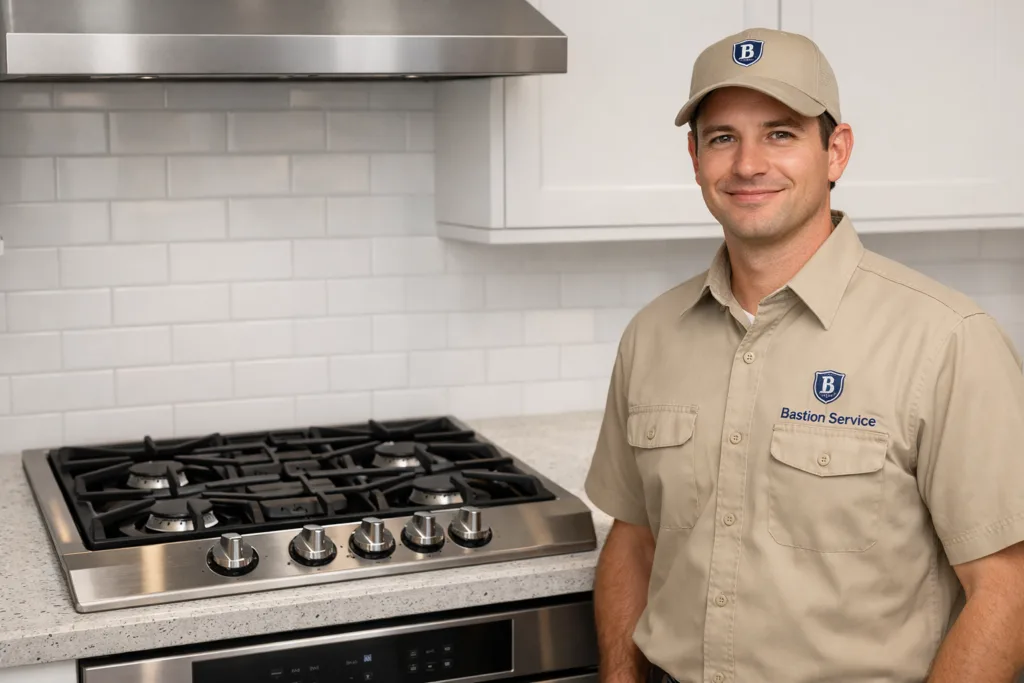
Cooktop problems are easiest to solve when the symptom is described precisely. Whether the issue is one burner, all burners, ignition, heat control, or visible surface damage, the pattern usually points toward a smaller group of likely causes. For homeowners in Century City, that makes the service decision simpler and helps avoid replacing parts based on guesswork.
Related GE and cooktop service paths in Century City include GE Appliance Repair in Century City, Cooktop Repair in Century City, and GE Refrigerator Repair in Century City.
Common GE cooktop issues seen in Century City homes
Most GE cooktop failures fall into a few familiar categories: a burner does not heat, a gas burner clicks or will not ignite, heat output is uneven, controls stop responding normally, or the glass surface is damaged. Some problems are isolated to a single burner, while others point to a shared control, wiring, or ignition component.
Burners that do not heat
On electric GE cooktops, a burner that stays cold may be caused by a failed element, a bad switch, a loose connection, or a control fault. If the burner warms only partway or cuts in and out, that often suggests the circuit is no longer operating consistently. This can make routine cooking frustrating and can also place extra strain on nearby components if the problem is ignored.
Uneven or erratic heating
When a burner runs too hot, too low, or cycles unpredictably, meals become harder to cook evenly. In many cases the issue is not the cookware but the regulation of heat itself. A worn switch, damaged element, or control problem can all create inconsistent burner behavior. If the symptom has become more noticeable over time, that usually indicates wear rather than a one-time glitch.
Clicking ignition or burners that will not light
On gas GE cooktop models, repeated clicking without a steady flame often points to trouble at the igniter system, burner head, switch, or spark module. Sometimes the cause is simpler, such as moisture after cleaning or a burner cap that is slightly out of position. If a burner lights only after several tries, that is still a repair symptom, because intermittent ignition tends to get worse rather than better.
If there is a strong gas odor or a burner does not ignite properly after gas is released, stop using the appliance and address the safety issue first.
Controls that feel loose or respond poorly
A GE cooktop may also show trouble through the controls rather than the burners themselves. Knobs that spin loosely, settings that do not change the flame or heat level correctly, and touch controls that respond only sometimes can all affect normal use. A problem that seems minor at first can become a safety concern if the burner does not match the selected setting.
Cracked glass cooktop surfaces
For glass-top GE cooktops, a crack or chip should be treated as more than cosmetic damage. A damaged surface can affect heat transfer, make cleaning harder, and create risk if spills reach internal components. Continued use after the surface is cracked can allow the damage to spread and may change whether repair remains practical.
How symptom patterns help narrow the cause
The same complaint can come from different failures, so the details matter. A burner that never heats is different from one that overheats. A gas burner that clicks constantly is different from one that clicks once and stops. A control that works after being pressed several times is different from one that does nothing at all.
Useful details include:
- Whether the problem affects one burner or multiple burners
- Whether the symptom is constant or intermittent
- Whether the issue began suddenly or got worse gradually
- Whether cleaning, spills, or recent power interruption happened before the problem started
- Whether the cooktop shows visible damage, sparking, or unusual sounds
Those clues often determine whether the issue is likely a burner component, ignition part, switch, wiring problem, or user-interface failure.
When a GE cooktop should not stay in regular use
Some cooktop problems are inconvenient but manageable for a short time. Others should be treated as stop-use conditions. If a burner overheats, a control sticks, the igniter keeps firing after the burner is lit, or the glass surface is cracked, continued use can increase repair cost and create avoidable risk.
It is also wise to stop using any burner that:
- Will not regulate temperature correctly
- Takes much longer than usual to heat
- Produces an unstable flame
- Trips power repeatedly
- Shows signs of arcing, burning smell, or discoloration
Turning that section off and having the cooktop evaluated early can prevent a single-burner issue from becoming a larger control or wiring problem.
What makes repair worthwhile
Many GE cooktop problems are repairable when the failure is limited to one switch, one burner circuit, one ignition component, or a specific control-related part. Repair is often the better path when the appliance is otherwise in solid condition and the problem is confined to a known system.
Replacement becomes more likely when the cooktop has multiple unrelated faults, major surface damage, or repair needs that are high compared with the unit’s age and condition. The most helpful visit is one that explains not just what stopped working, but whether the appliance still has a sensible service life after the fix.
Practical checks homeowners can notice before service
Without disassembling anything, homeowners can often gather a few observations that make diagnosis faster. For gas models, check whether the burner cap sits correctly and whether food debris is visible around the burner head. For electric models, note whether the issue appears on one cooking zone only or follows a specific control setting. If the cooktop was recently cleaned, moisture around ignition components can sometimes explain temporary clicking.
These observations are useful, but they are not a substitute for repair when the symptom keeps returning. Repeated no-heat, unreliable ignition, or erratic controls usually mean a component has started to fail.
What Century City homeowners usually want to know
Most households want straightforward answers: what is causing the symptom, whether the cooktop can be used safely for now, and whether the repair makes sense. In Century City homes, cooktop problems tend to matter quickly because even a single failed burner disrupts daily meal prep. A careful diagnosis should identify whether the fault is isolated, whether related parts may also be affected, and what the next step looks like.
Signs it is time to schedule GE cooktop repair in Century City
Scheduling service makes sense when the same burner keeps failing, the cooktop heats unpredictably, ignition becomes unreliable, or controls stop matching the selected setting. It is also time to act when the surface is damaged or when the appliance still works only partially but performance is clearly declining.
GE Cooktop Repair in Century City is most useful when the symptom is addressed before the appliance becomes fully unusable. Small changes in heat output, ignition timing, or control response are often the early signs of a repairable issue rather than something to wait out.