
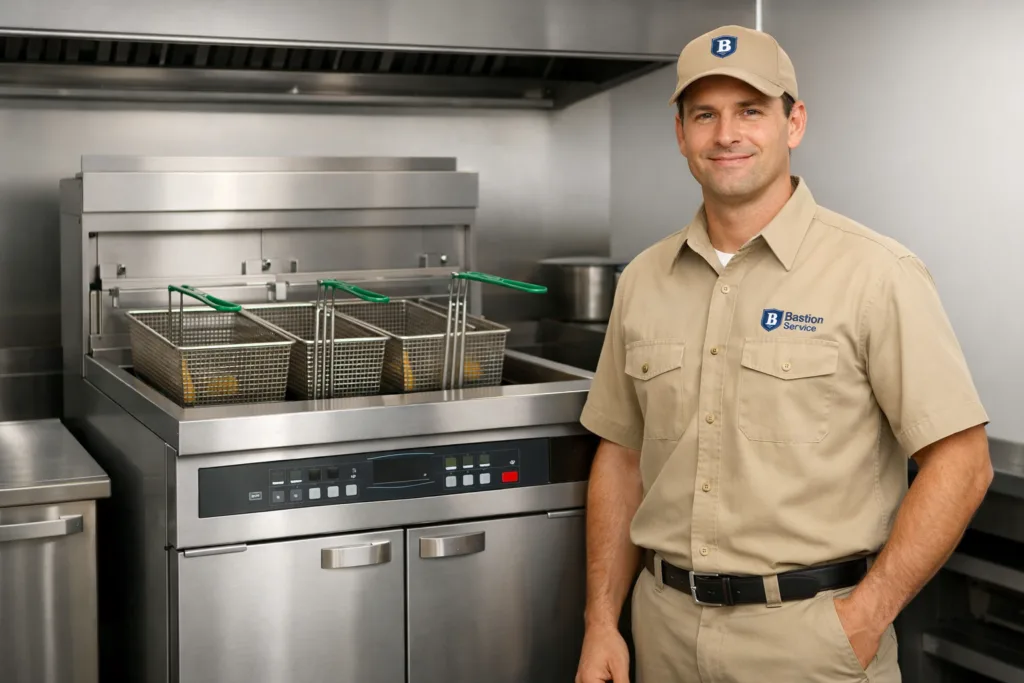




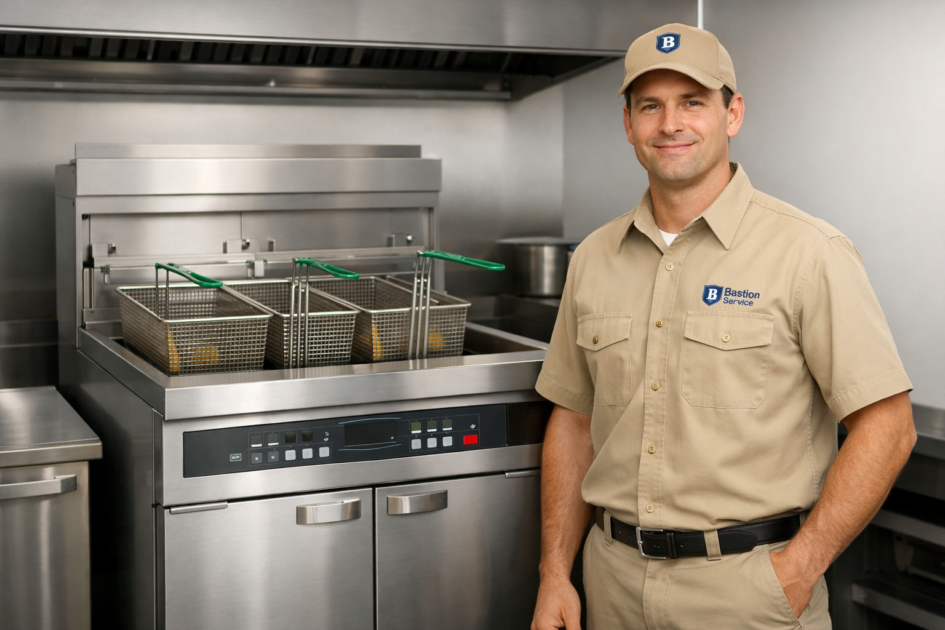
When Frymaster cooking equipment starts missing temperature, recovering slowly, or shutting down during service, the immediate problem is not just the machine itself. It is lost output, delayed tickets, product inconsistency, and pressure on the rest of the kitchen. In Redondo Beach, timely repair service matters because the same symptom can come from very different failures, including ignition components, burner problems, controls, high-limit safeties, probes, wiring, or power and gas supply issues. Bastion Service helps businesses identify what failed, whether the equipment should remain in use, and what repair scheduling makes the most sense for daily operations.
For specific equipment paths in Redondo Beach, review Frymaster Fryer Repair in Redondo Beach and Commercial Appliance Repair in Redondo Beach.
What Frymaster cooking equipment problems usually need service
Frymaster equipment issues often begin as intermittent performance changes before turning into full downtime. A unit may still run, but if it is heating unevenly, dropping out mid-cycle, or taking too long to recover, the problem is already affecting production. Service is usually most effective when the symptom pattern is addressed early instead of after a complete shutdown during a busy shift.
Temperature control problems
If the equipment overheats, undershoots the set temperature, drifts during use, or cycles unpredictably, the cause may involve the temperature probe, control board, thermostat logic, safety devices, or burner operation. These faults can lead to undercooked batches, scorched oil, wasted food, and inconsistent cook times. Temperature-related problems should be evaluated when staff start adjusting procedures just to keep output usable.
Ignition and burner faults
Units that fail to light, light intermittently, or lose flame during operation often point to ignition assemblies, flame sensing issues, gas valve trouble, wiring faults, or control failures. In daily kitchen use, these problems may look like delayed startup, weak heat, repeated attempts to ignite, or sudden lockouts. When ignition becomes unreliable, repair should be scheduled before the equipment is counted on for normal production.
Slow recovery and reduced output
Slow recovery is one of the most disruptive problems for frying equipment because the unit may appear functional while still limiting the kitchen. Restricted burner performance, sensor drift, control issues, and heat-transfer problems can all reduce recovery speed. That affects batch consistency, order pacing, and labor flow. If output drops during heavier use, diagnosis should focus on whether the equipment can still meet the demands placed on it.
Unexpected shutdowns and fault conditions
If the display resets, the unit enters fault mode, or operation stops without a clear reason, the issue may involve controls, safety circuits, power supply problems, or failing internal components. Intermittent shutdowns are especially difficult because they create uncertainty for staff and can turn one station problem into a broader service delay. Troubleshooting should determine whether the shutdown is tied to a single failed part or a larger reliability issue.
Symptoms that should not be ignored
Some performance problems seem manageable at first, but repeated operation under fault conditions can create bigger repair needs. A unit that overheats, requires frequent resets, drops flame, or struggles to maintain cooking temperature should not be treated as stable just because it still turns on. In many kitchens, the warning sign is not total failure but staff having to compensate for the equipment.
- Longer cook times than normal
- Uneven product color or doneness
- Repeated restart attempts
- Oil temperature that swings too high or too low
- Burners that sound weak or inconsistent
- Display errors, lockouts, or random resets
When those symptoms are present, the main question is reliability. If the equipment cannot complete normal use without attention from staff, it is already affecting operations and should be assessed before the next high-demand period.
How diagnosis supports better repair decisions
Good repair work starts with identifying the failed system instead of replacing parts based only on the most visible symptom. For example, poor heating may come from a sensor issue, a control problem, combustion trouble, or a gas-related fault. Shutdowns may point to a safety circuit, unstable power, damaged wiring, or a board failure. A proper service visit helps separate root cause from secondary symptoms so repair planning is based on the actual problem.
This also matters for scheduling. Businesses in Redondo Beach often need repair arranged around prep, limited staffing, or partial line availability. Once the failure pattern is understood, it is easier to decide whether the equipment should be taken out of primary use immediately, monitored until the appointment, or repaired as soon as possible to prevent a larger interruption.
Fryer-specific issues businesses often report
Because fryer repair is the most common need within this equipment category, it helps to recognize the patterns that usually trigger service calls. Fryers tend to show trouble in ways that directly affect food quality and speed, even before a complete breakdown occurs.
Oil not reaching or holding target temperature
This can point to sensor inaccuracies, thermostat or control problems, burner weakness, or safety-related interruptions. Operators may notice pale product, longer cook cycles, or frequent manual adjustments to compensate.
Unit heats, but not fast enough between loads
When recovery slows, the fryer may still function but fail under real kitchen demand. That usually leads to backed-up orders and inconsistent results from batch to batch. Recovery complaints should be treated as performance failures, not minor inconvenience.
Ignition clicks or starts, then drops out
This often suggests ignition assembly wear, flame sensing trouble, gas delivery issues, or control failure. The fryer may start normally some of the time, then lock out or stop heating during use.
Frequent high-limit trips or manual resets
Repeated safety trips are a sign that the fryer is not operating normally. The cause may involve overheating, probe faults, control failure, airflow problems, or burner behavior that should be corrected before continued use.
When repair may be more urgent than it first appears
Equipment does not have to be fully down to justify immediate service. In many cases, the more expensive disruption comes from reduced performance rather than a complete stop. If one fryer is unstable, staff may overload another station, alter batch sizes, or stretch ticket times. That creates indirect costs in product quality, labor efficiency, and customer service.
More urgent service is usually appropriate when:
- The equipment cannot maintain safe and consistent cooking temperatures
- Ignition is unreliable or burners cut out during use
- The unit shuts down during active production
- Staff must restart or monitor the machine repeatedly
- Product quality has become inconsistent because of equipment behavior
Repair versus replacement considerations
Not every major symptom means replacement is the better choice. Many Frymaster problems still come down to specific failed components that can be repaired effectively. Replacement becomes a more serious consideration when there is a pattern of recurring control failures, chronic temperature instability, extensive wear, or multiple recent service events tied to the same system.
The useful question is whether the current issue is isolated or part of broader decline. If the equipment has become unpredictable, affects daily output, and has a history of related failures, diagnosis can help determine whether another repair is likely to restore dependable use or only delay the next outage.
Service planning for businesses in Redondo Beach
For kitchens in Redondo Beach, the practical next step is to match the symptom to a service decision before downtime spreads. If your Frymaster cooking equipment is showing ignition trouble, heating faults, slow recovery, control issues, or repeated shutdowns, scheduling repair early usually protects production better than waiting for a full breakdown. A focused visit can confirm the cause, explain whether continued operation is advisable, and help you plan the repair around kitchen demands with fewer surprises.


