
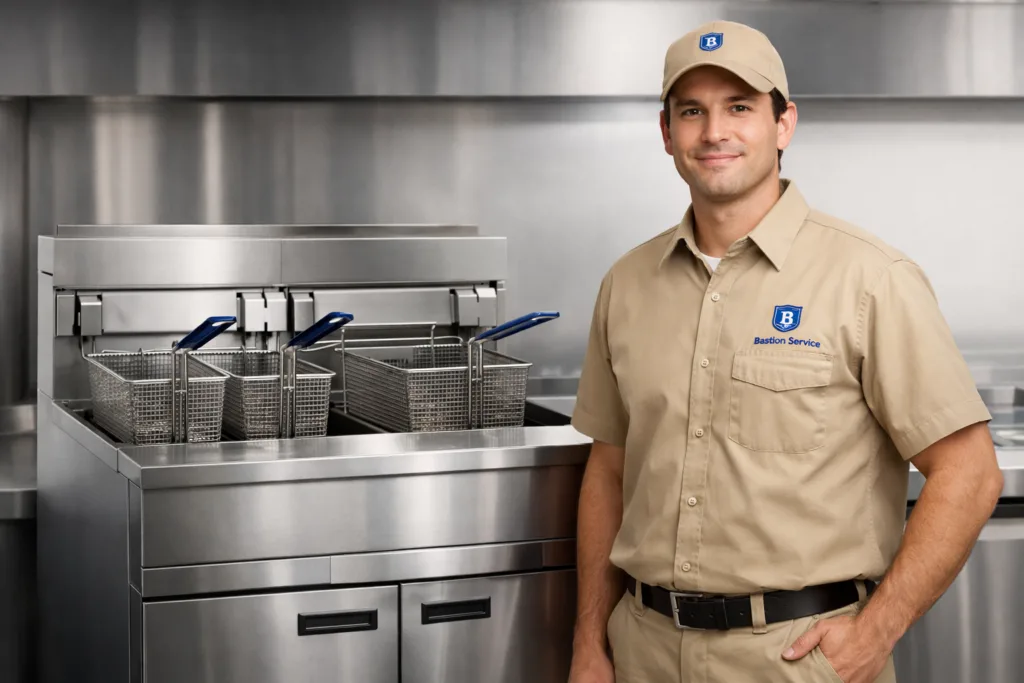





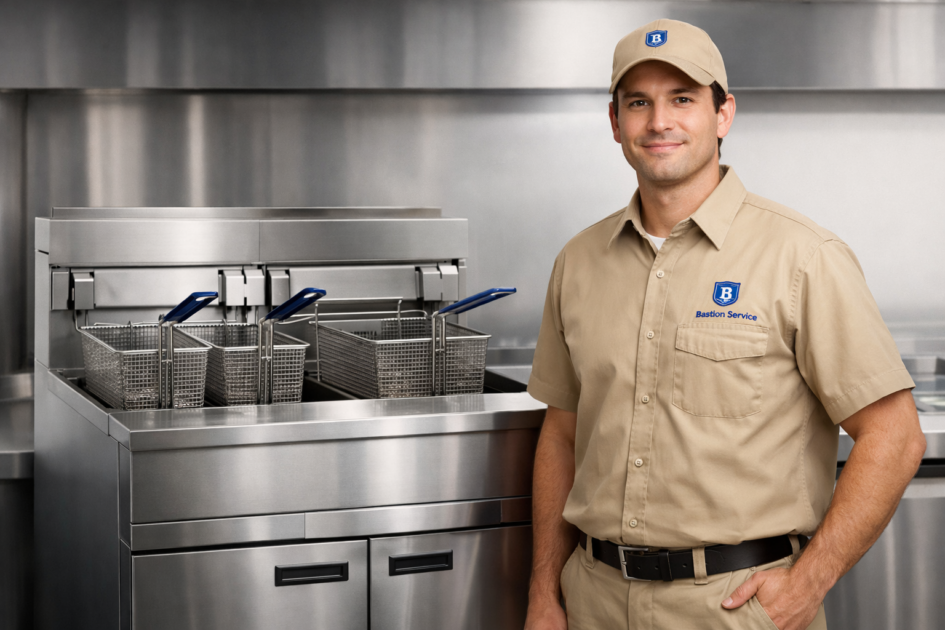
Equipment trouble usually shows up first as slower output, uneven results, or staff workarounds that keep the line moving for another shift. With Frymaster cooking equipment, those symptoms often point to heating faults, ignition problems, temperature control drift, safety trips, or component wear that does not become obvious until the unit is under normal kitchen demand. For businesses in Rancho Park, repair service is most useful when it connects the symptom pattern to a scheduling decision: keep the unit offline, plan a prompt repair, or inspect for broader wear that could lead to repeat downtime.
For specific equipment paths in Rancho Park, review Frymaster Fryer Repair in Rancho Park and Commercial Appliance Repair in Rancho Park.
Bastion Service provides Frymaster equipment repair support for Rancho Park businesses that need more than a generic parts guess. A service call should help identify what is actually failing, whether the issue is isolated or system-wide, and what repair path makes sense for production, staffing, and daily service flow.
What Frymaster cooking equipment problems do you troubleshoot?
Frymaster equipment issues often fall into a few repeat categories that affect kitchen performance quickly:
- Units that do not reach or hold set temperature
- Ignition failure, delayed lighting, or repeated burner attempts
- Slow heat recovery during normal batches
- Unexpected shutdowns or safety-limit trips
- Control problems, display errors, or inconsistent response
- Burner irregularity, weak flame performance, or unstable heating
- Oil leaks, visible wear, or signs of internal component stress
These symptoms can affect food quality, ticket times, oil life, and staff efficiency long before the equipment stops completely. That is why diagnosis matters: the same visible problem can come from different causes, and the repair approach depends on what is actually failing in the heating and control system.
Heating and temperature issues that affect daily production
If Frymaster cooking equipment runs too hot, too cool, or swings away from the selected temperature, the problem may involve sensors, high-limit components, controls, relays, wiring, or burner performance. In a busy kitchen, temperature instability is not just a technical issue. It changes cook times, creates inconsistent product results, and makes it harder for staff to rely on normal station timing.
Some units still appear to be operating even while temperatures drift enough to disrupt output. A fryer may recover late after a basket drop, overshoot, then cycle unevenly. In that situation, repair decisions should focus on whether the fault is limited to one failed part or whether several components are now working outside normal range.
Signs temperature control needs attention
- Product quality changes from batch to batch
- Longer cook times without any recipe change
- Units that overshoot the setpoint
- Frequent high-limit interruptions
- Displays or controls that do not match actual performance
Ignition, burner, and flame-related problems
Ignition trouble is one of the fastest ways for cooking equipment to become unreliable during service. Failure to light, delayed ignition, intermittent flame loss, or repeated reset behavior can point to ignition assemblies, flame sensing issues, burner condition, airflow restrictions, gas-valve behavior, or control faults.
These problems often begin as intermittent disruptions. Staff may notice the unit eventually lights after multiple tries or runs normally for a while before dropping out again. That pattern usually means the issue is progressing, not resolving. When burner operation becomes unstable, continued use can lead to more shutdowns and harder-to-predict service interruptions.
Common ignition-related symptoms
- Clicking or ignition attempts without full startup
- Burners that light late or unevenly
- Flame loss during a cooking cycle
- Lockouts after repeated startup attempts
- Controls that reset after burner faults
Slow recovery and reduced throughput
One of the most costly equipment problems is not a total outage but a unit that stays online while producing less than expected. Slow recovery is a good example. The fryer may still heat, but if it cannot recover properly between loads, the station falls behind, staff compensate with spacing changes, and production becomes harder to manage.
Weak recovery can result from burner weakness, sensor inaccuracies, control faults, oil-related heat transfer issues, or heating components that are no longer performing at full capacity. For businesses in Rancho Park, this is often the point where scheduling repair makes the most sense, because the equipment is still running but already reducing output.
Shutdowns, fault conditions, and intermittent operation
Unexpected shutdowns should be treated as a repair priority because they rarely stay intermittent for long. If a Frymaster unit resets on its own, trips safety controls, or shows recurring errors, the equipment may be reacting to overheating, communication faults, unstable electrical components, or other failing parts that only show up under load.
Intermittent problems are especially disruptive because they create uncertainty. Managers cannot plan around a unit that works for one shift and fails in the middle of the next. A proper inspection helps determine whether the shutdown pattern is tied to operating temperature, startup sequence, burner operation, or a deeper control issue.
Leak concerns and visible warning signs
Leaks and visible physical warning signs should not be ignored. Oil around the unit, unusual odors, residue buildup near heated sections, scorch marks, inconsistent flame appearance, or controls that respond erratically all suggest that the equipment needs attention before another full production cycle.
Even when the source looks minor, leaks and related wear can combine with temperature or ignition issues to create broader reliability problems. Service should focus on identifying the source, checking related components, and confirming whether continued use is increasing the chance of a larger outage.
When staff workarounds are a sign to schedule repair
Many businesses delay service because the equipment still turns on. In practice, the stronger signal is often how much staff have changed their routine to keep production moving. If operators are restarting the unit frequently, rotating volume to other stations, allowing extra recovery time, or watching the controls more than usual, the equipment is already affecting operations.
These workarounds may keep service going for a short time, but they also hide the true cost of the problem. Lost efficiency, longer ticket times, oil stress, and added pressure on other equipment usually mean the repair should be scheduled before a partial-performance problem becomes a complete stoppage.
How diagnosis supports better repair decisions
The goal of diagnosis is not just to name one failed component. It is to determine whether the equipment can be returned to stable operation, whether multiple faults are involved, and how to plan the repair with the least disruption to the kitchen. That includes reviewing symptom history, testing how the unit behaves under normal demand, and checking whether the failure is isolated or part of a broader wear pattern.
This is especially important with cooking equipment that has repeated shutdowns, inconsistent heating, or control behavior that seems to change from day to day. A repair that addresses only the most obvious symptom may not solve the larger reliability issue if related parts are also failing.
Repair or replacement: what businesses should weigh
Many Frymaster problems can be repaired successfully when the equipment structure is sound and the issue is tied to controls, ignition, sensing, burners, or related heating components. Replacement becomes a more serious consideration when the unit has recurring failures, multiple major needs at the same time, or reliability problems that continue after recent service.
For decision-making, the practical questions are straightforward:
- Is the current fault isolated or part of a larger pattern?
- Are additional worn components likely to create another outage soon?
- Will the repair restore stable performance for your actual workload?
- Is ongoing downtime now costing more than the repair path justifies?
Those answers matter more than whether the equipment still powers on. A unit that starts but cannot recover, hold temperature, or stay lit reliably may already be costing more than it appears.
Service support for Frymaster equipment in Rancho Park
For Rancho Park businesses, the next step is usually to schedule service when heating performance drops, ignition becomes unreliable, shutdowns repeat, or staff have begun compensating for unstable equipment. Timely repair helps limit production delays, reduce the chance of a full outage, and clarify whether the unit should be repaired promptly or evaluated for broader parts needs before the problem spreads across the kitchen.


