
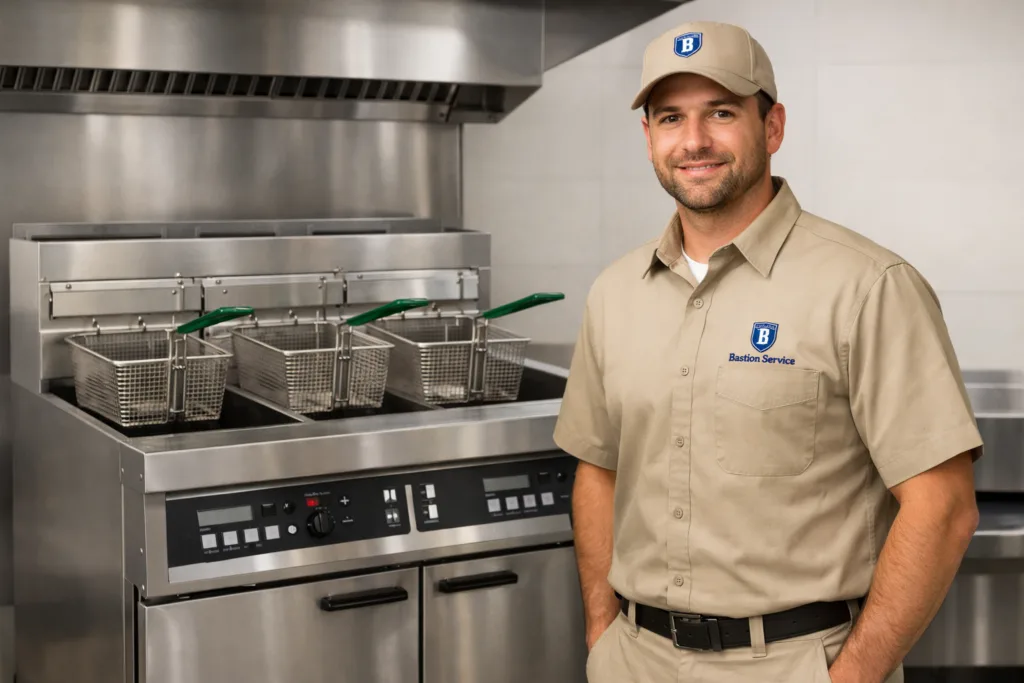




When Frymaster cooking equipment starts causing delays, uneven output, or repeated shutdowns, the most useful next step is service that ties the symptom to the actual failed system. For businesses in Pico-Robertson, that means looking beyond the surface complaint and confirming whether the problem involves heat production, ignition, sensors, controls, gas flow, electrical components, or wear that has built up over time. Bastion Service provides repair support based on how the equipment is behaving in real operation, so managers can make informed scheduling and downtime decisions.
For specific equipment paths in Pico-Robertson, review Frymaster Fryer Repair in Pico-Robertson and Commercial Appliance Repair in Pico-Robertson.
What Frymaster Cooking Equipment Problems Usually Trigger Service
Frymaster equipment often gives warning signs before it stops completely. In many kitchens, the first issue is not a total failure but a steady drop in performance that affects ticket times, food consistency, staff workflow, or oil management. Common service concerns include:
- Slow heat-up or no heat
- Ignition that fails, delays, or works intermittently
- Burners that do not stay lit
- Temperature readings that drift high or low
- Slow recovery between batches
- Unexpected shutdowns during use
- Error codes, resets, or controller lockouts
- Display or keypad problems
- Oil leaks or visible signs of wear around the unit
These symptoms can come from one failed part, but they can also point to a chain of related problems. A unit that seems to have an ignition issue may also have a sensing or control problem. A fryer that appears to be underheating may actually be cycling incorrectly or protecting itself because of another fault.
Heating Problems That Affect Output
Slow Heat-Up
If the equipment takes too long to reach operating temperature, production slows before service even starts. This kind of complaint may involve burners, heating circuits, gas delivery, thermostatic sensing, control response, or safety components preventing normal operation. In a busy kitchen, slow heat-up often leads to rushed staff adjustments, longer cook times, and inconsistent results across shifts.
Failure to Reach or Hold Temperature
When temperature stalls below the set point or drops too quickly during use, the issue is usually bigger than a minor calibration concern. Weak heating performance can reduce throughput, affect product quality, and create recurring delays during peak periods. Service helps determine whether the fault is isolated and repairable quickly or whether the equipment condition suggests a broader reliability problem.
Slow Recovery Between Batches
Recovery complaints matter because they show up when the kitchen is busiest. Equipment may appear normal at startup but fail under sustained use. That pattern can point to burner performance problems, control issues, sensor inaccuracies, airflow concerns, or wear affecting heating efficiency. When recovery gets slower, operators often notice that one unit starts limiting the pace of the entire line.
Ignition, Burner, and Startup Faults
Ignition failures are among the most disruptive cooking equipment problems because they often move from intermittent to constant without much warning. A unit that clicks repeatedly, lights inconsistently, or starts and then shuts back down may have issues related to ignition components, flame sensing, wiring, gas valve operation, or the controller that manages startup.
Burner-related faults can also show up as uneven heating, delayed ignition, rumbling, repeated resets, or a unit that appears to run but does not produce stable heat. These problems are important to diagnose early because temporary workarounds rarely last through heavy production. If staff members are having to retry startup, reset controls, or monitor one unit more than usual, the equipment is already affecting labor and service flow.
Temperature Control Issues and Inconsistent Results
When cooking temperatures do not match the settings, the problem reaches beyond food quality. It may indicate a fault in the sensor system, thermostat function, controller logic, or a safety circuit limiting operation. Businesses in Pico-Robertson often notice temperature control issues through symptoms such as:
- Product coming out darker or lighter than expected
- Longer cook times than usual
- Frequent staff adjustments to settings
- Oil breaking down faster than normal
- Uneven results from one batch to the next
These signs are useful because they help separate a production complaint from the underlying repair need. If the temperature is unstable, the equipment may still operate, but it may not be operating correctly enough to support consistent kitchen performance.
Control Board, Display, and Electrical Symptoms
Not every breakdown starts with a burner or heating component. Frymaster cooking equipment can also develop control and electrical faults that interrupt operation even when major mechanical parts are still intact. Managers often call for service when the display goes blank, settings do not respond, the unit resets unexpectedly, or fault messages appear repeatedly.
Electrical symptoms can involve power supply issues, harness and wiring faults, controller failure, limit circuits, keypad problems, or communication issues between components. Because several different faults can create similar symptoms, replacing parts without testing often leads to wasted time and repeat downtime.
Oil Leaks, Wear, and Condition-Related Problems
Visible leaks or signs of wear should not be ignored just because the equipment is still producing heat. Oil around the base of a fryer, seepage near fittings, or evidence of long-term stress on components can indicate a repair need that is already affecting reliability. In some cases, wear-related issues contribute to additional heating or control complaints because the equipment is no longer operating under stable conditions.
Condition matters when deciding whether repair is straightforward or whether the unit needs broader evaluation. Older equipment with repeated failures, visible deterioration, and multiple active symptoms may require a different plan than a newer unit with one isolated part failure.
When Continued Use Can Increase Downtime
Some problems leave room for planned scheduling, while others suggest the equipment should be taken out of service until it is inspected. Continued use can make a manageable issue more expensive when the unit:
- Will not maintain a consistent cooking temperature
- Shuts off during active use
- Fails ignition repeatedly
- Needs constant resetting to keep running
- Shows persistent error messages or lockouts
- Leaks oil or shows signs of overheating
In those situations, delaying repair can turn one service call into a longer outage. A technician can help determine whether the equipment can remain in limited use, whether load should be shifted to other units, or whether operation should stop until repairs are completed.
How Repair Decisions Are Usually Made
Choosing between repair and replacement is rarely about age alone. The better decision usually depends on the specific failure, how often similar problems have happened before, the condition of the controls and heating systems, and how much disruption the business can absorb. Useful questions include:
- Is the problem isolated or part of a repeating pattern?
- Will the repair restore stable operation or only buy a short amount of time?
- Are key components still in serviceable condition?
- Is current downtime costing more than the repair is worth?
For many businesses in Pico-Robertson, the right answer comes from tested findings rather than assumptions. That is especially true when one unit supports a large share of daily volume.
What a Service Visit Should Accomplish
A repair appointment should do more than identify the obvious symptom. It should confirm the failed system, check related components, explain why the problem is occurring, and outline the next step in a way that helps management act quickly. That may mean immediate repair, approval for parts, staged service planning, or a recommendation to stop using the equipment if reliability has dropped too far.
This service-oriented approach matters because kitchen equipment problems affect more than the unit itself. They affect prep timing, staffing, service speed, product consistency, and day-to-day planning. The goal is to move from uncertainty to a realistic repair path with as little wasted time as possible.
Frymaster Repair Support for Businesses in Pico-Robertson
If Frymaster cooking equipment is running inconsistently, recovering too slowly, failing to ignite, showing control faults, or causing production delays, scheduling repair early helps limit disruption. A focused inspection can identify the source of the problem, clarify whether the unit should remain in operation, and help your business in Pico-Robertson move forward with repair scheduling based on actual equipment condition and urgency.


