
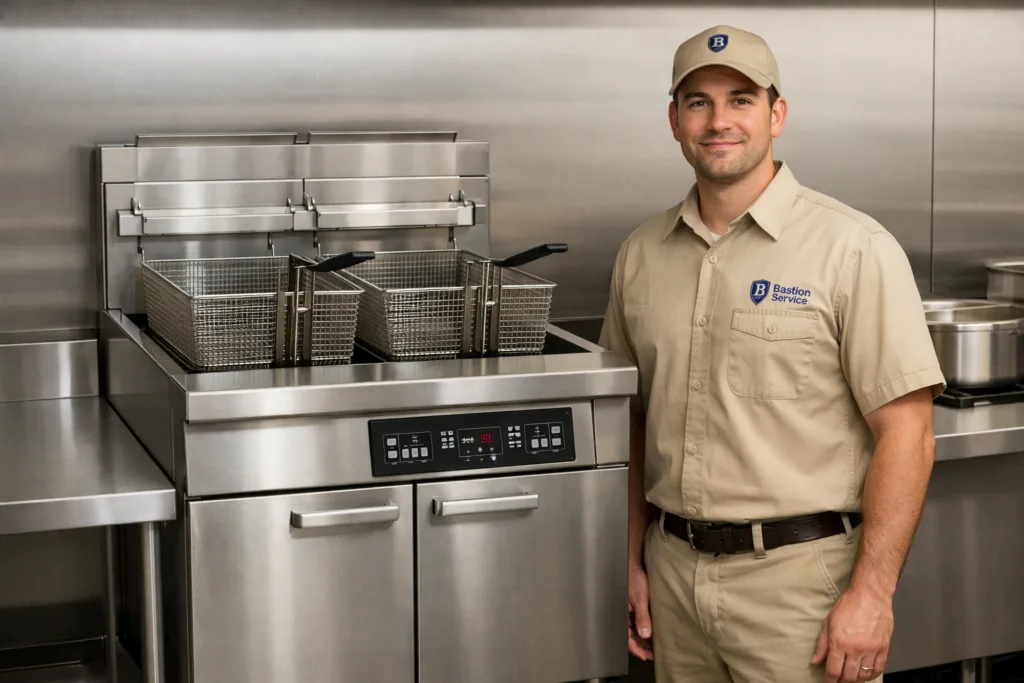




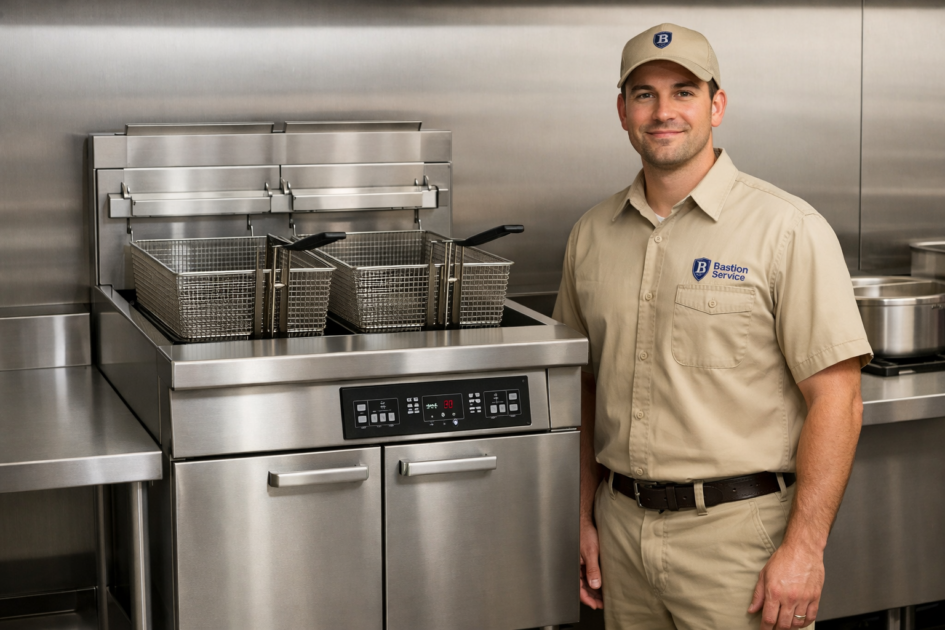
When Frymaster cooking equipment starts slipping out of normal operation, the right response is to look at the symptom pattern before a minor issue turns into a service interruption. In Palms, repair scheduling is often driven by production pressure: a fryer that falls behind on recovery, a unit that drops out during a rush, or controls that no longer hold consistent temperature. The goal of service is not just to restore heat, but to determine what is failing, whether the equipment can stay in use safely, and what repair path best protects daily output.
For specific equipment paths in Palms, review Frymaster Fryer Repair in Palms and Commercial Appliance Repair in Palms.
For businesses in Palms, that usually means diagnosing the equipment in the context of real kitchen use. Bastion Service provides Frymaster repair support with that service-focused approach, helping operators understand whether the problem points to ignition trouble, temperature regulation faults, burner issues, safety shutdowns, control failures, or wear that is already affecting reliability.
Frymaster Cooking Equipment Symptoms That Usually Need Repair
Not Heating or Heating Inconsistently
If the equipment powers on but does not produce normal heat, reaches temperature slowly, or cycles unevenly, the problem may involve burners, gas flow, sensors, controls, or safety circuits. In a working kitchen, inconsistent heat creates more than an equipment complaint. It can change cook times, affect product consistency, and force staff to compensate manually throughout the shift.
This symptom becomes especially important when the issue is intermittent. A unit that heats correctly at startup but drifts later in service may point to a different fault than one that never reaches set temperature at all. That distinction matters when deciding whether the equipment can remain in limited use or should be removed from production until repaired.
Slow Recovery Between Batches
Slow recovery is one of the clearest signs that cooking equipment is no longer keeping up with demand. With Frymaster fryers, this often shows up when oil temperature drops after a load and takes too long to return, creating longer ticket times and uneven throughput. Operators may first notice it only during peak periods, but that is often when underlying burner or control issues become impossible to ignore.
Possible causes can include weak burner performance, temperature sensing problems, airflow restrictions, control calibration drift, or other heat-transfer issues. Because slow recovery can be mistaken for a normal high-volume condition, service is most useful when it confirms whether the unit is truly being overworked or whether a repairable fault is limiting performance.
Ignition Problems or Flame Instability
Equipment that fails to ignite, clicks repeatedly, lights inconsistently, or loses flame during operation should be inspected promptly. These symptoms can involve ignition components, flame sensing, gas delivery issues, or safety controls reacting to unstable operation. In practical terms, that means a unit may seem usable one moment and then shut down without warning the next.
For kitchens in Palms, this is usually not a wait-and-see problem. If staff are restarting equipment repeatedly to get through service, the repair decision should move up the priority list. Repeated ignition attempts and unstable burner operation can lead to bigger interruptions and make service planning more urgent.
Control Problems, Error Displays, or Random Shutdowns
When controls stop responding, flash fault information, reset unexpectedly, or shut the equipment down mid-operation, the root cause is not always the control itself. Electrical connections, sensors, high-limit devices, wiring faults, and board-level issues can produce similar symptoms. That is why parts should not be guessed at based only on what appears on the display.
Unexpected shutdowns are especially disruptive because they remove confidence from the line. Even if the unit restarts, staff may have to adjust workflow around an appliance that no longer feels dependable. A service visit helps determine whether the failure is isolated, repeatable, load-related, or likely to worsen with continued use.
Why Symptom Patterns Matter on Frymaster Equipment
Cooking equipment problems rarely stay neatly separated. A complaint about poor heating may actually begin with ignition weakness. A recovery complaint may trace back to temperature sensing or control accuracy. Shutdowns may be linked to overheating protection, burner instability, or intermittent electrical loss. Looking at symptoms in isolation can lead to unnecessary downtime and the wrong repair path.
That is why useful repair work starts by identifying when the problem happens and how it behaves. Does it occur only after warm-up? Only during heavier production? Only after several cycles? Does the unit restart immediately, or does it require a cool-down period? Those details help narrow the fault and support better decisions about repair timing, parts planning, and safe operation.
Common Frymaster Fryer Issues Seen in Daily Kitchen Use
Although Frymaster cooking equipment can include different configurations, fryer-related issues tend to affect operations in very specific ways. Businesses often call for service when they notice:
- Oil not reaching the programmed temperature
- Long recovery times during busy periods
- Burners that do not stay lit
- Units that need repeated resets
- Temperature overshooting or drifting during production
- High-limit trips or sudden shutoffs
- Control panels that respond inconsistently
- Performance changes after filtration or routine cleaning
Each of these symptoms can affect food quality, pace of service, and staff workflow in different ways. What matters most is not only whether the unit still runs, but whether it runs predictably enough to support the kitchen without constant workarounds.
When Continuing to Use the Equipment Can Increase Downtime
Some problems feel manageable at first because the equipment still operates part of the time. But continuing to run a unit that overheats, shuts down, recovers slowly, or requires repeated restarting can push the problem further and make scheduling more difficult later. In many cases, the operational cost comes before the full breakdown: delayed orders, reduced batch consistency, added stress on staff, and last-minute production changes.
If the team is changing normal process just to accommodate one unreliable piece of equipment, that is usually a sign that service should be scheduled sooner rather than later. The same is true when performance concerns are affecting product timing, line balance, or confidence that the unit will hold through the next rush.
What a Service Visit Helps Clarify
A repair appointment is not only about replacing a failed part. It helps answer the questions that matter most to business operators in Palms:
- Is the equipment safe to continue using?
- Is the problem isolated or part of a larger reliability issue?
- Does the symptom point to controls, burners, sensors, or shutdown protection?
- Can the unit stay in limited operation while parts are arranged?
- Should service be timed around prep and peak demand?
That evaluation is especially important when the kitchen has limited redundancy. One fryer operating below normal performance can affect more than one station, and one unstable heating issue can create delays that spread across the entire service flow.
Repair Planning for Kitchens in Palms
Businesses in Palms usually need more than a technical answer; they need a workable schedule. That may mean arranging diagnosis quickly so management can decide whether to shift menu output, limit batches, or temporarily remove a unit from active use. It may also mean identifying likely parts needs early so the repair can be completed with less disruption to service windows.
Good planning also matters when symptoms overlap. A fryer may appear to have one obvious complaint while also showing early signs of a second issue, such as unstable ignition combined with temperature drift. Addressing the full condition of the equipment helps avoid repeated downtime from piecemeal fixes.
When Repair Versus Replacement Becomes Part of the Decision
Not every service call leads to a replacement discussion, but it can become relevant when the same equipment has repeated failures, unreliable controls, ongoing shutdown issues, or general wear that keeps affecting daily production. The key is to base that decision on actual condition and repair history rather than one difficult shift.
If the current problem is isolated and the equipment remains a strong fit for the kitchen, repair is often the sensible path. If breakdowns are becoming routine and confidence in the unit keeps dropping, it may be time to evaluate whether additional repair investment still supports operations. A diagnosis helps define that choice with less guesswork.
Next Steps When Frymaster Equipment Is Affecting Service
If your Frymaster cooking equipment is running below temperature, struggling with ignition, shutting down unexpectedly, or slowing production in Palms, the best next step is to schedule service while the symptoms are still identifiable. Early diagnosis helps determine whether the unit can remain in operation, what repair route makes sense, and how to reduce disruption before a partial failure becomes a full outage.


