
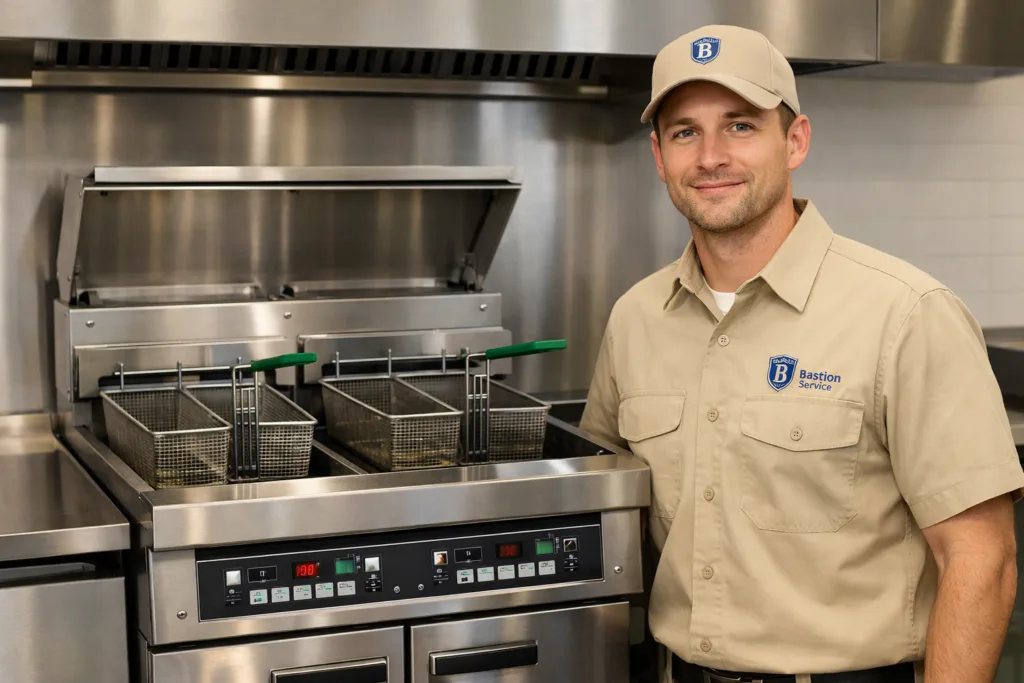




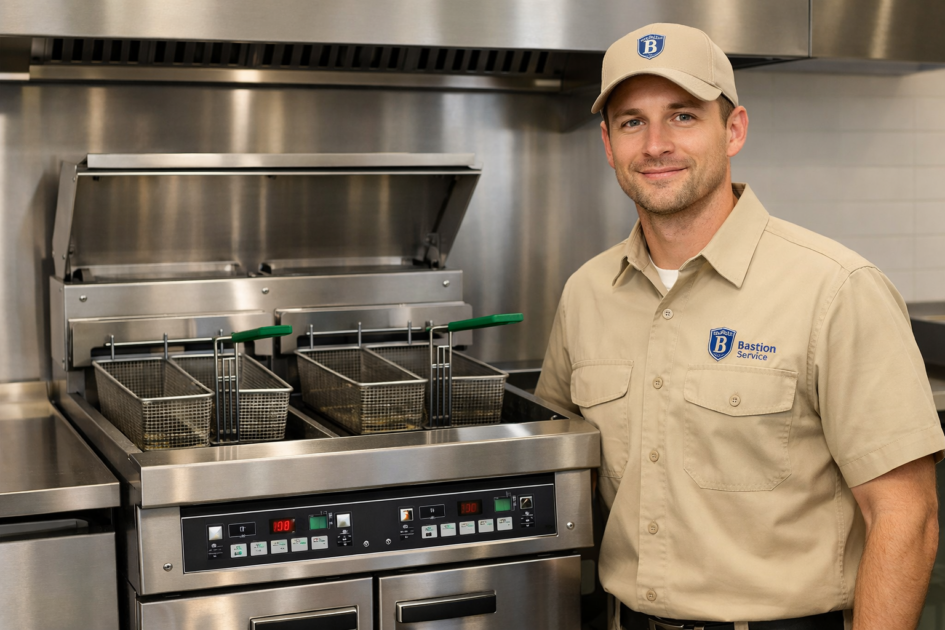
Production problems tied to Frymaster cooking equipment rarely stay limited to one station for long. When a fryer starts heating slowly, misses target temperature, drops out during a rush, or shows erratic burner behavior, the priority is to identify the fault, protect output, and schedule repair based on how the equipment is actually performing in daily use. For businesses in Mar Vista, timely service can help limit food-quality issues, staffing disruption, and avoidable downtime.
For specific equipment paths in Mar Vista, review Frymaster Fryer Repair in Mar Vista and Commercial Appliance Repair in Mar Vista.
Bastion Service works with Mar Vista businesses that need Frymaster cooking equipment repair based on real operating symptoms, not guesswork. That includes diagnosing whether the problem is centered in ignition, heat recovery, temperature sensing, burner performance, controls, safety shutdown behavior, or a combination of faults that only appear once the equipment is under load.
Common Frymaster cooking equipment problems that affect service
Frymaster equipment is built for demanding kitchen use, but recurring heat and production cycles can expose issues that interfere with consistency. Some failures appear suddenly, while others build gradually through slower recovery times, drifting temperatures, intermittent ignition, or repeated resets. In each case, the symptom pattern matters because similar complaints can come from very different underlying causes.
Not heating or taking too long to reach temperature
If the unit powers on but does not heat normally, takes too long to come up to temperature, or never reaches a usable cooking range, service is usually needed soon. This kind of problem may point to burner issues, ignition faults, control failure, sensor problems, or safety-limit interruptions. In a busy kitchen, slow heat-up affects prep timing, opening routines, and the ability to maintain normal output.
Even when the equipment eventually gets hot, delayed heat-up should not be ignored. What starts as a performance complaint can turn into a full no-heat condition that leaves staff shifting work to other stations.
Temperature control that drifts, overshoots, or will not stay stable
Temperature inconsistency is one of the most disruptive problems in cooking equipment because it affects food quality and operating rhythm at the same time. If oil or cooking temperature swings too high, falls below target, or seems unreliable throughout the shift, the issue may involve controls, probes, sensors, or heating-system behavior that needs to be tested during service.
Operators often notice this problem first through uneven cook times, darker or lighter product than expected, or staff compensating by changing timing from batch to batch. Once that starts happening regularly, repair is usually more practical than continuing to work around the equipment.
Ignition problems and burner instability
Ignition faults may show up as delayed lighting, repeated attempts to ignite, burners that fail to stay lit, or units that start normally and then stop heating without warning. These complaints can be intermittent, which is why symptom history from the kitchen is useful during diagnosis. A unit that fails only during peak use may still have a significant burner or ignition problem even if it appears normal for short periods.
Repeated ignition trouble should be treated as more than a nuisance. It can create inconsistent cooking performance, unexpected shutdowns, and a greater chance of lost production during busy service windows.
Slow recovery under normal demand
One of the clearest signs that cooking equipment needs attention is weak recovery after a basket drop or a normal production cycle. If temperature falls too far and takes too long to recover, ticket flow slows down and staff may reduce load size just to keep up. That often points to a heating-performance issue, burner inefficiency, or control-related fault rather than normal wear from the day’s volume.
Recovery complaints matter because the equipment can look functional at idle while still underperforming when the kitchen actually needs it. Testing the unit against real usage symptoms helps determine whether repair can restore expected output.
Unexpected shutdowns or repeated resets
If the equipment shuts down mid-shift, needs frequent restarting, or behaves unpredictably after reaching temperature, that is a strong sign to schedule repair. Nuisance shutdowns can stem from control issues, safety-limit trips, ignition failures, or electrical problems that become more obvious once the unit is hot. Repeated resets are especially important because they often signal a fault that is progressing rather than resolving.
Why symptom-based diagnosis matters
Two units can show the same visible problem and require different repairs. For example, poor heating may come from a burner problem on one machine and a control or sensing fault on another. Temperature drift may be tied to inaccurate sensing, inconsistent heating response, or a shutdown pattern that interrupts the cycle without staff noticing the source right away.
That is why a service visit should focus on how the equipment behaves before startup, during heat-up, under load, and after it has been running for a while. For Mar Vista businesses, this approach helps avoid unnecessary parts replacement and supports better decisions about timing, continued use, and repair scope.
Signs the equipment should be serviced sooner rather than later
Some problems justify immediate scheduling even if the unit is still operating. Service should move up the list when you notice:
- heat-up times getting longer from week to week
- temperature that no longer matches the setting
- burners cycling irregularly or failing to stay consistent
- repeated shutdowns during active production
- staff having to restart the unit to finish a shift
- slower recovery that creates bottlenecks during rush periods
- performance changes that affect product consistency
These are the kinds of issues that often worsen under normal kitchen demand. A unit that seems manageable during a slower period may become unreliable once volume increases.
When continued use can create bigger problems
Not every fault means the equipment must be taken out of service immediately, but some symptoms do raise that concern. If the unit is overheating, failing to maintain safe and predictable operation, dropping out repeatedly, or showing serious control instability, continued use can increase wear and make the eventual repair more involved.
Even less dramatic issues, such as poor recovery or inconsistent ignition, can become more expensive when ignored. Running equipment with unresolved heating problems may place added stress on related components and turn a contained repair into a broader service need. A technician can help determine whether the unit can remain in limited use, should be removed from production, or can be repaired with minimal interruption.
Repair planning for kitchens that cannot afford delays
For many businesses in Mar Vista, the repair question is not just whether the equipment can be fixed, but how the timing will affect service flow. A useful visit should clarify the likely source of the problem, whether parts planning is needed, and how urgently the repair should be scheduled based on current symptoms. That helps managers decide whether to adjust production temporarily, move volume to backup equipment, or pause use until the fault is corrected.
This is especially important when a unit has become unreliable but has not fully failed yet. Waiting for a total breakdown often creates more disruption than addressing the problem while the symptom pattern is still identifiable and the repair path is easier to plan.
Repair versus replacement considerations
Sometimes the right next step is repair, and sometimes the larger question is whether the equipment still fits operational needs. That decision usually depends on the severity of the current fault, the condition of major components, repeat service history, and how much downtime the kitchen can absorb. A proper diagnosis gives businesses a better basis for that decision than symptoms alone.
Repair is often the practical option when the problem is isolated and the equipment still supports day-to-day production once restored. Replacement becomes more relevant when there are repeated control or burner issues, multiple related failures at the same time, or a pattern of breakdowns that continues to interrupt service.
What to have ready when scheduling Frymaster repair
When calling for service, it helps to note how the equipment is failing rather than only stating that it is down. Useful details include whether the problem happens during startup or during active cooking, whether the unit reaches temperature at all, whether recovery is slow after loading, and whether shutdowns are random or repeatable under similar conditions. If staff have noticed unusual cycling, reset behavior, or a worsening pattern over several shifts, that information can also help narrow the diagnosis faster.
The goal is to turn a general complaint into a repair decision that matches the equipment’s actual condition. That saves time and helps set realistic expectations for use, parts, and scheduling.
Practical next steps for businesses in Mar Vista
If Frymaster cooking equipment is slowing production, missing temperature, showing ignition trouble, or shutting down during use, the best next move is to schedule service before the issue disrupts more of the kitchen. A focused repair visit can confirm the cause, determine whether the equipment should remain in operation, and outline the most sensible path to restore reliable performance with as little downtime as possible.


