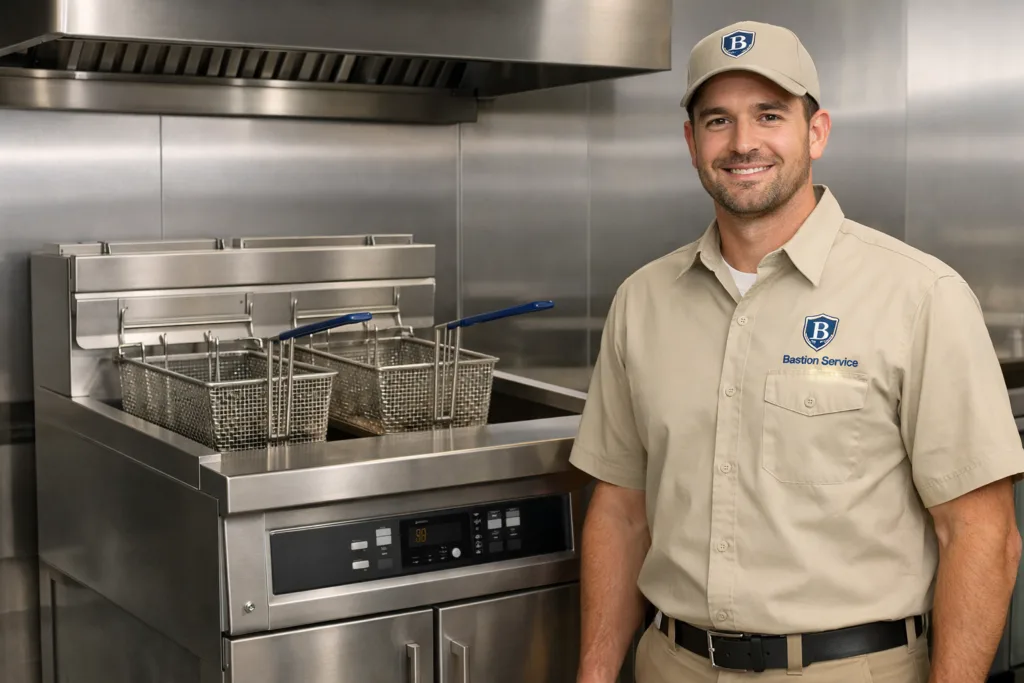




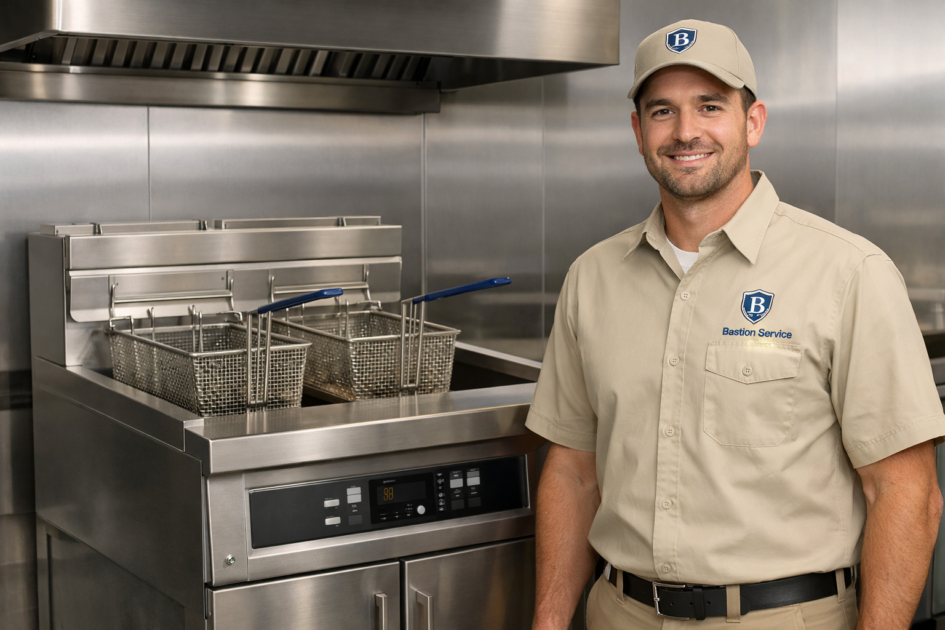
When Frymaster cooking equipment starts disrupting line speed, food quality, or daily output, the priority is to determine whether the issue is limited, whether the unit should stay in service, and how quickly repair needs to be scheduled. In Manhattan Beach, businesses often first notice trouble as inconsistent heat, slow recovery, ignition failures, or unexpected shutdowns during active kitchen use. Bastion Service helps identify the fault, narrow the repair scope, and schedule service based on how the equipment is affecting production.
For specific equipment paths in Manhattan Beach, review Frymaster Fryer Repair in Manhattan Beach and Commercial Appliance Repair in Manhattan Beach.
Because Frymaster equipment is built around high-demand kitchen use, symptoms that seem minor at first can quickly turn into delays, repeat resets, and avoidable strain on staff. The same complaint can have more than one cause, so repair decisions are best based on how the equipment behaves under load, whether the problem is constant or intermittent, and whether normal operation can continue without risking more downtime.
Common Frymaster cooking equipment problems that affect kitchen operations
Most service calls begin with a performance change that operators can see in daily use. The equipment may still run, but no longer at the level needed for steady ticket flow. In other cases, it may stop heating altogether or shut down without warning.
Temperature problems and uneven cooking results
If equipment is not reaching the set temperature, overshoots, drops heat during production, or struggles to hold a stable range, the issue may involve controls, probes, high-limit components, burners, or related heating parts. These problems often show up as inconsistent product color, changing cook times, or batches that do not finish the same way from one cycle to the next.
Temperature instability is more than a quality issue. It can also signal a condition that worsens as the equipment runs longer. A repair visit helps determine whether the fault is sensor-related, control-related, or tied to the heating system itself.
Ignition failures and burner-related shutdowns
When cooking equipment will not light, lights inconsistently, or drops out after startup, operators may notice delayed heating, repeated restart attempts, or lockouts that interrupt service. Ignition and burner faults are especially disruptive because the unit may appear to recover briefly and then fail again during the next rush.
These symptoms typically point to a problem that needs more than an operator reset. If the equipment is failing to light reliably or shutting off under normal use, the safer business decision is usually to schedule repair before the next high-volume period.
Slow recovery and reduced output
Slow recovery is one of the most common reasons kitchen equipment begins holding the line back even before it completely fails. With Frymaster fryers, this can look like longer gaps between batches, poor response after heavy loads, or a unit that technically heats but cannot keep pace with demand.
Slow recovery may be tied to burner performance, controls, heat transfer issues, or internal wear affecting efficiency. Even when the equipment remains operational, it can create production bottlenecks that increase labor pressure and reduce consistency during busy periods.
Unexpected shutdowns during service
Unplanned shutdowns often create the biggest immediate disruption because they force operators to shift production, adjust menus, or pull equipment out of rotation on short notice. If a unit turns off unpredictably, requires frequent resets, or only runs for part of a service window, the problem may involve safety controls, temperature protection, ignition faults, or an unstable control issue.
Intermittent shutdowns deserve prompt attention because they are difficult to manage operationally and often become more frequent over time.
Fryer-specific symptoms businesses often report
Since Frymaster fryers are a major part of many kitchens, fryer problems are often the first equipment issues to affect revenue and service speed. Common reported symptoms include:
- Oil not reaching target temperature
- Heat dropping after baskets are lowered
- Long recovery times between loads
- Burners not igniting or staying lit
- Repeated high-limit trips or resets
- Error conditions on digital controls
- Uneven cooking from one side or one batch to another
- Shutdowns that occur during peak production
These symptoms can overlap, which is why diagnosis matters. What appears to be a simple temperature complaint may actually involve ignition reliability, burner output, or a control issue that affects multiple operating stages.
What a repair visit is meant to determine
A service call is not only about replacing a failed part. It is also about clarifying whether the equipment can stay in use, what problem is actually driving the symptom, and whether the repair is likely to restore stable operation. For businesses in Manhattan Beach, that matters when scheduling around prep windows, staffing, and active service periods.
During diagnosis, symptom patterns help narrow the fault. For example, equipment that never heats at all points to a different repair path than equipment that heats correctly at startup but loses performance later. Units that fail only under load can also indicate a different issue than units that refuse to start from a cold condition.
Signs the equipment should be taken seriously now
Some issues can be monitored briefly while service is arranged, but others suggest the equipment should not be relied on for normal production. It is usually time to move quickly when:
- The unit is shutting down unpredictably during active use
- Operators are resetting controls multiple times a day
- Cooking times are drifting enough to affect consistency
- Recovery time is slowing ticket flow
- Heat output is visibly weaker than normal
- The same operating problem has already returned after earlier service
These are not just maintenance concerns. They are signs that the equipment is affecting workflow and may be moving toward a larger interruption.
Repair planning for businesses in Manhattan Beach
Good repair planning starts with the symptom, not assumptions about the part. If the equipment fails only after warmup, only during rush periods, or only after repeated cycles, that information can help shape the appointment and reduce wasted time. Managers can also help speed diagnosis by noting whether the problem is constant, whether it improves after reset, and whether other performance changes appeared first.
For businesses in Manhattan Beach, timing matters as much as the repair itself. A unit that still runs at partial performance may seem manageable, but partial failure often creates hidden costs through slower output, inconsistent product, extra labor adjustments, and increased risk of a full shutdown.
Repair versus replacement considerations
Not every problem points to replacement, and not every shutdown means the equipment is at the end of its useful life. The practical decision depends on the fault involved, repeat repair history, overall equipment condition, and how essential that specific unit is to daily kitchen capacity.
If the problem is isolated and the rest of the equipment is in solid condition, repair is often the logical next step. If heating, control, and ignition issues have become recurring patterns, the better decision may depend on whether another repair is likely to hold up under ongoing business use.
Next steps when Frymaster equipment is affecting service
When Frymaster cooking equipment starts causing delays, inconsistent results, or repeated shutdowns, early service is usually the best way to limit disruption. The most helpful next step is to schedule diagnosis while the symptom pattern is still clear, especially if the unit is losing heat, recovering slowly, failing to ignite, or dropping out during production. For Manhattan Beach businesses, timely repair support helps protect kitchen flow, reduce avoidable downtime, and make a better decision about whether the equipment should stay in use until service is completed.