
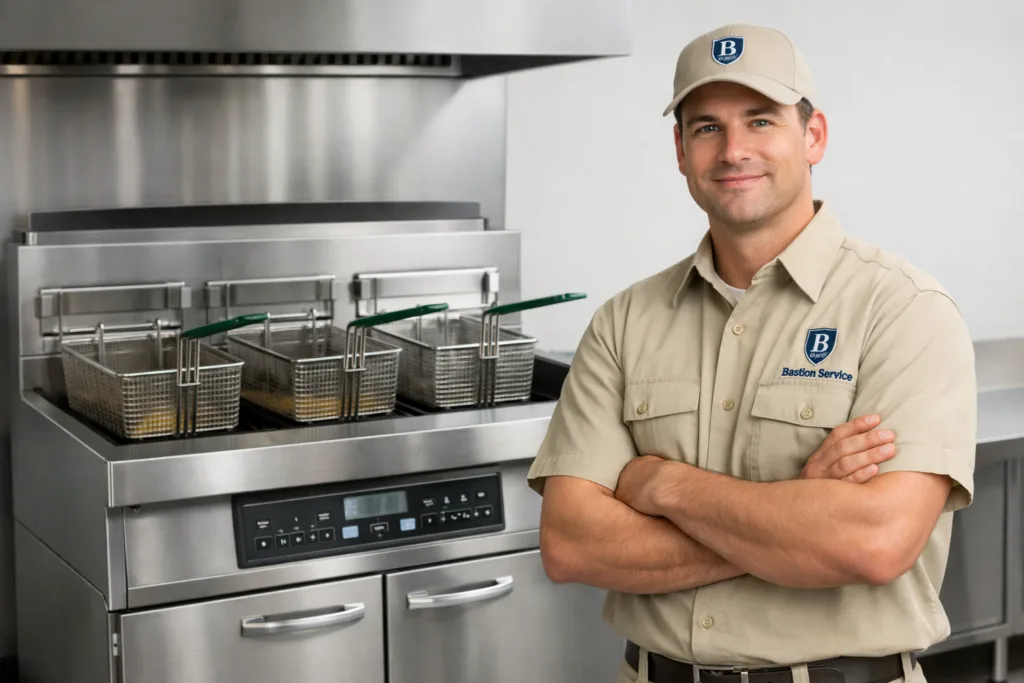




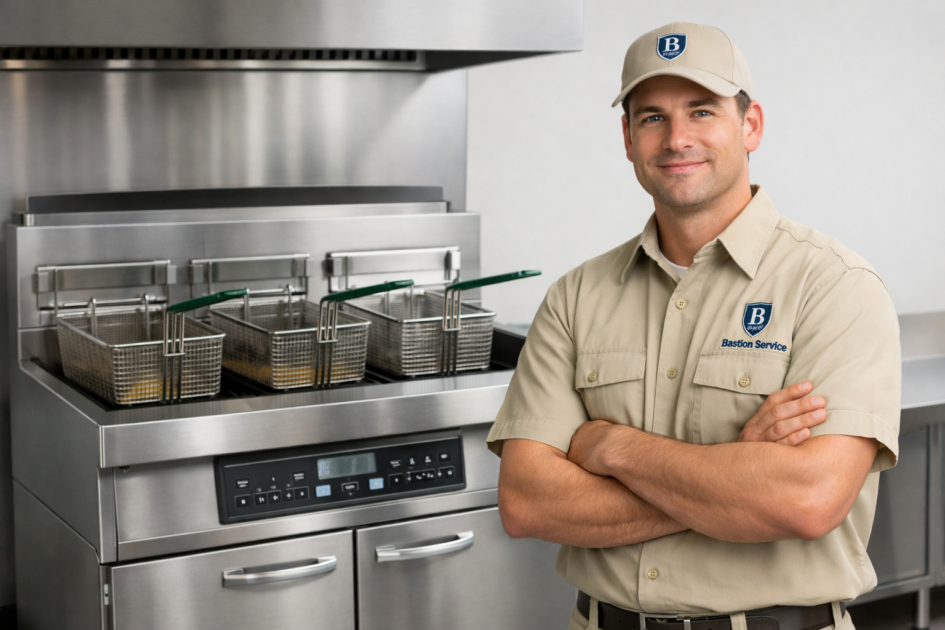
When Frymaster cooking equipment starts missing recovery targets, failing to ignite, or shutting down during service, the immediate problem is lost production. In Hermosa Beach kitchens, one symptom can come from several different causes, including burner issues, temperature sensing faults, control failures, gas flow problems, safety-limit trips, or electrical interruptions. The most effective next step is service that identifies the actual fault first so managers can decide whether the unit can remain in limited use, needs prompt repair, or should be taken out of operation to avoid a larger breakdown.
For specific equipment paths in Hermosa Beach, review Frymaster Fryer Repair in Hermosa Beach and Commercial Appliance Repair in Hermosa Beach.
For business operators, repair is not just about replacing a part. It is about restoring stable output, protecting food quality, and scheduling work around prep and service demands. Bastion Service helps restaurants and other food-service businesses evaluate Frymaster equipment problems based on symptom pattern, operating impact, and how quickly the unit needs to return to reliable use.
Common Frymaster cooking equipment problems that lead to service calls
Frymaster equipment often shows warning signs before a full failure. Slow heat-up, weak recovery between batches, temperature drift, ignition trouble, burner instability, display or control issues, and unexpected shutdowns all point to conditions that should be inspected. In a busy kitchen, these problems affect more than the equipment itself. They can delay tickets, disrupt prep timing, increase food waste, and force staff to work around inconsistent performance.
Service becomes more urgent when the same issue keeps returning, when the unit needs repeated resets, or when results vary from shift to shift. At that point, the goal is to determine whether the problem is a single failed component or part of a broader wear-and-condition issue that affects ongoing reliability.
Heating and recovery issues
Slow heat-up and reduced recovery
If the equipment takes too long to reach operating temperature or struggles to recover during heavy use, likely causes may involve burners, controls, temperature sensors, gas delivery, or buildup that interferes with normal heating. In day-to-day kitchen use, reduced recovery shows up as slower output and less consistent product. Addressing the issue early can help prevent a complete no-heat condition during a lunch or dinner rush.
Temperature swings and inconsistent cooking results
When actual temperature does not match the setting, operators may notice undercooked product, overbrowning, or the need to change cook times just to keep quality acceptable. This can point to sensing problems, calibration drift, control faults, or intermittent component response. If staff are constantly adjusting settings to compensate, the equipment is already affecting production enough to justify a repair visit.
Ignition, burner, and startup faults
Failure to ignite or repeated ignition attempts
A unit that does not light reliably may be dealing with ignition system problems, flame sensing issues, burner faults, or a control-related startup failure. Even if it eventually starts, repeated ignition attempts usually mean performance is no longer stable. That is a sign to schedule service before the equipment becomes unavailable during operating hours.
Burner instability and shutdowns during use
If the burner drops out, cycles abnormally, or the equipment shuts down in the middle of production, the system may be responding to an unsafe or out-of-range condition. This type of interruption should be treated as a repair priority because it affects output and can make kitchen timing unpredictable. Diagnosis helps determine whether the issue is isolated and repairable or whether multiple failing parts are contributing to repeated shutdowns.
Control and safety-related performance problems
Control issues may appear as blank displays, unresponsive buttons, error messages, incorrect temperature behavior, or startup sequences that do not complete normally. Safety-limit trips and lockouts also need attention because they may be reacting to a deeper heating or control problem rather than failing on their own. For operators, the important question is how quickly the equipment can be returned to stable service without repeated interruptions.
When a unit repeatedly locks out, trips, or behaves differently from one shift to the next, continued use increases downtime risk. A proper inspection can show whether the problem is limited to one replaceable part or whether several worn systems are affecting performance at the same time.
Signs the equipment should be taken out of use
It is usually time to stop using the equipment and schedule repair when it cannot maintain temperature, heats unpredictably, fails to ignite consistently, shuts down during operation, or creates a bottleneck in production. Frequent resets, recurring fault behavior, and unstable performance are all signs that continued use may lead to more serious failure and higher repair cost.
- Temperature no longer holds during normal production
- Startup is unreliable or requires multiple attempts
- Recovery time is too slow for service demand
- Burners cycle irregularly or drop out
- Controls display faults or respond inconsistently
- Staff have to constantly monitor or compensate for the equipment
In many kitchens, the practical threshold is simple: if the equipment can no longer be trusted during a normal rush, it should be evaluated before the next one.
Repair planning and repair-versus-replacement decisions
Not every Frymaster service call leads to the same recommendation. Some problems are straightforward repairs involving a failed control, sensor, ignition component, or burner-related part. Others reveal a pattern of repeated failures, multiple worn components, or overall condition issues that make further investment harder to justify. The best repair decision considers the present fault, the age and condition of the equipment, the cost of downtime, and whether the repair is likely to restore dependable day-to-day use.
For managers weighing repair against replacement, the key issue is not only whether the unit can be fixed. It is whether it can return to predictable kitchen performance without causing additional service interruptions. That is why the inspection, parts outlook, and scheduling plan should be considered together.
What to expect when scheduling Frymaster service in Hermosa Beach
When service is scheduled, the most useful outcome is a direct explanation of what is failing, how urgently it affects operation, and what the next step should be. For some businesses, that means restoring the unit quickly to keep production moving. For others, it may mean limiting use until follow-up repair is completed or deciding that replacement is the better operational choice.
If your Frymaster equipment is affecting output, cooking consistency, or shift planning in Hermosa Beach, the right next move is to schedule diagnosis and repair based on the actual symptom pattern. That keeps the decision focused on uptime, safety, and the fastest practical path back to reliable kitchen operation.


